The short version
A California house with water damage can be a sound purchase when the cause is known, repairs have records and an insurer will cover it. Study the Transfer Disclosure Statement and Natural Hazard Disclosure, order a CLUE report, add a moisture inspection and collect insurance quotes before closing.
On this page (9)
- Can buying a water-damaged house in California make sense?
- What water and flood information must a California seller disclose?
- How can I research a California home's flood zone and water history?
- Which warning signs of water damage should I watch for at a showing?
- What will a home inspector catch, and what slips past?
- Do I need insurance quotes before the sale closes?
- What are my options if the seller hid earlier water damage?
- What steps should I take if water damage shows up after I move in?
- Must a California water heater be strapped when I buy the house?
Can buying a water-damaged house in California make sense?
It can, provided you learn the cause, the extent and the chance of recurrence before signing. A pipe leak that was fixed is a different purchase from a lot that floods in storms. Records, an inspection and an insurance quote together let you put a price on the risk.
- The cause. A mended supply line, an aging roof, a slab leak and a hillside shedding runoff each imply different costs and different odds of coming back.
- The repairs. Find out who did the work, whether permits were pulled and whether moisture readings documented the drying.
- The repeat risk. A past loss tells you something about the property and its surroundings. Atmospheric river water damage shows how winter storms test a house.
A stain alone cannot tell you what repairs will cost. Gather written estimates, and consult the restoration cost guide for how published price ranges behave.
What water and flood information must a California seller disclose?
Sellers in California fill out a Transfer Disclosure Statement and a Natural Hazard Disclosure. One captures what the seller knows about the home's condition. The other reports mapped hazard areas, flood zones among them. Treat both as starting points that do not replace your own checks.
Civil Code 1102.6 sets out the transfer disclosure statement. Reproductions of the form include questions on flooding, drainage or grading problems, soil problems, major flood or earthquake damage, and environmental hazards like mold. Check the form attached to your own contract, since its wording changes over time.
The hazard report stands apart from it, and Civil Code 1103 spells out its contents.
- A special flood hazard area, meaning FEMA Zone A or V, when the seller or agent has actual knowledge or the local jurisdiction has posted a parcel list.
- An area of potential flooding from dam failure.
- A very high fire hazard severity zone.
- An earthquake fault zone or a seismic hazard zone.
Each form captures what a seller or agent knows, or what a map shows. A leak nobody noticed will not appear on either. Your agent or a California real estate attorney can explain how they apply to your deal.
How can I research a California home's flood zone and water history?
Read the seller's paperwork first, then check the address on your own. Every source answers a different question and leaves a different gap, so use several, and ask your insurer and the neighbors what they have noticed. The table lays out what each one reveals and what it overlooks.
| Source | What it shows | What it misses |
|---|---|---|
| Transfer Disclosure Statement | The seller's statements on flooding, drainage and major damage | Whatever the seller never knew, including events before their ownership |
| Natural Hazard Disclosure | Which flood, dam inundation, fire, fault and seismic zones include the parcel | A burst pipe, a roof leak or a street that backs up |
| CLUE report | Insurance claims made at the address | Damage fixed with no claim filed; the CLUE report guide explains |
| Insurance quote | The way an insurer rates the property | Why the price is what it is, unless you ask |
| Home inspection | Stains, moisture and defects that are visible on the day | Hidden or dried damage in walls and floors |
A home outside any mapped flood zone can still take on water through a clogged storm drain, a failed roof or runoff. The California Department of Insurance points out that flood coverage is its own NFIP policy, so a zone lookup shows only half the picture.
Which warning signs of water damage should I watch for at a showing?
Use your eyes and nose for stains, soft spots and anything that looks recently covered up. One patch of fresh paint on the ceiling of an otherwise older room deserves a question. Do this walk-through quietly before opening closets, and photograph what you notice.
- Ceiling stains. Brown rings can trace back to the roof, an attic air handler drain or plumbing overhead, and may be old or still active.
- A musty odor. It may point to moisture in a wall cavity, beneath flooring or in a crawl space. The water damage smell page explains.
- Cupped or buckled floors. Moisture below or within the flooring often causes this.
- New baseboards or drywall low on a wall. That can signal a flood or leak repair, so raise it.
- Spongy cabinet bottoms under sinks. A slow supply or drain leak is the likely culprit.
- New flooring in a single room. Ask what was there before.
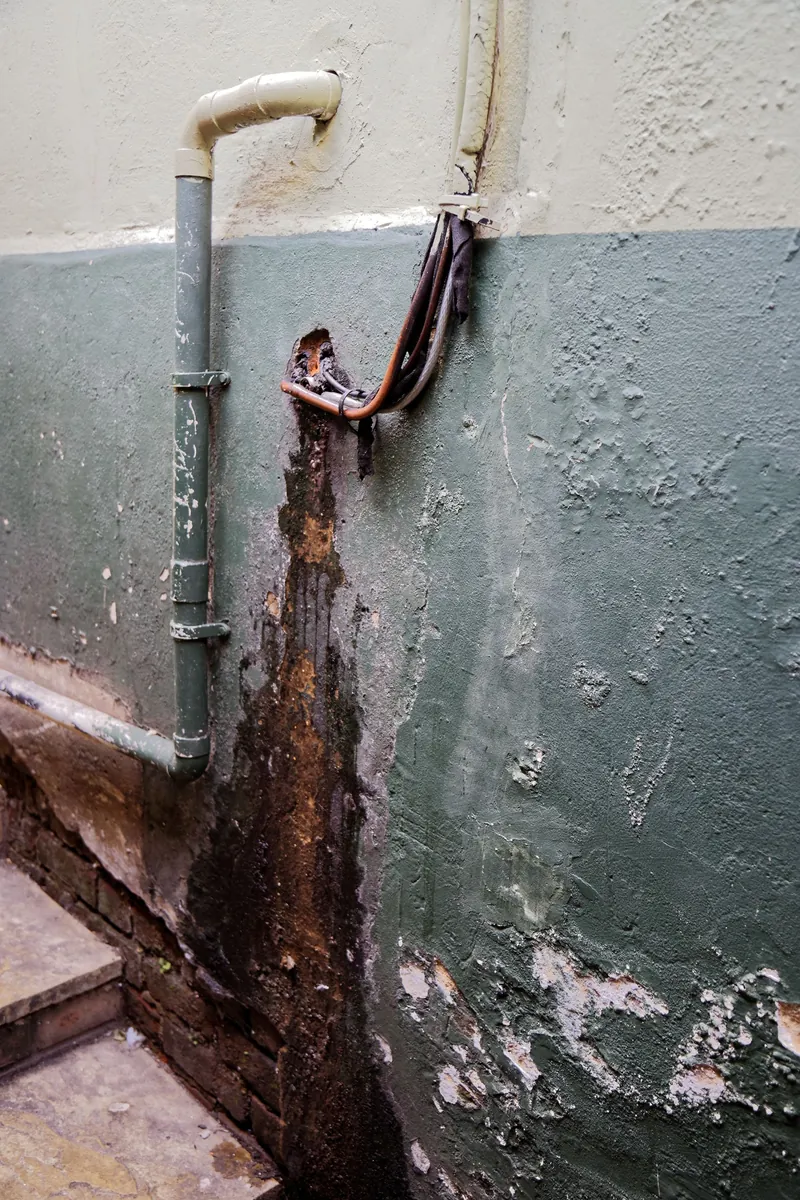

On a slab foundation, inspect the garage floor, the water heater closet and any warm patches underfoot. With a crawl space, ask to see inside through the access hatch. The signs of water damage guide offers a longer checklist, and slab leaks covers the hidden type.
What will a home inspector catch, and what slips past?
Standard inspections rely on sight. Inspectors note what they can see and reach that day, including stains, active leaks and conditions that might lead to water problems. Cutting into walls or pulling up flooring typically falls outside the job, so read what your inspector's agreement includes.
So water that has since dried, or that hides behind finished surfaces, may never be seen. A clean moisture section does not prove water never entered the house.
Look through the report for phrases like staining noted, evidence of past moisture or further evaluation recommended. If it flags more work, follow up before your contract deadlines pass. Consider whether this property calls for a separate moisture survey, a sewer line camera check or a roof inspection.
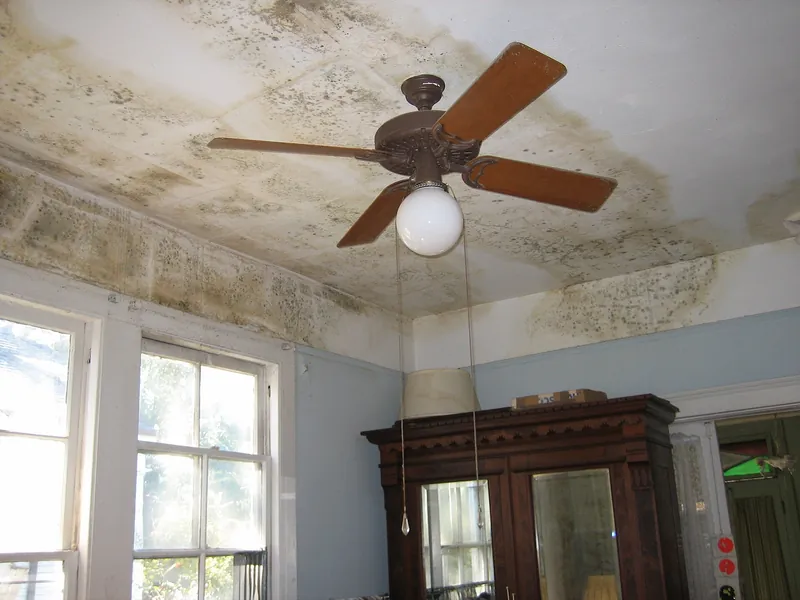

The EPA says a moldy patch under roughly 10 square feet can usually be handled by you. A larger area, or any hint of sewage, calls for a professional. California does not license mold remediators, per the California Department of Public Health, so vet experience carefully, as the mold guide describes.
Do I need insurance quotes before the sale closes?
Yes, and get them while your contingency period is still open so you can walk away. Standard homeowners coverage excludes flood, and the California FAIR Plan, the insurer of last resort, leaves water damage off its basic policy. What you learn may change your offer.
- Have your agent look up the address's flood zone and any claims history visible to them.
- Get both a homeowners quote and a flood quote. A flood policy, says the California Department of Insurance, starts 30 days after purchase, with exceptions tied to some federally regulated lenders.
- Ask whether sewer backup cover is sold as an endorsement, because typical policies omit it, Triple-I notes.
- When the FAIR Plan is your only choice, inquire about a Difference in Conditions policy. A CDI fact sheet lists water damage among the perils those policies add.
- Request any claim records the seller is willing to hand over.
Claims in a home's past are common. The Insurance Information Institute reports that roughly one in 60 insured homes sees a water damage or freezing claim yearly, at an average of $15,400 across 2019 to 2023. The FAIR Plan topic adds detail.
What are my options if the seller hid earlier water damage?
Collect evidence first: photos, the inspection report, repair invoices, the disclosure forms and every message from the seller or agent. What you can do depends on the contract, the forms and California law, none of which this page can interpret. A California real estate attorney can review your specific case.
Hold off on repairs that would destroy evidence until the damage is photographed. When an insurance claim is in play, phone the insurer before any permanent work.
The California Department of Insurance advises homeowners to find leaks and stop them at the source, and warns that slow cleanup can lead to mold. A hotline, 1-800-927-4357, is listed for trouble opening a claim.
What steps should I take if water damage shows up after I move in?
Stop the water at its source, document what you see and phone your insurer before any major repair. Plenty of buyers discover soft spots only after the furniture moves. The EPA says wet materials should dry within 24 to 48 hours to head off mold, so move fast.
- Close the valve serving the affected fixture, or the main if you cannot tell which. The prevention guide shows where shutoffs are found.
- Take dated photos and video of it all before cleaning anything.
- Notify your insurer. Triple-I recommends shielding the home from further harm and postponing major permanent work until the adjuster has looked.
- Dig out the inspection report and disclosure forms and see what they recorded.
- Arrange drying through a restoration provider, and save every receipt.
Under the IICRC S500 standard, floodwater from outdoors is Category 3 and grossly contaminated, so read flood damage restoration before attempting any of it yourself. Restoration teams differ, so confirm directly what each one does.
Must a California water heater be strapped when I buy the house?
Yes. State law says residential water heaters must be braced, anchored or strapped against earthquake motion, and a seller whose property has one must certify in writing to the buyer that this is done. The certification may sit in the sales contract or the transfer disclosure statement.
The rule comes from Health and Safety Code section 19211. Look at the heater yourself during the walk-through, because an unbraced tank may topple in an earthquake and rip its pipes free. Water heater leaks lists warning signs.
Restoration teams differ, so confirm scope, price and timing directly with the team you reach before you agree.
Sources: IICRC S500; EPA mold and moisture guide; Triple-I, Settling claims; Triple-I, Which disasters are covered; Triple-I, Facts and Statistics; CDPH, FAQ about Mold; CDI, Residential Insurance Policies and the FAIR Plan; CDI, Residential Property Claims Guide; California Department of Insurance, Flood Insurance Resources; Health and Safety Code 19211, Seismic Safety Commission; Civil Code 1103; California Civil Code 1102.6
Water Damage Cleanup California is the local water damage restoration line and information resource for California. When you call or send a request, it reaches a local water damage restoration team that serves your area. That team confirms whether it can reach you and gives its own scope, price and timing. Confirm them directly before you agree to anything.