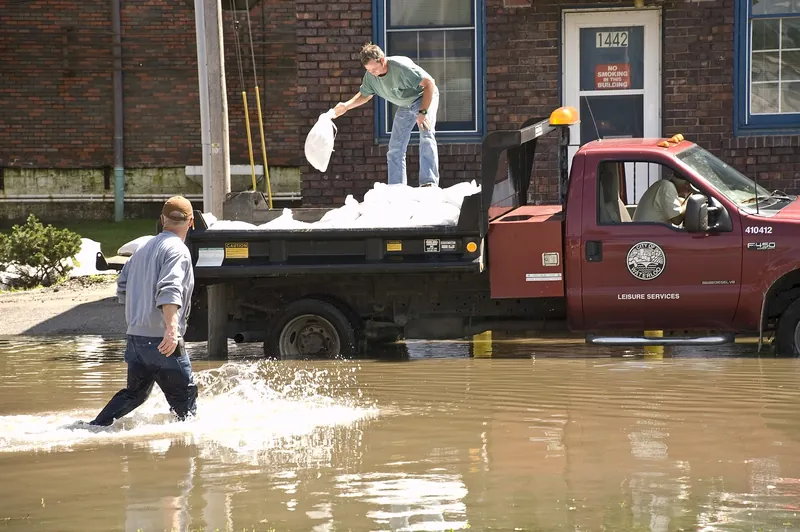
For Central Coast homeowners
For water damage restoration in Santa Barbara and San Luis Obispo counties, stop the water, photograph the rooms and begin drying in the first 24 to 48 hours. Runoff and flood are typically not covered by standard homeowners policies. We take requests from Carpinteria to Paso Robles.
On this page (7)
- Which Central Coast cities and ZIP codes do you take requests from?
- What happened in Montecito in January 2018?
- Why does Santa Barbara get such sharp swings in rain?
- How do creeks and rivers matter in San Luis Obispo County?
- Do old downtowns and earthquake history change water damage risk?
- Is mud or runoff in a house covered by insurance?
- What should coastal homeowners do in the first 24 to 48 hours?
Which Central Coast cities and ZIP codes do you take requests from?
This page covers Santa Barbara County and San Luis Obispo County. In the south that means Santa Barbara, Goleta, Carpinteria and Montecito; in the north, Santa Maria, Lompoc and Solvang; up the coast, San Luis Obispo, Paso Robles, Atascadero and Grover Beach. A restoration team confirms whether your address is in range.
Check codes with the ZIP finder for Santa Barbara County and San Luis Obispo County. Wikipedia counts 448,229 residents in Santa Barbara County and 282,424 in San Luis Obispo County in the 2020 census.
To the south is Ventura County. Farther north are the Santa Clara County and the Fresno County.
What happened in Montecito in January 2018?
A burned mountainside gave way in a downpour. Wikipedia says the Thomas Fire stripped the Santa Ynez Mountains in December 2017. On January 9, 2018, about half an inch of rain fell in five minutes around 3:30 a.m., and debris flows as high as 15 feet came down into Montecito.
The same article lists 23 confirmed deaths and more than 100 homes destroyed, with about 300 more damaged. A 30-mile stretch of US 101 between Santa Barbara and Ventura was closed, and it fully reopened on January 21 after Caltrans crews cleared 12 feet of mud from the road.
Power, gas, water and sewage services were disrupted, according to Wikipedia. That is why mud events are about more than wet drywall. Read our mudslide page before you start cleanup.
Why does Santa Barbara get such sharp swings in rain?
The city sits on a narrow shelf between steep mountains and the sea. Wikipedia says downtown occupies a floodplain, and that storms pushing moist air over the Santa Ynez Mountains can produce more rain than other coastal spots. Yearly totals swing widely.
The article notes over 40 inches of rain in exceptional years such as 1940 to 1941 and 1997 to 1998, and less than 6 inches in dry seasons. Summers are mostly rainless.
After a long dry spell, roofs and gutters may fail on the first big storm. See roof leak storm damage and atmospheric river damage.
How do creeks and rivers matter in San Luis Obispo County?
Water here moves along a handful of named channels. Wikipedia says San Luis Obispo Creek passes through the county seat before it reaches the Pacific beside Avila Beach. The Salinas River drains the Paso Robles area, and the Santa Maria River watershed reaches into both counties.
| Area | Water feature Wikipedia names | What to ask about |
|---|---|---|
| San Luis Obispo | San Luis Obispo Creek | Whether your lot sits near the creek |
| Paso Robles area | Salinas River | Runoff after hard winter storms |
| Santa Maria and Cuyama | Santa Maria River, Cuyama and Sisquoc rivers | Valley flooding versus roof leaks |
| Santa Barbara downtown | Floodplain below the Santa Ynez Mountains | Flood zone and flood cover |
Wikipedia describes the county climate as Mediterranean, with most rain in the cooler months, a damp northern coast and a hot, dry interior.
Do old downtowns and earthquake history change water damage risk?
They can, because shaking breaks pipes and fittings. Wikipedia records a magnitude 6.3 earthquake on June 29, 1925, that damaged much of downtown Santa Barbara, killed 13 people and collapsed the Sheffield Dam. The rebuilt downtown leans toward Mediterranean Revival and Spanish Colonial Revival design.
Nothing in that history says your plumbing is at risk. It does suggest a habit: after any strong quake, look for wet spots near the water heater, under sinks and along exterior walls.
A tank in a garage should be strapped, which a plumber can explain. See water heater leaks and appliance leaks for the usual signs.
Is mud or runoff in a house covered by insurance?
Often not, though your policy decides. The NAIC says damage from ground water and rain runoff is not typically covered, while plumbing and roof leaks usually are. Triple-I says flood is excluded from standard homeowners policies, with cover bought separately.
FEMA says most homeowners insurance does not cover flood losses. How an insurer classifies a debris flow is a question to put to your agent in writing.
Keep receipts, since Triple-I advises saving them for reimbursement, and hold off on major permanent repairs until the adjuster has looked. Our claim guide and FAIR Plan page cover more.
What should coastal homeowners do in the first 24 to 48 hours?
Make the house safe, then dry it, in that order. The EPA advises drying water-damaged areas and items within 24 to 48 hours to prevent mold growth. Humidity should stay below 60 percent, ideally between 30 and 50. A fast start matters most when mud or damp insulation is involved.
- Shut off the water at the main valve. If sewage or mud is involved, keep children and pets out.
- Take photos and short videos of the rooms before you clear anything.
- Ring your insurer and note the claim number and the date of the call.
- Ask a restoration team how they will track drying and what they will test before saying the job is done.
- Skip flooded roads. Ready.gov says a foot of moving water can sweep a vehicle away.
Our emergency page goes further. If sewage came in, read sewage backup cleanup. Restoration teams differ on service areas, so confirm yours.
Sources: Santa Barbara, Santa Barbara County, San Luis Obispo County and 2018 Southern California mudflows (Wikipedia); NAIC, homeowners insurance; Triple-I, disasters covered by homeowners insurance; Triple-I, settling claims after a disaster; FEMA, flood insurance; EPA, mold and moisture; Ready.gov, floods.
Coverage
Cities and communities in Santa Barbara and SLO
Requests come from 34 cities and communities here, covering 76 ZIP codes. Pick a name to see its ZIP codes in the checker.
- Arroyo Grande
- Atascadero
- Avila Beach
- Buellton
- Cambria
- Carpinteria
- Casmalia
- Cayucos
- Creston
- Goleta
- Grover Beach
- Guadalupe
- Harmony
- Lompoc
- Los Alamos
- Los Olivos
- Los Osos
- Morro Bay
- New Cuyama
- Nipomo
- Oceano
- Paso Robles
- Pismo Beach
- San Luis Obispo
- San Miguel
- San Simeon
- Santa Barbara
- Santa Margarita
- Santa Maria
- Santa Ynez
- Shandon
- Solvang
- Summerland
- Templeton
Water Damage Cleanup California is the local water damage restoration line and information resource for California. When you call or send a request, it reaches a local water damage restoration team that serves your area. That team confirms whether it can reach you and gives its own scope, price and timing. Confirm them directly before you agree to anything.