The short version
Preventing water damage in California starts with knowing and testing your main shutoff. Clear gutters before the first rain, strap the water heater, inspect hoses and supply lines each season, and review flood, earthquake and sewer coverage early. If water still gets in, close the valve and begin drying quickly.
On this page (11)
- How do I prevent water damage in my California home?
- How do I find and test my main water shutoff?
- How do I get the house ready before the first big storm?
- Should I strap my water heater against earthquakes?
- What should I do about my pipes after an earthquake?
- Which parts of my plumbing and appliances need a seasonal check?
- How do I protect pipes in a mountain or inland freeze?
- How do I keep sewage from backing up during a storm?
- Do leak sensors and automatic shutoff valves help?
- Which insurance gaps should I fix before storm season?
- What should I do if a leak gets through anyway?
How do I prevent water damage in my California home?
Learn where your shutoff valve is, then work through the parts that fail most often: gutters and roof before the first storm, the water heater, hoses and supply lines, and sewer drains. California adds earthquakes and sudden atmospheric river storms, so the routine below covers both.
Most damage starts small. According to Triple-I, roughly one in 60 insured homes files a property damage claim for water damage or freezing each year.
Upkeep also protects a future claim. Triple-I notes that policies will not pay for damage that comes from neglect, since the owner is the one who keeps the house in repair.
How do I find and test my main water shutoff?
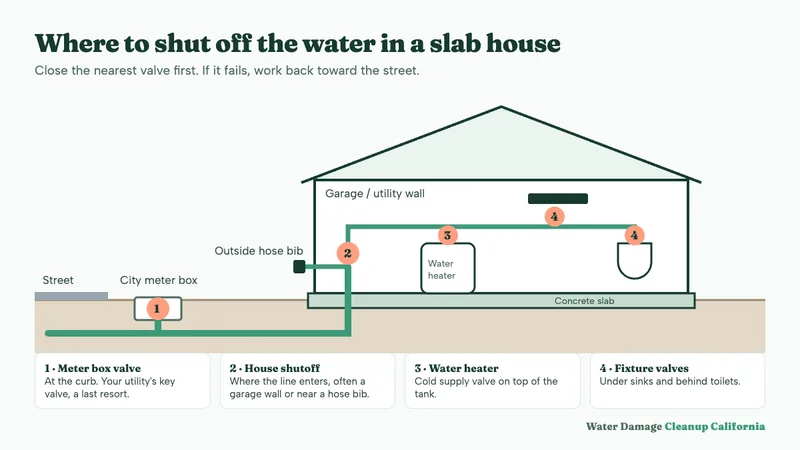
Look where the supply pipe enters the house: an outside wall, a garage, a utility closet, or beside the water heater. Find it during a calm afternoon, not while water spreads across the floor. In a slab home there is no lower level, so check exterior walls first.
- Clear the path to the valve so you can reach it quickly.
- Close it fully. A lever is shut when it sits crosswise to the pipe; a round handle closes clockwise.
- Open a faucet to confirm the flow stops.
- Reopen slowly and look for drips at the stem.
- Label it so everyone in the house can find it.
A stiff valve that will not seal, or one that weeps at the handle, deserves a plumber before you rely on it. The valve at the street meter box belongs to the utility.
How do I get the house ready before the first big storm?
Clear the gutters and downspouts, check the roof for loose or cracked pieces, and make sure water drains away from the foundation. Do it before the first heavy rain, because gaps that stayed dry all summer are the ones that leak in a storm.
The timing matters here. NOAA says that about 30 to 50 percent of annual precipitation in the west coast states arrives in just a few atmospheric river events, so a few storms carry much of the year's rain.
- Scoop leaves from gutters and confirm downspouts discharge away from the house.
- Look at flashing around vents, skylights and chimneys. The roof leak page explains what a leak looks like.
- Check that the ground slopes away from the walls.
- Photograph each room and the exterior while everything is dry, so you have a before record.
- If you live below a recently burned slope, read about mudslide water damage early.
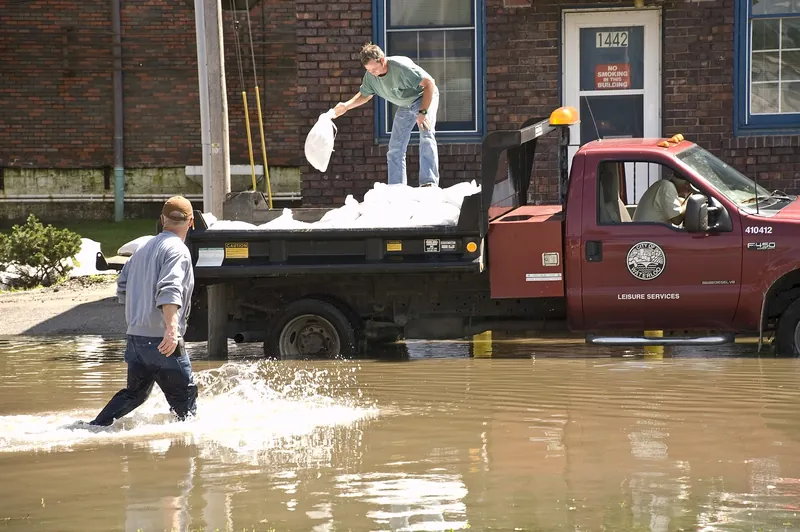

Stay out of moving water while you prepare: Ready.gov warns that just six inches of it can knock a person down. The after-storm checklist covers what to do once the rain stops.
Should I strap my water heater against earthquakes?
Yes, California law requires it. Health and Safety Code section 19211 says all new and replacement water heaters, and all existing residential water heaters, must be braced, anchored or strapped to resist falling or sliding in an earthquake, since a toppled tank can snap its own pipes.
The same section covers standard heaters of up to 120 gallons, according to the Seismic Safety Commission's copy of the statute. Sellers must also certify in writing to the buyer that the heater has been secured.
The Division of the State Architect publishes bracing guidelines that say a minimum of two sets of straps are required. The guide illustrates 30 to 75 gallon tanks and dates from 2004, so ask a plumber to confirm current code before you buy a kit.
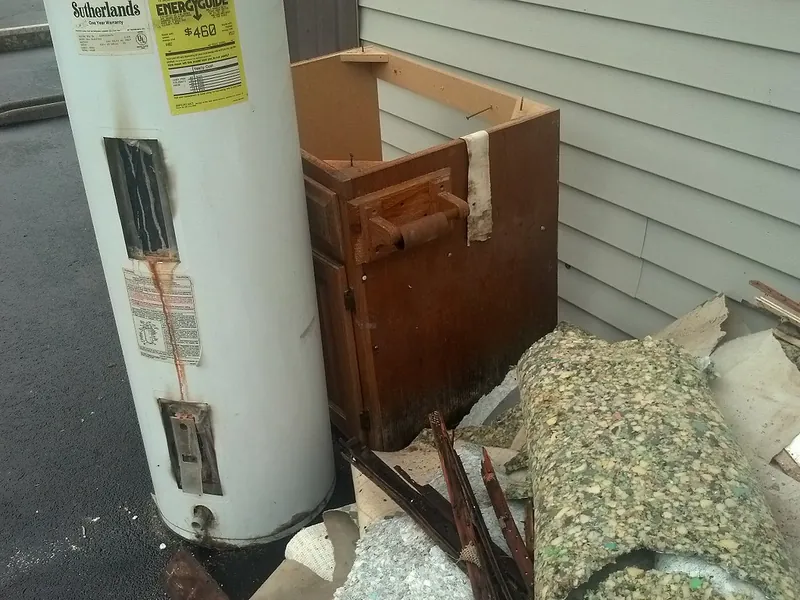
The California Department of Insurance lists bracing the water heater to a wall among retrofits that can lower earthquake insurance premiums. Ask your insurer what applies to you. The water heater leak page covers cleanup after a failure.
What should I do about my pipes after an earthquake?
After strong shaking, check for broken pipes and close the main valve if you find water where it should not be. Then look at the water heater, supply lines and ceiling below any upstairs bathroom. Recheck in the days after, in case a slow leak started.
The CDI says homeowners policies do not cover earthquake damage, except fire. A California Earthquake Authority sample policy says its water exclusion does not apply to loss from a water heater or supply pipes within the dwelling when an earthquake caused the release. A sample is not your policy, so read yours.
- Close the main valve and photograph the break before touching it.
- Leave gas and electrical equipment alone if you smell gas or see wet wiring.
- Ask a plumber about the whole system, not only the visible pipe.
Which parts of my plumbing and appliances need a seasonal check?
Every season, look over the water heater, washer hoses, dishwasher and fridge lines, toilet supply lines and the shower pan. They fail from age and wear, not weather. If you see a bulge, a rust trail or a damp spot, call a plumber before it becomes a ceiling stain.
| Part | Warning sign | Simple habit | Call a plumber if |
|---|---|---|---|
| Water heater | Rust at the base, drips at fittings | Look at the floor and connections | The tank weeps or the strapping is loose |
| Washer hoses | Bulges, rust at the ends | Close the valves when you travel | A fitting drips |
| Dishwasher and fridge lines | Damp floor behind the unit | Slide it out gently and look | The line is kinked or wet |
| Toilet and sink supplies | Drips, crust on fittings | Wipe dry, see if it returns | A valve will not turn |
| Shower pan and tub seal | Cracked grout, a soft floor | Reseal small gaps | The ceiling below stains |
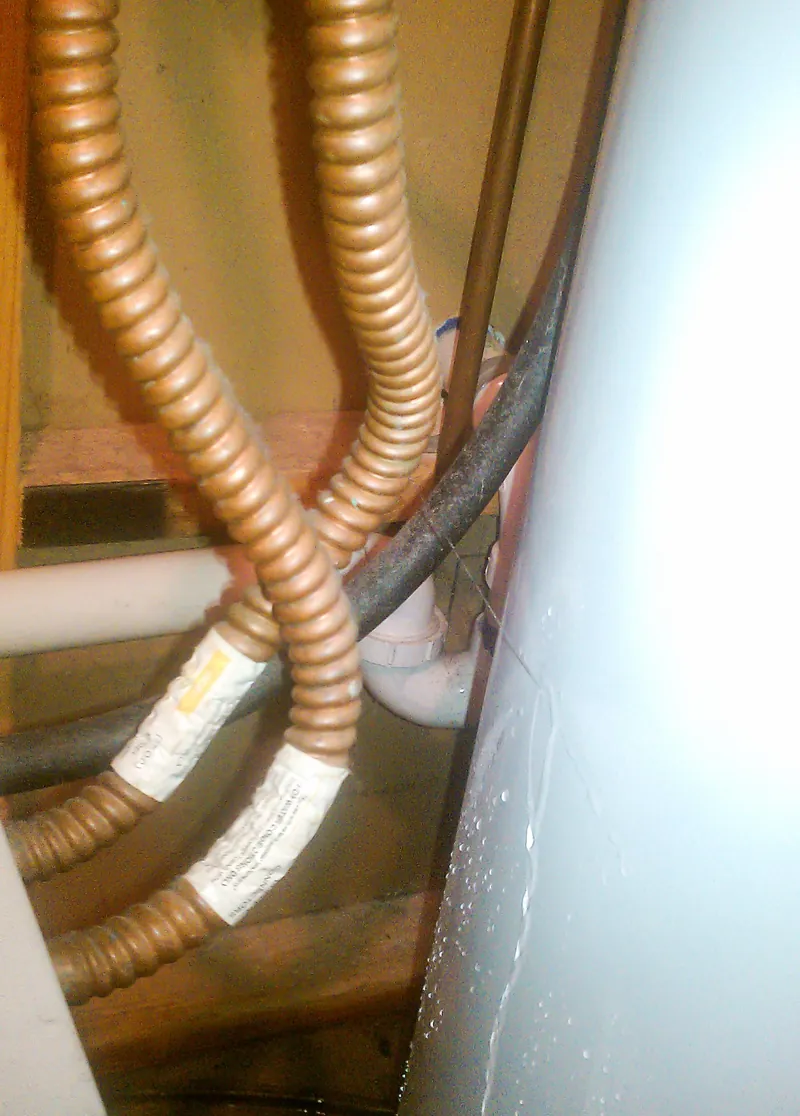

If your house has older copper or galvanized pipes, ask a plumber how to inspect them. The appliance leak page covers cleanup when a hose lets go.
How do I protect pipes in a mountain or inland freeze?
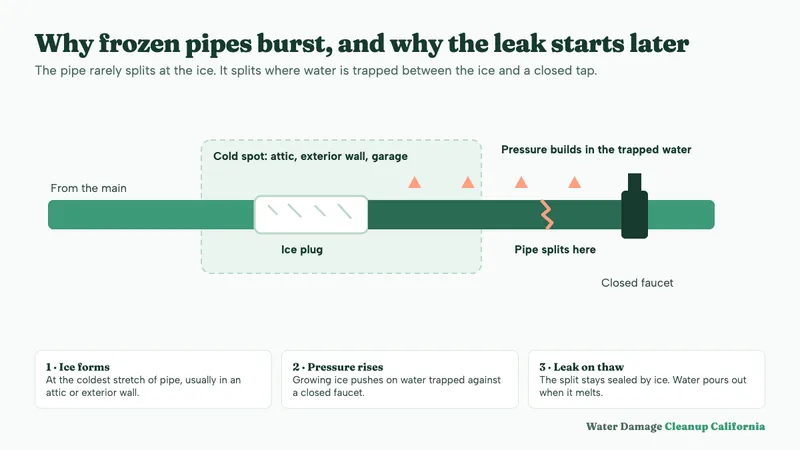
Cover the pipes most at risk. The American Red Cross lists supply pipes in unheated areas such as crawl spaces, attics, garages and kitchen cabinets. If your plumbing runs through any of those in a cold place, a hard freeze can reach it.
- Disconnect garden hoses and cover outdoor spigots.
- Insulate exposed lines in the crawl space, attic and garage.
- Open cabinet doors on exterior walls so house heat reaches the pipes.
- Let cold water drip from a faucet served by an exposed pipe, as the Red Cross advises.
- Keep the thermostat at one setting day and night.
For a house that will sit empty, the Red Cross advises keeping the thermostat at 55 F or above. The burst pipe guide covers a pipe that has already split.
How do I keep sewage from backing up during a storm?
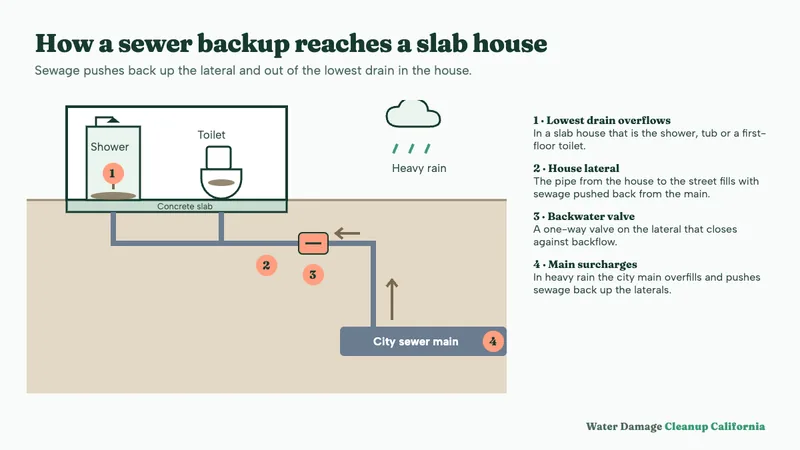
Ask a plumber about a backwater valve and keep grease and wipes out of your drains. When a storm overloads the sewer main, pressure can push sewage out of the lowest drain in a house. A valve on the home's sewer line is designed to stop that.
Sewage is Category 3 water. IICRC's S500 standard classes it with rising flood water as grossly contaminated, and the EPA says to call in a professional experienced with contaminated water damage.
Coverage is a separate matter. Triple-I states that a typical homeowners policy does not cover sewer backups, and neither does flood insurance, though an endorsement can add it. See the sewage backup page for cleanup.
Do leak sensors and automatic shutoff valves help?
A leak sensor sounds an alarm, and an automatic shutoff valve closes the line. Both are general tools, and neither replaces a quick look at your hoses and heater. A sensor only helps if someone hears it, so it suits a house where someone is usually home.
- Put sensors where water appears first: under sinks, behind toilets, beside the washer and the water heater.
- For a second home or long trips, ask a plumber about a valve that shuts the main on its own.
- Keep batteries fresh and test the alarm when you change the clocks.
The second home leak monitoring guide goes deeper on empty houses. Dry air indoors also helps. The EPA recommends holding indoor humidity under 60 percent, with 30 to 50 percent as the ideal range.
Which insurance gaps should I fix before storm season?
Check your policy for flood, earthquake and sewer backup, since a standard homeowners policy leaves out the first two. The California Department of Insurance says homeowners policies do not cover flood damage, though they do cover other kinds of water damage.
| Event | Standard homeowners policy | What to ask your agent |
|---|---|---|
| Flood | Excluded | Separate flood policy, and when it starts |
| Earthquake | Excluded, except fire | Earthquake policy and deductible |
| Sewer backup | Typically not covered | An endorsement |
| Mudslide or debris flow | Typically excluded unless a recent wildfire caused it | How a wildfire connection is treated |
The CDI says a flood policy takes effect 30 days after purchase, with an exception for some federally backed mortgages in high-risk areas, so buy before the rain. On mudslides, a CDI press release says policies typically exclude them unless a recent wildfire or another covered peril caused them.
See the FAIR Plan page if your coverage comes through it, and the insurance claim guide for the claim process.
What should I do if a leak gets through anyway?
Shut off the water, keep people out of wet areas, and start the paperwork. Close the nearest valve, take photos, then call your insurer and a plumber. The EPA says to dry water-damaged areas and items in the first 24 to 48 hours to prevent mold.
- Close the valve that feeds the leak, or the main.
- Photograph and film the damage before moving things.
- Call your insurer. Triple-I says to protect the property from more damage, hold off on major permanent repairs until the adjuster visits, and keep receipts.
- Call a plumber for the source and a restoration provider for drying.
Restoration teams differ in what they handle and when they can arrive, so confirm directly. The emergency restoration page explains what a first visit involves. To reach a restoration team in your area, use the contact page.
Sources: NOAA Research, Atmospheric Rivers; Ready.gov, Floods; American Red Cross, Frozen Pipes; Triple-I, Facts and Statistics; California Seismic Safety Commission, Health and Safety Code 19210-19217; Division of the State Architect, Guidelines for Earthquake Bracing of Residential Water Heaters; California Department of Insurance, Earthquake Insurance; California Earthquake Authority, sample Homeowners Choice policy; Triple-I, Which disasters are covered by homeowners insurance; IICRC, S500 standard; EPA, A Brief Guide to Mold, Moisture and Your Home; Triple-I, Settling insurance claims after a disaster; EPA, Mold Cleanup in Your Home; California Department of Insurance, Residential Property Claims Guide; California Department of Insurance, Flood Insurance Resources; California Department of Insurance, press release February 4, 2025
Water Damage Cleanup California is the local water damage restoration line and information resource for California. When you call or send a request, it reaches a local water damage restoration team that serves your area. That team confirms whether it can reach you and gives its own scope, price and timing. Confirm them directly before you agree to anything.