The short version
Drying a wet California building means air movers, dehumidifiers and meter readings working together to pull water out of framing, floors and walls. The EPA advises starting in the first 24 to 48 hours and holding indoor humidity under 60 percent. Readings end the job, so request the dry log.
On this page (10)
- How does structural drying work in a California home?
- Which machines are used to dry a wet house?
- How long does structural drying take?
- Does coastal fog or inland heat change how drying works?
- How do you dry a slab, a crawl space floor or a wet subfloor?
- How do I know structural drying is finished?
- What comes first before drying can start?
- What is it like to live in a house while it is being dried?
- Will insurance pay for structural drying?
- How can I tell drying ended too soon?
How does structural drying work in a California home?
Structural drying means pulling water back out of a building's framing, floors and walls after a leak or flood. Machines move air across wet surfaces and draw vapor from the room while a meter tracks progress. Structural drying in California uses the same physics as anywhere, though local homes and weather change the details.
Drying is one stage of water mitigation. It follows extraction, which is covered on the water removal page, because standing water leaves faster with a pump or vacuum than by evaporation. Drying targets moisture that has already soaked into wallboard, studs, the subfloor, cabinets and floor coverings.
A note on who does what: each restoration team sets its own equipment, method and scope, so ask directly what will happen at your address.
Which machines are used to dry a wet house?
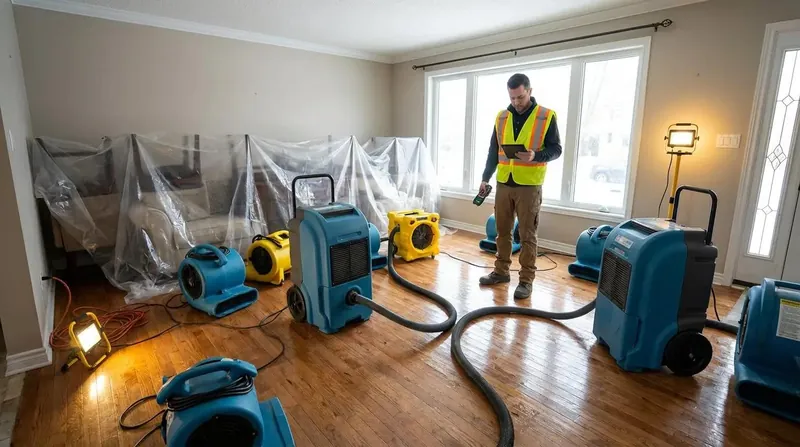
Most jobs rely on air movers, dehumidifiers and a moisture meter working as one system. Air movers lift water out of materials, dehumidifiers take it out of the air, and the meter shows whether anything changed. A provider chooses the units and counts, so ask what goes in each room and why.
| Tool | Its job | A fair question |
|---|---|---|
| Air mover | Sweeps air along walls and floors so surface water evaporates | Which surface is each one aimed at? |
| Dehumidifier | Captures the vapor the air movers release | Is the room closed so it can keep up? |
| Moisture meter | Gives a number for wood, drywall and subfloor at marked spots | Will I see the readings after each visit? |
| Thermal camera | Spots cool, wet patches behind finished surfaces | Is each patch confirmed with a meter? |
| Air scrubber | Filters dust when walls or ceilings have been opened | Does this job call for one? |
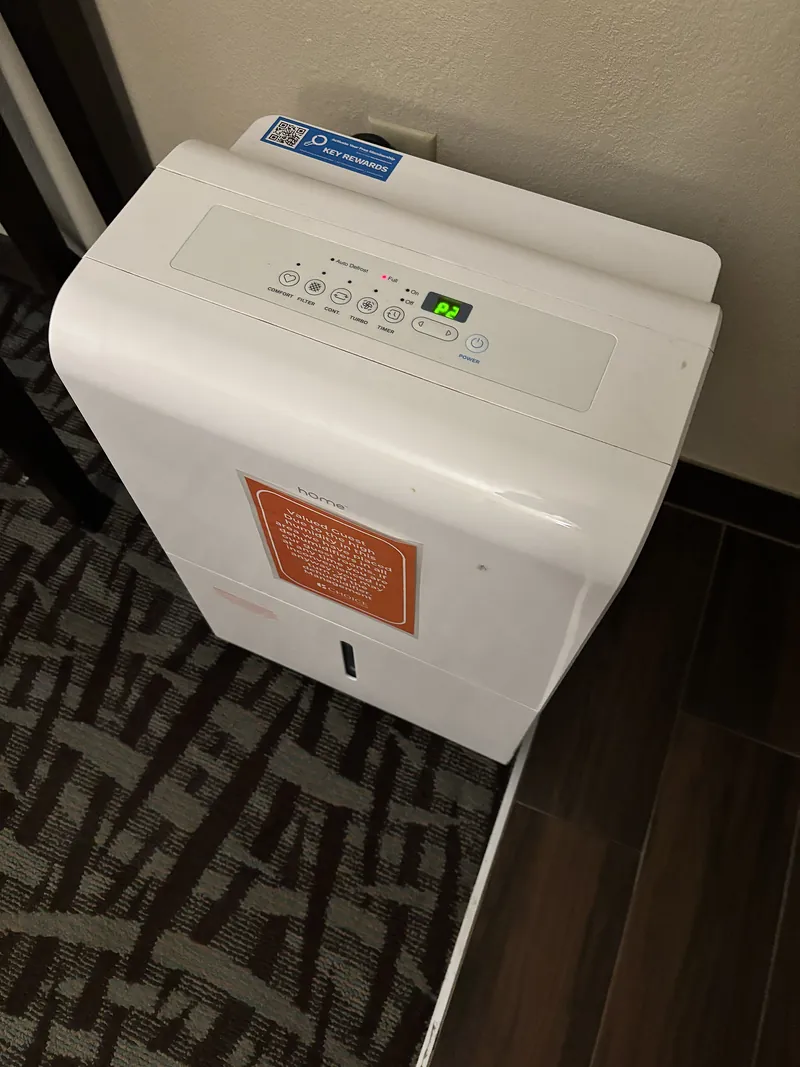
A box fan from a hardware store moves air but does not take water out of the building. Without a dehumidifier it can carry damp air into dry rooms. Words on a work authorization are defined in the water damage glossary.
How long does structural drying take?
Most jobs take several days, and moisture readings decide the end date, not a calendar. The EPA advises drying wet areas and items in the first 24 to 48 hours to head off mold, which is when drying should be underway. Dense materials keep giving up water long after the surface feels dry.
No honest provider can name a firm finish date before the first round of readings. Several factors move the timeline:
- How long materials stayed wet before anyone started drying them.
- The type of water. Clean supply-line water is dried. Sewage or flood water usually means affected porous materials are removed instead.
- The material. Carpet and drywall dry faster than hardwood, plaster or concrete.
- Hidden pockets. Wet insulation or a soaked bottom plate behind an intact wall slows the whole job.
- Obstructions. Cabinets, tile and built-ins trap water against the surface behind them.
The CDC gives the same 24 to 48 hour window for cleaning and drying a flooded home. Treat any promised number of days as an estimate until the dry log supports it.
Does coastal fog or inland heat change how drying works?
It can, because drying only works when the air can take on more water than it already holds. A closed, dehumidified room controls that regardless of the weather outside. Outdoor conditions mostly matter for how much the equipment has to fight and whether opening windows helps or hurts.
In damp, cool coastal air, a window opened to ventilate may bring in as much moisture as it lets out. In hot, dry inland air, the outdoors can feel like the drier choice, but a room closed up and run with a dehumidifier is still the usual setup. Restoration teams differ on this, so ask what they plan for your house and your thermostat.
This page quotes no local climate figures. The target is the same anywhere: the EPA advises keeping indoor humidity below 60 percent, and ideally between 30 and 50 percent. A reading in that range inside the drying room is a number you can check yourself with a cheap hygrometer.
How do you dry a slab, a crawl space floor or a wet subfloor?
Many Southern California and Central Valley homes sit on slabs, and many older homes have crawl spaces. A slab dries from the top and slowly, while a wood floor over a crawl space can lose water from above and below.
| If your home has | Where water goes | What drying usually involves |
|---|---|---|
| A concrete slab | Spreads across the floor and wicks into the bottom of walls | Lifting wet coverings so air reaches the concrete, then slab readings before new flooring |
| A crawl space | Soaks the subfloor and can drip into the space below | Drying the subfloor from above, and checking the crawl space for standing water and wet insulation |
| A second story | Runs down through ceilings and wall cavities | Opening the ceiling or wall below the leak so trapped water can be reached |
Different floor coverings behave differently as well:
- Carpet and pad: the pad is usually discarded, and carpet may be lifted and dried or replaced. Details on wet carpet drying.
- Hardwood and engineered wood: boards can swell and cup, and a few flatten once dry. More on water-damaged floor repair.
- Tile over a slab: the tile survives, but grout, thin-set and the concrete below can hold water.
If the water came from a pipe under the floor, the leak is a plumbing job first. Read slab leak water damage before drying anything, because a pipe that is still leaking keeps the concrete wet.

How do I know structural drying is finished?
Drying is finished when readings in each wet material match a dry reference, usually the same material in an unaffected part of your home. Judge the numbers, not the noise. A dated dry log with readings at marked points is the record worth keeping.
A useful log names the room, the material, the reading and the date for every visit. It should also list the equipment in place and the air conditions in the drying room. If the numbers stop falling, the provider should look for a hidden source, a wet cavity or a pocket of trapped water.
The guide to water categories and classes explains how the type of water changes the drying plan. Equipment days and monitoring visits also appear on the invoice, which is covered in the water damage restoration cost guide.
A room that feels dry or machines that have been hauled away are not proof. Find out which reading ended the job and request a copy of the log.
What comes first before drying can start?
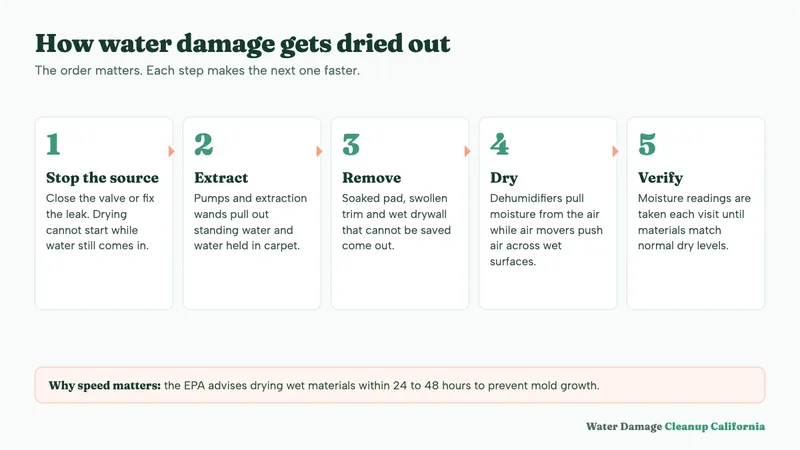
Stop the water, make the area safe and document the damage before anything else. Drying cannot begin until the source is controlled and electrical hazards are handled. These steps cost little, they support an insurance claim, and they make any provider's work easier.
- Stop the source. Close the main water shutoff for a plumbing leak. The California Department of Insurance tells homeowners to try to find and stop leaks at the source right away.
- Handle electrical risk. Where water reaches outlets, appliances or the panel, turn off power to that area only when the breaker is reachable and you are standing on dry ground. If not, call an electrician.
- Photograph and video the damage before anything is moved, as Triple-I advises for claims.
- Lift what you safely can: loose rugs, books, boxes and furniture legs off wet floors.
- Call your insurer or agent promptly and keep receipts for what you spend.
- Ask for a provider connection and raise equipment, readings and the dry log in that first call.
The emergency water damage page covers the first hour in more detail. Waiting to see if it dries by itself is the choice that most often leads to mold.
What is it like to live in a house while it is being dried?
Plan for noise, heat and extra electricity use for several days. Air movers and dehumidifiers run around the clock, and dehumidifiers add warmth to a closed room. Some households sleep elsewhere, especially when the drying area sits next to a bedroom.
- Noise: ask where units will be placed and whether any can sit away from bedrooms.
- Power: several machines can trip a breaker, so ask which circuits will carry them.
- Kids and animals: keep them clear of cords, moving air and opened wall cavities.
- Leave the machines alone. A unit that gets moved or unplugged can leave a wet area untouched.
If the water was contaminated, check whether the space is safe to occupy before you stay. The CDC warns that mold can trigger severe reactions in people with asthma or a mold allergy, and can lead to lung infections in people with weakened immune systems or chronic lung disease.
Will insurance pay for structural drying?
Often it does, if the cause is a covered source like a sudden plumbing failure. The California Department of Insurance says homeowners policies do not cover flood damage but do cover other kinds of water damage. Coverage is decided by your policy and adjuster, so a drying provider cannot promise it.
Triple-I advises policyholders to take reasonable steps to protect the property and to keep receipts for what they spend. Drying counts as a protective step, but permanent repairs should wait for the adjuster's assessment.
Under California claim rules, an insurer must acknowledge a claim in no more than fifteen calendar days after notice and accept or deny it in no more than forty calendar days after proof of claim (10 CCR 2695.5 and 2695.7). Rising water from a river or a street is a flood loss and needs a separate flood policy, per the same department. The water damage insurance claim guide has the full sequence.
How can I tell drying ended too soon?
Drying is unfinished if a musty smell returns, a spot stays damp or a moisture reading climbs again, even after the equipment has gone. The returning smell is the most common clue, and soft baseboards, bubbling paint and cupped floors are others.
- A sour or musty odor that returns, especially in humid weather.
- Baseboards, cabinet bases or drywall that feel cool, soft or damp to the touch.
- Flooring that buckles or lifts after being installed over a base that was not fully dry.
- Dark spots on walls or ceilings, which the mold after water damage guide addresses.
- Indoor humidity that stays above 60 percent, the ceiling the EPA gives.
Should any of these show up, have the provider take fresh readings before walls are closed. The EPA also says moldy surfaces should not be painted or caulked. Once the structure tests dry, the next stage is water damage repair.
Want to know who takes requests in your ZIP code? Check the service areas or send a request.
Sources: EPA, A Brief Guide to Mold, Moisture and Your Home; EPA, Mold Cleanup in Your Home; CDC, About Mold and Your Health; California Department of Insurance, Residential Property Claims Guide; 10 CCR 2695.5; 10 CCR 2695.7; Triple-I, Settling insurance claims after a disaster.
Water Damage Cleanup California is the local water damage restoration line and information resource for California. When you call or send a request, it reaches a local water damage restoration team that serves your area. That team confirms whether it can reach you and gives its own scope, price and timing. Confirm them directly before you agree to anything.