For Santa Cruz and San Benito homeowners
For water damage restoration in Santa Cruz County, stop the water, photograph the damage and start drying in the first 24 to 48 hours. River and creek water is Category 3, and flood is excluded from homeowners policies. A call reaches a local water damage restoration team.
On this page (8)
- Which Santa Cruz and San Benito County cities and ZIP codes do you take requests from?
- How does Santa Cruz County differ from the rest of the Bay Area?
- What happened in Santa Cruz County during the 2023 floods?
- Does the Pajaro River still matter for water damage in Watsonville and San Benito County?
- Can slopes, quakes and creeks cause water damage here?
- Will insurance pay for water damage in Santa Cruz County?
- What are the first steps after water gets into your home here?
- How does a call work in Santa Cruz County?
Which Santa Cruz and San Benito County cities and ZIP codes do you take requests from?
For water damage restoration in Santa Cruz County, a request can come from Santa Cruz, Watsonville, Scotts Valley, Capitola, Aptos and the San Lorenzo Valley towns, and from San Benito County, including Hollister and San Juan Bautista. Each restoration team sets its own service area, so confirm your street on the first call.
Look up a ZIP code with the Santa Cruz County ZIP finder or the San Benito County ZIP finder. Neighbors have their own pages: Santa Clara County, San Francisco and the Peninsula and Santa Barbara and San Luis Obispo.
Wikipedia reports 270,861 residents in Santa Cruz County in the 2020 census, and its San Benito County article reports 64,209, with Hollister as the seat.
How does Santa Cruz County differ from the rest of the Bay Area?
It is a narrow coastal county squeezed between the ocean and a mountain ridge. Wikipedia calls it a strip about 10 miles wide between the coast and the crest of the Santa Cruz Mountains. Water comes down steep creeks and meets flat, low ground near the shore.
The article splits the county into four regions: the rugged north coast, the urban area around Santa Cruz, Soquel, Capitola and Aptos, the mountainous Bonny Doon and San Lorenzo River Valley, and the fertile south county around Watsonville and Corralitos.
| Part of the county | What Wikipedia says | What to watch |
|---|---|---|
| Santa Cruz to Aptos | The urban coastal area | Creek crossings, older homes and street runoff |
| San Lorenzo Valley and Bonny Doon | Mountainous, along the San Lorenzo River | Slopes, a single access road and wet slopes above the house |
| Watsonville and Corralitos | The fertile south county | River levees and flat farmland |
| San Benito County | The San Benito River joins the Pajaro River | Creek and river flow in wet winters |
If your home sits on a raised foundation, look under it after storms, and see crawl space water damage.
What happened in Santa Cruz County during the 2023 floods?
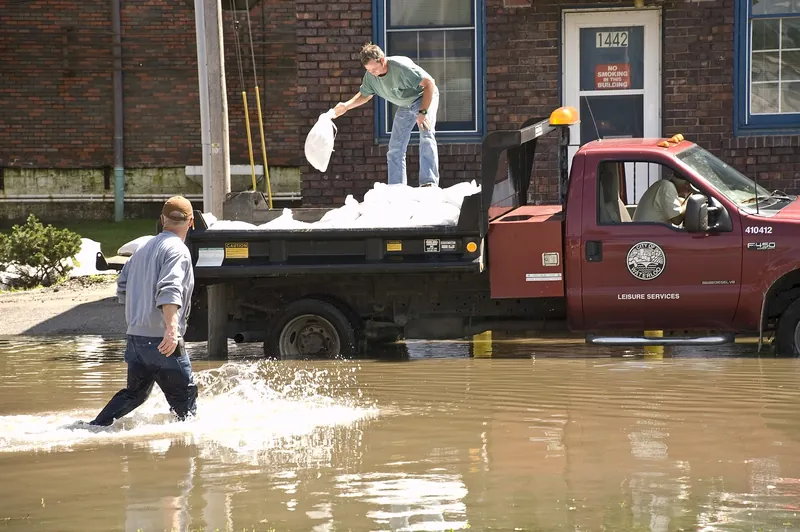
Storms in early 2023 flooded roads and neighborhoods across the county. A major disaster declaration covered Santa Cruz County on January 14, 2023, according to Wikipedia's account of the floods, and a later Pajaro River levee failure forced evacuations. It shows how fast a quiet creek can change.
The article on the 2022 to 2023 floods says the Pajaro River levee failed on March 10, forcing nearly 2,000 residents to evacuate. Another breach was found March 13. Experts said the levees were weakened by poor material selection, earthquakes and rodent activity.
In Soquel, about 450 people were stranded after a creek washed out the only road to their neighborhood on March 10, and a water main break cut off clean water. The article adds that flooding was worsened because the storms exceeded the soil's capacity to soak up water.
NOAA's satellite service also reported flooding and mudslides in the Santa Cruz Mountains. For the weather pattern, see atmospheric river water damage.
Does the Pajaro River still matter for water damage in Watsonville and San Benito County?
Yes, as a reason to check your address. The Pajaro River flows from northern San Benito County into Monterey Bay, per Wikipedia, and the San Benito River joins it near the county's northwest edge. Low ground along that corridor has flooded before.
FEMA publishes a flood map service, and the state's DWR runs MyFloodRisk. Use them to look up your address rather than guessing.
Flood water from a river is Category 3 under the IICRC S500 standard, which means restoration teams treat it as contaminated. Read storm and flood damage and flood damage restoration to see how that cleanup differs from a plumbing leak.
Can slopes, quakes and creeks cause water damage here?
Yes. Heavy rain on slopes can send runoff toward the lowest door, and quakes can break pipes. Wikipedia says the 1989 Loma Prieta earthquake destroyed Santa Cruz's central business district, and the 1857 Fort Tejon quake destroyed Mission Santa Cruz.
After heavy rain, check roof edges, garage thresholds and the ground beside the foundation. After a strong shake, look at the water heater and under sinks. A slope with burn scar or loose soil can send mud too, which is covered on post-wildfire flood damage.

Roof leaks are the most common storm entry point, see roof leak damage. If a cabin sits empty, see leak monitoring for second homes.
Will insurance pay for water damage in Santa Cruz County?
It depends on the source. The California Department of Insurance says homeowners policies do not cover flood damage but do cover other kinds of water damage, such as rain through a wind-made roof hole. Flood insurance is sold separately, and it takes effect 30 days after purchase, with limited exceptions.
Under 10 CCR 2695.5, an insurer must acknowledge a claim in no more than 15 calendar days. Under section 2695.7, it must accept or deny within 40 calendar days of proof of claim.
The CDI says it does not regulate the National Flood Insurance Program. Start with water damage insurance claims and California flood insurance before you call.
What are the first steps after water gets into your home here?
Stop the source, then dry. The EPA advises drying water-damaged areas and items in 24 to 48 hours to prevent mold. A restoration team can measure moisture and tell you which materials need to come out and which can be saved.
- Shut the main valve, or the fixture valve, to stop the leak.
- Cut power to wet rooms only if the panel is dry and reachable.
- Photograph and film everything before moving it.
- Call your insurer or agent and ask what proof it wants.
- Stay clear of moving outdoor water. Ready.gov says six inches of it can knock a person down.
See emergency water damage help for what a restoration team does first, and mold after water damage if growth has started.
How does a call work in Santa Cruz County?
This site is the local water damage restoration line and information resource for California. Your request reaches a local water damage restoration team that serves your location. You have no obligation to hire anyone, and the team confirms availability, scope and price directly with you.
Check any contractor's license on the Contractors State License Board lookup, and read how a call works before you decide.
Sources: Santa Cruz County, San Benito County and 2022 to 2023 California floods (Wikipedia); NOAA NESDIS, atmospheric rivers hit West Coast; IICRC S500; California Department of Insurance, residential property claims guide; CDI, flood insurance resources; 10 CCR 2695.5; 10 CCR 2695.7; EPA, mold and moisture; Ready.gov, floods.
Coverage
Cities and communities in Santa Cruz County
Requests come from 17 cities and communities here, covering 26 ZIP codes. Pick a name to see its ZIP codes in the checker.
Water Damage Cleanup California is the local water damage restoration line and information resource for California. When you call or send a request, it reaches a local water damage restoration team that serves your area. That team confirms whether it can reach you and gives its own scope, price and timing. Confirm them directly before you agree to anything.