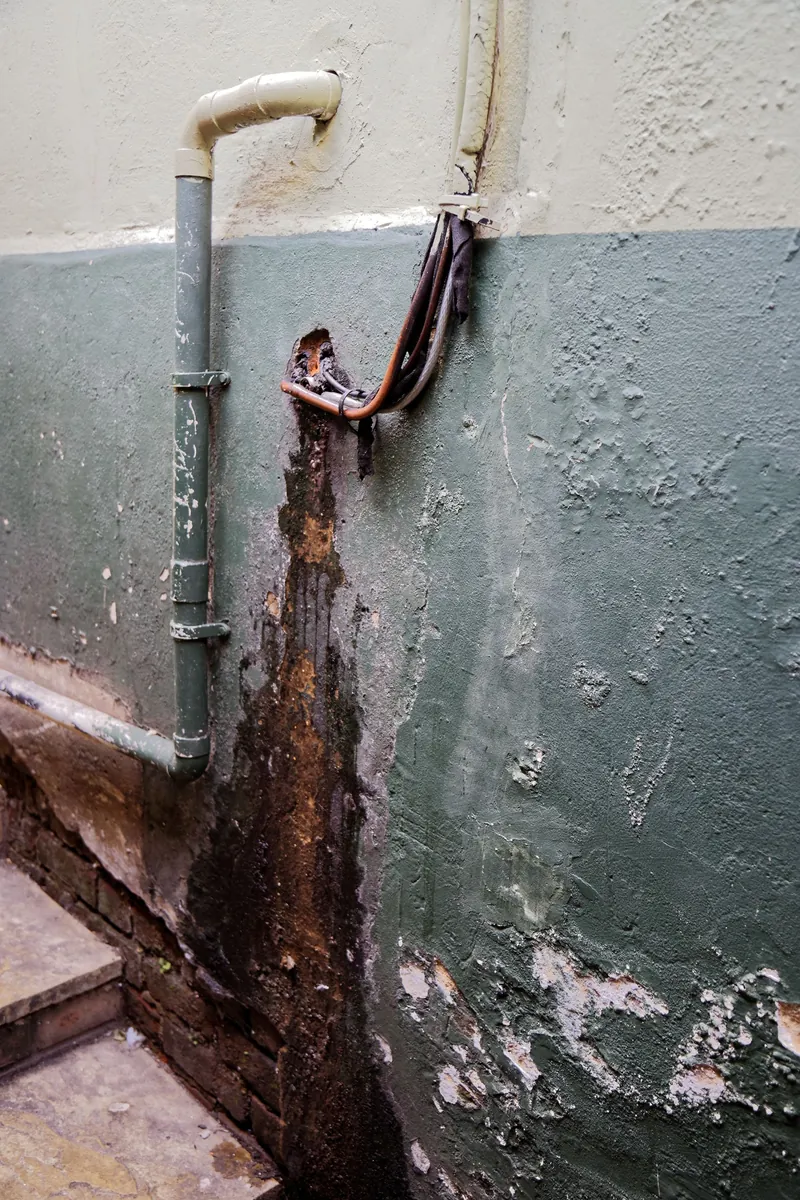
The short version
Think spreading stains, a musty smell, flaking paint, cupped floors and drywall that feels soft. A spot that keeps changing means the leak is active. Turn off the nearest valve, take photos, then phone a plumber for the source and a restoration provider for the wet materials.
On this page (13)
- How can I tell my California home has water damage?
- How do I spot hidden water damage before it spreads?
- Where in the house does each sign usually appear?
- How do I know if my slab is leaking?
- What are the signs of water trouble in a crawl space?
- Do pinhole leaks look different from a burst pipe?
- Do roof leaks show up after the first rain of the season?
- Is this water stain old or still active?
- How do I check for a leak with the water meter?
- When do the signs mean mold?
- How serious is it, and who do I call?
- What are the first steps once I spot a sign?
- Will insurance cover the water damage I found?
How can I tell my California home has water damage?
Common signs of water damage include stains that keep spreading, a musty smell, paint that bubbles or peels, floors that cup or lift, and drywall that feels soft. A single sign can have a harmless cause. Two or three together, or one that keeps changing, suggest moisture is still getting in.
- Color: brown, yellow or gray patches, often with a darker rim.
- Odor: a smell like damp cardboard or wet soil that is strongest in a closed-up room.
- Surface changes: blistered paint, curling wallpaper, rust on screws or metal trim.
- Movement: swollen baseboards, buckled planks, doors that begin to stick.
- Sound: dripping or a faint hiss while every fixture is off.
California adds a few of its own. Water can run quietly under a concrete slab, collect in a crawl space, or enter through a roof that sat dry all summer. The pages on a slab leak and a roof leak after a storm go deeper on those two.
How do I spot hidden water damage before it spreads?
Look for faint clues that sit away from the leak itself: a pale stain, a smell with no obvious source, a floor that gives a little underfoot, or a wall that feels cooler than the one beside it. The water is inside a cavity, under flooring or above a ceiling.
Speed matters here. Mold growth is what the EPA wants to avoid when it recommends drying wet areas and items in the first 24 to 48 hours, so a leak that drips for weeks gives mold a long head start.
Check the spots where plumbing concentrates: behind toilets, under sinks, around the water heater, in a closet that backs onto a bathroom, and in the attic near any equipment. Unfamiliar words you meet along the way are explained in the water damage glossary.
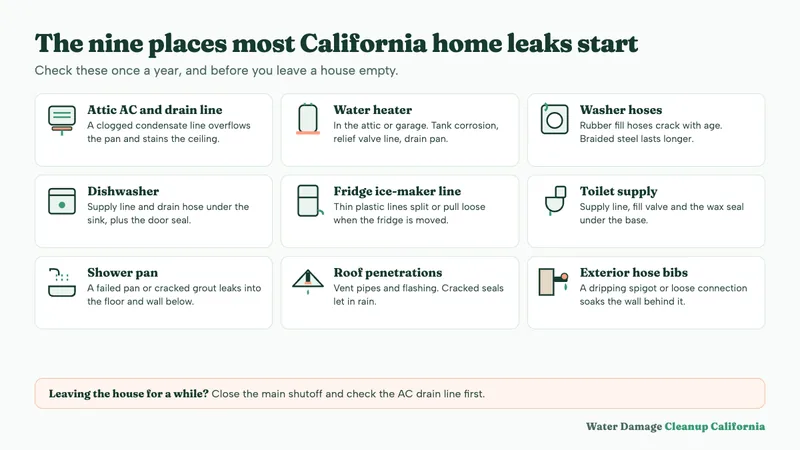
Where in the house does each sign usually appear?
Different rooms fail in different ways, so the location of a sign narrows the list of suspects. Use the table as a starting point, then have a plumber or a restoration provider confirm. Restoration teams differ in what a visit covers, so ask before you book.
| Room | What you notice | Likely source | Next step |
|---|---|---|---|
| Kitchen | Swollen cabinet floor, soft spot near the dishwasher, damp smell in the cupboard | Sink drain or supply, dishwasher hose, ice maker line | Clear out the cabinet, check for drips and call a plumber |
| Bathroom | Spongy floor by the toilet, cracked grout, a stain on the ceiling below | Toilet seal, shower pan, tub drain or supply line | Stop using the fixture and book a plumber |
| Laundry area | Damp floor, rust at a hose fitting, a stained wall | Washer hose or drain box | Close the washer valves, replace the hose |
| Ceiling | Brown ring, sag or a drip in a storm | Roof leak, attic pipe or air conditioner drain | See the ceiling page |
| Floors on a slab | Warm patch, lifting flooring, sound of running water | Supply line under the slab | Run the meter test below |
| Garage | Puddle near the tank, rusty base, wet drywall | Water heater, relief valve or fittings | Details are on the water heater page |
How do I know if my slab is leaking?
If your house sits on a concrete slab, a leaking supply pipe may show as a floor that feels warm, running water you can hear with everything off, a bill that rises for no reason, or flooring that turns damp from underneath. Not every slab home has this problem.
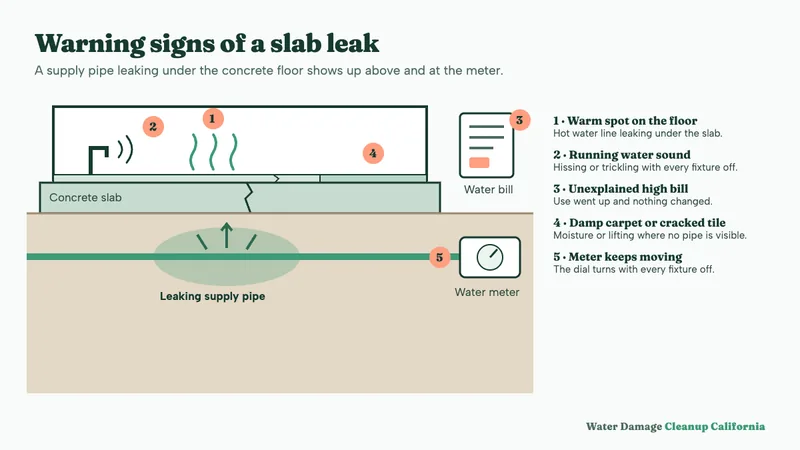
A plumber pins down the exact spot with listening gear or pressure tests. Hot water lines are the ones that warm a floor, so a patch that is warm only in one area is worth reporting. The slab leak guide covers what happens to wet flooring afterward.
What are the signs of water trouble in a crawl space?
If your home has a raised foundation, the crawl space is where trouble hides. Watch for a musty smell that rises through floor vents, floors that bounce or feel spongy, damp insulation hanging down, and wood that looks dark or soft. Look with a flashlight from the access hatch when it is safe.
The American Red Cross lists crawl spaces among the unheated areas where supply pipes are most at risk in cold weather, so a drip down there can also follow a freeze in mountain and high-desert towns.
- Pooled water or wet soil under a pipe run.
- Mud lines on foundation vents after a heavy storm.
- Sagging insulation that feels wet to the touch.
- Floor cupping above a bathroom or kitchen.
Skip crawling in when you smell sewage or see standing water near wiring. Call a plumber or a provider and let them go in with the right gear.
Do pinhole leaks look different from a burst pipe?
Yes. A pinhole leak is a slow, tiny spray, so it leaves small signs such as green or white crust on copper, a tiny wet spot on a wall, a faint hiss, or a bill that creeps upward. A burst pipe floods fast.
If your home has older copper or galvanized plumbing, ask a plumber how to check it. Pipe age and water chemistry vary from house to house.
When you suspect a small leak, shut off the water to the fixture and watch whether the sign stops growing. If a pipe has already split, the burst pipe page explains the shutoff steps.
Do roof leaks show up after the first rain of the season?
They can. After a long dry spell, worn sealant or loose flashing may only show itself when heavy rain arrives. Expect a ceiling ring that grows during or after rain, a drip at a light fixture, or wet insulation above; a stain that grows only in storms points to the roof, not the plumbing.
Long, wet storms test a roof harder than a passing shower. The atmospheric river page explains how these storms work.
After a storm, walk through the house with a flashlight and look at ceilings, window corners and the tops of walls. A fresh stain deserves a photo with the date.
Is this water stain old or still active?
Fresh damage feels damp, looks dark and keeps changing. Older damage is dry, steady and usually has a crisp edge. The difference matters: an active leak keeps spreading until someone repairs the source, while a dried stain needs a repair and a recheck.
| Check | Active leak | Old stain |
|---|---|---|
| Feel | Cool and damp, or soft | Dry and firm |
| Edge | Blurry, spreading border | Sharp ring, sometimes several |
| Over a week | Larger or darker | Unchanged |
| Smell | Fresh and wet | Stale or absent |
Trace the edge with a pencil and write the date next to it. Compare after the next rain and again after a few days of normal use. Rings inside rings show that water has come back more than once.
How do I check for a leak with the water meter?
Turn off everything that uses water, then watch the meter. If the dial or leak indicator still moves, water is escaping somewhere. Stop the ice maker, irrigation timer and any treatment equipment first, then take a photo of the reading and look again after a quiet stretch.
- Rule out slow users: a toilet flapper, a humidifier, a drip line on a timer.
- Close the house shutoff and read the meter once more. A meter that stops means the leak is inside the house; one that keeps running points to the pipe before it.
- Compare recent bills. A climb with no change in habits is a clue.
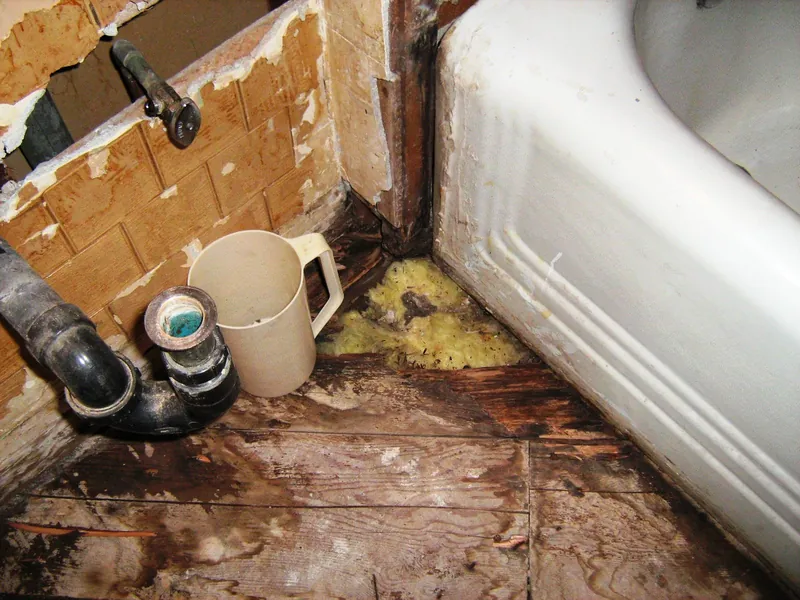

When the source stays hidden, a plumber can run a pressure check on the supply lines.
When do the signs mean mold?
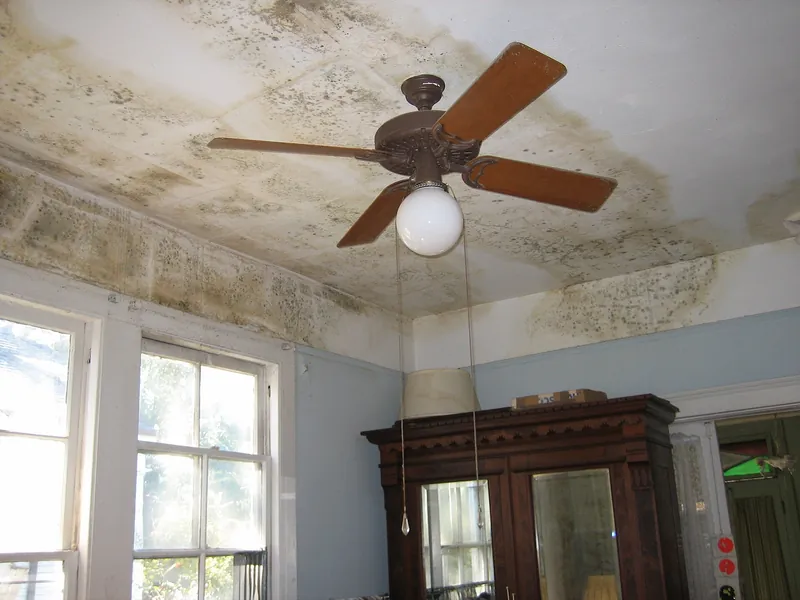
Fuzzy or dark patches and a musty smell that keeps returning can mean mold is growing. Mold needs moisture, so it hints that a leak is still active or was never dried. By the EPA's rule of thumb, you can usually handle a moldy patch under about 10 square feet yourself.
The CDPH renter booklet says that dampness is needed for mold to grow, so controlling dampness controls mold. It lists visible mold, mold odor, visible water damage and damp materials as the signs to watch for.
The EPA advises against painting or caulking moldy surfaces and says to call a professional when the water was sewage or other contaminated water. For what to scrub and what to leave alone, see the mold after water damage guide.
Per the CDC, mold can cause a stuffy nose, coughing or wheezing, so people with asthma should stay out of the area.

How serious is it, and who do I call?
Sort each finding into one of three bins: watch it, call a plumber, or bring in a restoration provider. Urgency rises with the amount of water, how long it has sat, and how much material it touched. When in doubt, treat the area as wet.
Standing water or sewage from outside the house is a different case. IICRC's S500 standard puts sewage and rising flood water in Category 3, grossly contaminated. See the sewage backup page and stay out of the area.
A dry, unchanged stain can be watched. A slow drip or a moving meter calls for a plumber. Soaked carpet, soft drywall or a sagging ceiling calls for a provider soon.
What are the first steps once I spot a sign?
Cut off the water supply first, then record what you see, then ask for help. Close the closest valve, take photos, and only then start phone calls. Permanent repairs should wait until the leak is fixed and the wet materials have been checked and dried.
- Turn off the water at the valve nearest the problem or at the main house shutoff. Leave electricity alone in wet areas unless the panel is reachable while dry.
- Photograph and film the signs from several angles.
- Move contents out of the wet zone.
- Call your insurer. Triple-I advises protecting the property from more harm, holding off on major permanent repairs until the adjuster has looked, and keeping receipts.
- Line up help: a plumber for the source and a restoration provider for what got wet.
Will insurance cover the water damage I found?
It depends on the cause. The California Department of Insurance says homeowners policies do not cover flood but do cover other kinds of water damage, so a plumbing leak and rising water are treated differently. Read your policy and report a problem to your agent early.
The California Department of Insurance says that homeowners should find and stop leaks at the source right away. Its consumer hotline is 1-800-927-4357.
According to NAIC, policies typically pay for water damage from plumbing or a roof leak, but not for ground water or rain runoff. The insurance claim guide goes through the rest.
If a wet area needs drying, send a request through the contact page and ask for a restoration provider who serves your area. Because the cause affects coverage, describe only what you saw.
Sources: EPA, A Brief Guide to Mold, Moisture and Your Home; EPA, Mold Cleanup in Your Home; CDC, About Mold and Your Health; CDPH, Information on Dampness and Mold for Renters in California; California Department of Insurance, Residential Property Claims Guide; American Red Cross, Frozen Pipes; IICRC, S500 standard; Triple-I, Settling insurance claims after a disaster; NAIC, Homeowners Insurance
Water Damage Cleanup California is the local water damage restoration line and information resource for California. When you call or send a request, it reaches a local water damage restoration team that serves your area. That team confirms whether it can reach you and gives its own scope, price and timing. Confirm them directly before you agree to anything.