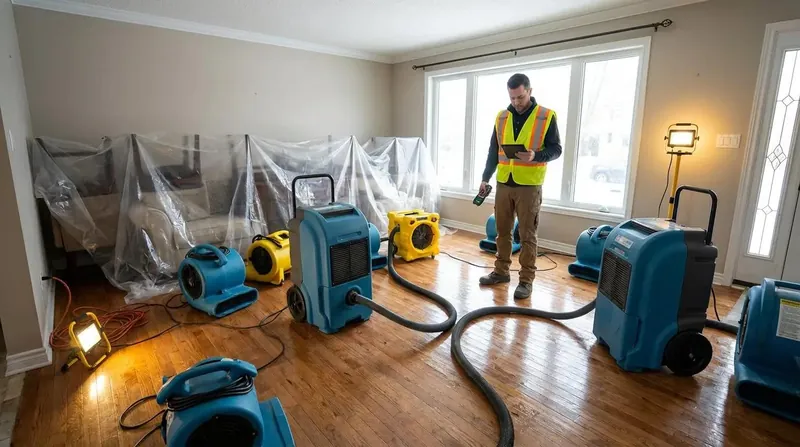
For Contra Costa homeowners
For water damage restoration in Contra Costa County, close the main valve, photograph every wet area and start drying in the first 24 to 48 hours. Outside flood water is Category 3, and homeowners policies do not cover flood. Requests come from every county city.
On this page (7)
- Which Contra Costa County cities and ZIP codes do you take requests from?
- How do West, Central and East County differ?
- Do postwar suburban homes in Concord and Walnut Creek leak differently?
- Which faults run through Contra Costa County?
- Does Contra Costa County flood?
- What does insurance cover after water damage in Contra Costa County?
- What should you do in the first hour after water damage here?
Which Contra Costa County cities and ZIP codes do you take requests from?
Requests come from all of Contra Costa County, from Richmond and El Cerrito on the bay to Concord and Walnut Creek in the middle and Antioch and Brentwood in the east. The Contra Costa ZIP finder shows the codes covered. Service ranges differ by restoration team, so the callback confirms your address.
Wikipedia says the county had 1,165,927 residents in 2020, with Martinez as the seat, and calls it primarily suburban. Concord is the largest city, at 125,410 people in the same census.
Neighbors have their own pages: Alameda County to the south, the North Bay across the strait, Stockton and Modesto to the east, Sacramento County to the northeast and San Francisco and the Peninsula over the bay.
How do West, Central and East County differ?
They differ in when they were built and what sits underneath. Wikipedia splits the county into West County on the bays, a central valley along Interstate 680 and Highway 24, and East County on the western edge of the Central Valley. Each has a different housing story.
| Part of the county | What Wikipedia says | First look after a leak |
|---|---|---|
| West County: Richmond, El Cerrito, Pinole | Housing largely built after the 1906 earthquake | Supply lines, sewer laterals, old roofing |
| Central: Concord, Walnut Creek, Lafayette | Older suburbs, infill and newer developments | Water heaters, appliance hoses, attics |
| East: Antioch, Oakley, Brentwood | Newer tract housing along Suisun Bay | Roof flashing, irrigation, window seals |
| Diablo foothills | Mount Diablo rises to 3,849 feet | Gutters, slope drainage, retaining walls |
Use the table as a prompt for your own walk-through. Hillside and valley-floor houses meet water in different ways, and your inspector can tell you what applies to your lot.
Do postwar suburban homes in Concord and Walnut Creek leak differently?
They tend to share an age, and age shapes the failures. Wikipedia says postwar baby-boom demand turned central-county walnut orchards and cattle ranches into tract suburbs, with a typical low-cost home on a lot of about 10,000 square feet. Many of those houses now have original plumbing and roofs.
Wikipedia also says Walnut Creek and Concord became edge cities once BART and Highway 24 improvements arrived. Concord's downtown has since added high-density apartment and condominium projects, which brings shared-wall leaks into the mix.
Common failures in an aging house include a tired water heater, brittle supply hoses and attic duct condensation. Read about appliance leaks, AC condensate leaks and water heater leaks, and see HOA water damage responsibility if you live in a planned community.
Which faults run through Contra Costa County?
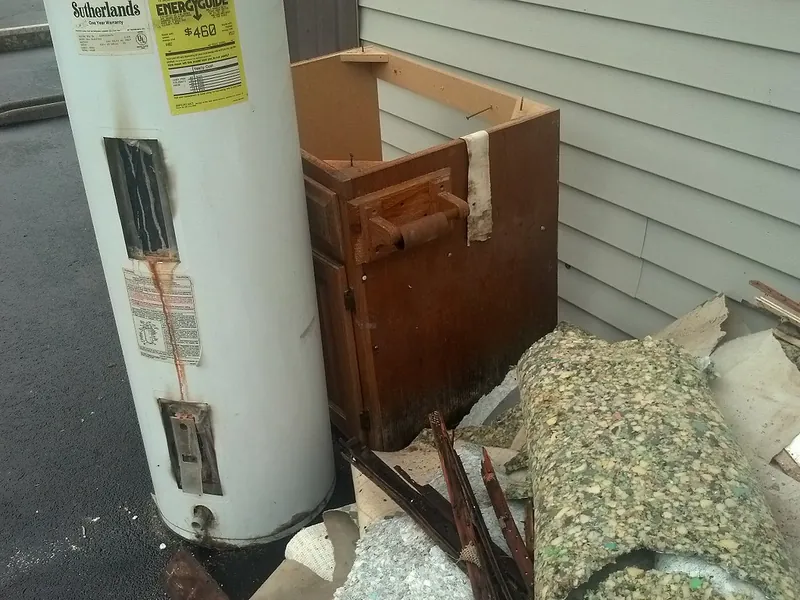
Four named fault systems cross the county, according to Wikipedia. The Hayward Fault Zone runs through the west from Kensington to Richmond, the Calaveras Fault from Alamo to San Ramon, and the Concord Fault through part of Concord and Pacheco. The Clayton-Marsh Creek-Greenville Fault runs from Clayton toward Livermore.
Wikipedia adds that the Diablo thrust fault near Danville and these strike-slip faults are all considered capable of significantly destructive earthquakes. Shaking can crack pipes, shift water heaters and loosen appliance connections.
After a strong quake, shut the main valve if you hear running water, then check the water heater, washer hoses and the lines under sinks. A leak inside a wall may not show for days, so photograph each room first and keep the receipts for any repairs.
Does Contra Costa County flood?
Water can reach homes here through storms, runoff and drainage that fails under load. The sources we use record no named Contra Costa flood, so this page does not claim one. For your own address, ask your city and look up the FEMA flood map before relying on any assumption.
Wikipedia says the Concord area grew in part because Pacheco residents moved to avoid fire and flood in the 19th century. It also says the Bay Area averages one Category 4 atmospheric river every three years, and Concord's weather record shows how rain can bunch up: 3.95 inches fell in 24 hours on one December 31.
Concord averages 23.91 inches of rain a year across 71 days, and its wettest year, 1995, brought 46.62 inches. The atmospheric river guide, storm and flood damage and sewage backup cleanup cover what to do when a storm reaches the house.
Under IICRC S500, water that rises from outside is Category 3, meaning grossly contaminated. Read flood damage restoration for how that changes the cleanup.
What does insurance cover after water damage in Contra Costa County?
It depends on the source of the water. The California Department of Insurance says homeowners policies do not cover flood damage but do cover other kinds of water damage, for example rain through a roof hole caused by a covered event. Your policy wording decides the details.
Claim timing is set by regulation. 10 CCR 2695.5 gives an insurer 15 calendar days to acknowledge your claim, and 10 CCR 2695.7 gives it 40 calendar days after proof of claim to accept or deny.
In Contra Costa County about a third of occupied homes are rentals, since Wikipedia counts 34.4 percent renter-occupied in 2020, so tenants should also read tenant and condo water damage. Start any claim with the insurance claim guide.
What should you do in the first hour after water damage here?
Stop the water, protect yourself and document before you clean. The EPA says to dry wet materials within 24 to 48 hours to prevent mold. A restoration team can measure moisture and tell you what needs to be opened up or removed.
- Close the main water shutoff, then the valve at the fixture if you can find it.
- Switch off power to the wet area only if the panel and floor are dry.
- Take wide and close photos of damage, serial numbers and soaked belongings.
- Call your insurer, or your landlord if you rent, and write down who you spoke with.
- Keep out of moving flood water. Ready.gov says six inches can knock you down.
The what to do after water damage guide adds detail, and emergency water damage restoration explains the service. You are under no obligation to hire any team you reach.
Sources: Contra Costa County, Concord, California and Atmospheric river (Wikipedia); California Department of Insurance, Residential Property Claims Guide; 10 CCR 2695.5 and 2695.7; IICRC S500; EPA, mold and moisture; Ready.gov, floods.
Coverage
Cities and communities in Contra Costa County
Requests come from 30 cities and communities here, covering 52 ZIP codes. Pick a name to see its ZIP codes in the checker.
Water Damage Cleanup California is the local water damage restoration line and information resource for California. When you call or send a request, it reaches a local water damage restoration team that serves your area. That team confirms whether it can reach you and gives its own scope, price and timing. Confirm them directly before you agree to anything.