The short version
With upstairs neighbor water damage, make the space safe, photograph everything, report the leak in writing to your landlord or HOA and your own insurer, and start drying right away. Fault can be sorted out later from your records. This is general information, not legal advice. Restoration teams differ, so confirm directly.
On this page (9)
- What should I do when an upstairs neighbor causes water damage?
- How can I tell what kind of water is coming through my ceiling?
- What should I document before anything gets moved?
- Who pays when a neighbor's leak damages my apartment or condo?
- What does a California landlord have to repair after a leak from another unit?
- What if my building is a condo with an HOA?
- How fast does my insurance company have to respond in California?
- How do I stop the ceiling and walls from growing mold?
- How should I handle the neighbor upstairs?
What should I do when an upstairs neighbor causes water damage?
Protect yourself and your belongings first, then tell the right people in writing. Stop any electrical hazard near wet ceilings, move valuables out of the drip zone, photograph everything and report the leak to your landlord or HOA and to your own insurer. Sort out who pays afterward.
Every hour the materials stay wet matters more than who was at fault, and the fault question can be handled from your records once the water is controlled. This site is not a law office, so nothing here is legal advice. The steps below apply whether you rent or own.
- Make the space safe. If water drips near fixtures or outlets, turn off power to that area at the breaker if you can reach it dry, and stay out of rooms with a sagging ceiling.
- Catch what you can. Put buckets under drips and move electronics, papers and bedding away.
- Photograph and video the ceiling, walls, floors and every damaged item before anything is cleaned or discarded.
- Call your landlord, property manager or HOA and send the same message by text or email so a record exists. Ask them to reach the unit above and have the source shut off.
- Notify your own insurer and ask what it wants you to keep.
- Ask a restoration provider to check how far the moisture has spread.
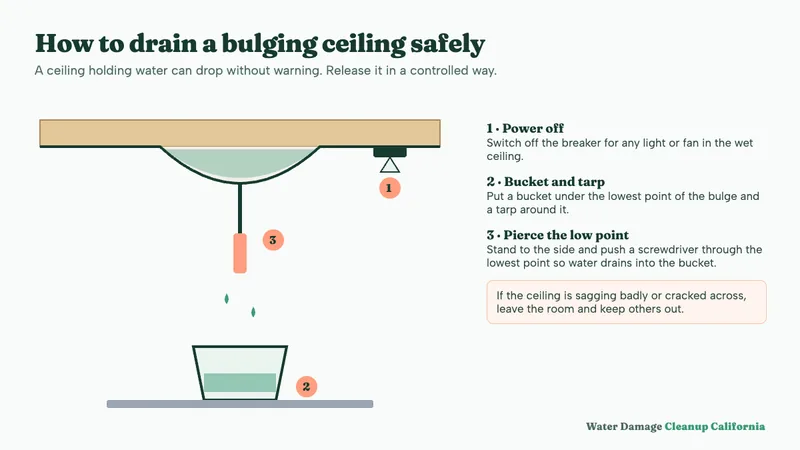
How can I tell what kind of water is coming through my ceiling?
Look at color, smell and the way the stain grows. Clear water that appears suddenly often comes from a supply line. Brown, cloudy or foul-smelling water may come from a drain, and that changes how it must be handled. If you are unsure, treat it as contaminated until a provider says otherwise.
The IICRC S500 standard groups water into three tiers: Category 1 is clean supply-line water, Category 2 is gray water from a washer or dishwasher, and Category 3 is grossly contaminated water such as sewage. The tier determines what a provider can dry and what has to be removed.
| What you notice | Possible source above | What it suggests |
|---|---|---|
| Clear drip that starts suddenly | Failed supply line or fixture | Likely Category 1; shutting off the valve stops it |
| Drip under the kitchen or laundry area | Dishwasher or washer hose or drain | Often Category 2 once it mixes with discharge |
| Dark, cloudy or foul water | Toilet or sewer line overflow | Treat as Category 3 and avoid contact |
| Stain after a storm only | Roof or exterior wall, not the neighbor | Report to the building owner or HOA |
For sewage or other contaminated water, the EPA recommends a professional with experience in such buildings. Our sewage backup page and the appliance leak page cover those sources.
What should I document before anything gets moved?
Record the damage as it looks now, the time you noticed it and every message you send about it. Photos and short videos with a wide shot and a close-up of each area work best. Keep damaged items until your insurer says they can be thrown away.
Triple-I advises photographing or filming the damage, saving receipts and not throwing out damaged items until the adjuster has visited. Big permanent repairs should wait until the adjuster has assessed the loss, it adds.
- The ceiling, walls, floor and any stains, with a wide view and a close view.
- The date and time you first saw water and when you reported it.
- Every text, email or call note with the landlord, HOA, neighbor and insurer.
- Receipts for buckets, fans, a hotel stay or a provider's visit.
Who pays when a neighbor's leak damages my apartment or condo?
It depends on your lease or association documents, the cause of the leak and your insurance. There is no single answer for every building, and this page cannot decide a dispute. What it can do is show who to ask and which records to gather.
Renters usually start with their own policy for belongings, and so do owners. The California Department of Insurance says homeowners policies cover many kinds of water damage but not flood, and Triple-I names accidental discharge from plumbing or an appliance as a covered peril on standard forms. Your policy wording decides what applies to you.
Ask your claims representative whether the insurer will pursue the neighbor's insurer. A tenant aid organization, a legal aid office or a California attorney can compare a lease or the association's governing documents to your situation. Our renters, landlords and condos guide maps the usual responsibilities, and the insurance claims guide covers the claim steps.
What does a California landlord have to repair after a leak from another unit?
California law lists basic habitability standards that a rental must meet, and a landlord is expected to keep the building in compliance. Whether a particular leak triggers those rules depends on the facts. Ask the landlord in writing what repair plan they have and when work will begin.
Civil Code section 1941.1 lists characteristics a dwelling must have to be tenantable, including effective waterproofing and weather protection of the roof and exterior walls and plumbing that was lawful when installed and is kept in good working order. It also reaches units described in Health and Safety Code section 17920.3.
Section 17920.3 lists dampness of habitable rooms and visible mold growth, as found by a health officer or code enforcement officer, among the substandard conditions. The state renter booklet says the owner must fix dampness or mold that is a health hazard. See the text of Civil Code 1941.1 for the wording.
What if my building is a condo with an HOA?
In a condo, the association's governing documents usually decide who repairs what, and California's Civil Code sets defaults when they say nothing. Report the leak to the HOA manager or board in writing, and keep the message. Ask which unit the water came from and who will repair the pipe.
Civil Code section 4775 says that, unless the declaration says otherwise, the association repairs and maintains the common area and the owner maintains the separate interest. It also says the association handles repairs needed to restore interrupted gas, heat, water or electrical service that begin in the common area. For those repairs the board must commence the process within 14 days of the interruption.
Your declaration may change the default, and declared emergencies are an exception. Read the HOA water damage responsibility page and the statute itself, then ask the board or an attorney how it applies to you.
How fast does my insurance company have to respond in California?
California's claim rules set response windows. An insurer must acknowledge a claim and begin investigating within 15 calendar days of notice, and accept or deny within 40 calendar days after proof of claim. Those are outer limits, so report the loss immediately rather than waiting.
Title 10 of the California Code of Regulations, section 2695.5(e), says an insurer must acknowledge notice of a claim, provide forms and begin any necessary investigation immediately, but no more than 15 calendar days later. Section 2695.7(b) gives 40 calendar days after proof of claim to accept or deny, in whole or in part. A denial must be in writing and list the reasons.
Once a claim is accepted, section 2695.7(h) requires payment within 30 calendar days; see the regulation text. If you have trouble opening a claim, the California Department of Insurance lists that as a reason to call its consumer hotline at 1-800-927-4357.
How do I stop the ceiling and walls from growing mold?
Get the materials drying quickly. In most cases, the EPA says, mold will not grow when wet or damp materials are dried within 24 to 48 hours of the leak. Keep the room ventilated, run fans and a dehumidifier if you have them, and ask the building to open the ceiling if it stays damp.
Water often travels along joists and down inside the wall, so the stain may be small compared with what is wet. The EPA lists the inside of walls around leaking pipes as a place hidden mold can grow, and suggests an experienced professional if you suspect it. It also says not to paint or caulk moldy surfaces.
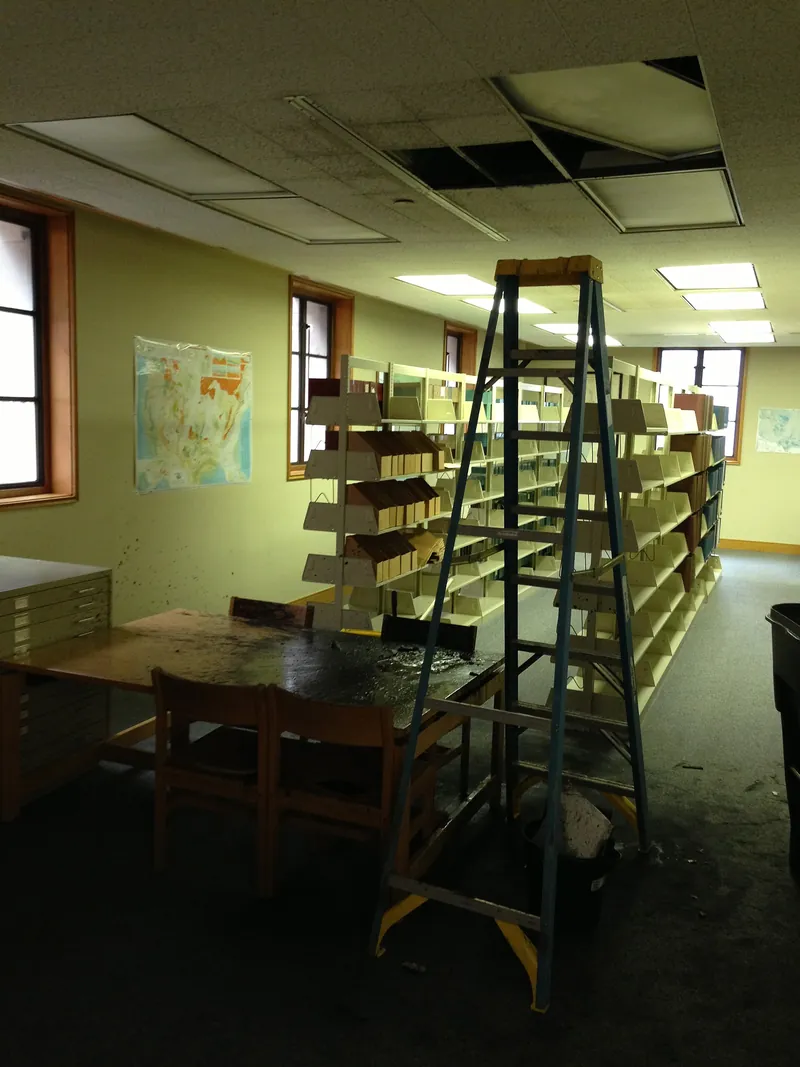

The ceiling water damage page explains what that involves, and the mold guide covers mold cleanup. Restoration teams differ in what they offer, so confirm directly.
How should I handle the neighbor upstairs?
Keep it calm and put things in writing. A short, polite note or message that says what happened, when you saw it and that you have notified the landlord or HOA is enough. Do not enter their unit, and do not try to shut off their water yourself.
The neighbor may not know about the leak, or may be away, which is one reason to go through the property manager or association. If tempers rise, let the landlord, the HOA or your insurer take the lead, and keep your messages factual.
The water damage guides list more steps for the first 48 hours, and the burst pipe page covers a failure that sends a lot of water at once.
Sources: EPA, A Brief Guide to Mold, Moisture and Your Home; EPA, Mold Cleanup in Your Home; Triple-I, Settling insurance claims after a disaster; Triple-I, Which disasters are covered by homeowners insurance; California Department of Insurance, Residential Property Claims Guide; 10 CCR 2695.5; 10 CCR 2695.7; Civil Code 1941.1; Health and Safety Code 17920.3; Civil Code 4775; CDPH, Information on Dampness and Mold for Renters in California; IICRC S500.
Water Damage Cleanup California is the local water damage restoration line and information resource for California. When you call or send a request, it reaches a local water damage restoration team that serves your area. That team confirms whether it can reach you and gives its own scope, price and timing. Confirm them directly before you agree to anything.