The short version
When hiring a water damage restoration company in California, verify the CSLB license (required at $1,000 or more), cap the down payment at $1,000 or 10 percent of the price, whichever is less, and read the contract first. The site does not rank any company.
On this page (11)
- What should I look for in a water damage restoration company in California?
- Does a California restoration company need a CSLB license?
- How do I check a contractor's license with the CSLB?
- How much can a contractor ask for as a down payment?
- What should a California home improvement contract say?
- Can I cancel a restoration contract after I sign it?
- How do I spot a storm chaser after a California storm?
- What questions should I ask a restoration provider?
- Must I hire the company my insurer recommends?
- Does speed matter when I am picking a company?
- How does a call through this site work?
What should I look for in a water damage restoration company in California?
Start with the state license, move on to the paperwork, and judge the people last. California sets rules on who may take on home work and how much a contractor may collect before starting. A water damage restoration company in California that meets them and explains the job plainly is a sensible choice.
- Verify the license. Look the business up with the Contractors State License Board before you agree to anything.
- Get the scope in writing. Rooms, materials to be removed and equipment to be used.
- Ask about the first payment. State rules cap the down payment on home improvement work.
- Read the contract. Know what you are signing and which cancellation rights apply.
- Call your insurer. Report the loss and ask what the policy requires of you.
None of this slows the first steps. Someone can close the shutoff valve while you make the calls. The emergency water damage page lists what to do before anyone arrives.
Does a California restoration company need a CSLB license?
Usually yes, once a job is big enough. The Contractors State License Board says work that costs $1,000 or more, counting labor and materials, needs a contractor's license. Below that, an unlicensed person may take the job only if no workers are hired and no permit is needed.
That figure comes from a CSLB press release on Assembly Bill 2622, which took effect on January 1, 2025 and raised the old $500 limit. A small leak repair might fall under it. A drying job with equipment, demolition and a rebuild almost never will.
The CSLB says it licenses and regulates about 285,000 contractors in California. Penalties for contracting without a license include administrative fines of up to $15,000, up to six months in jail, and fines of up to $5,000. Ask each provider which license classification covers the work in your quote.
How do I check a contractor's license with the CSLB?
Use the license lookup on the CSLB website, which has a tool labeled Check a License or Home Improvement Salesperson Registration. Enter the name or license number the provider gave you, then compare what comes back with the business name on the estimate.
The CSLB also answers questions by phone at 800-321-CSLB (2752). Do the check yourself, from your own phone or computer, instead of relying on a number printed on a flyer or handed to you at the door.
A salesperson who visits your home to sell home improvement work has a separate registration, and the same lookup covers it. If the name on the lookup does not match the name on the contract, stop and ask why before you sign.
How much can a contractor ask for as a down payment?
On a home improvement job, the down payment cannot be more than $1,000 or 10 percent of the contract price, whichever is less. The CSLB consumer guide says that limit has no exceptions for special order materials, apart from a valid blanket performance and payment bond on file with the board.
The CSLB also advises paying only as work is completed, not before. Later payments should not run ahead of the value of the work finished or the materials delivered.

Someone asking for a large cash deposit before any equipment shows up is a signal to pause. Compare the request against the limit above, and ask for the payment schedule in writing.
What should a California home improvement contract say?
Expect the scope, the price, the payment schedule and the start and finish dates on paper. The CSLB guide says changes to the job need a written change order, which keeps a verbal promise from turning into an unexplained charge on the final bill.
Read every line, and do not sign pages with blanks. Ask for bids in writing that itemize materials and prices, as Triple-I advises. That also makes two bids easy to compare.
One caution on dollar figures: the CSLB guide still names an older amount for when a written contract is required, and the license limit rose to $1,000 in 2025. This page does not state a contract threshold. Ask the provider for a written agreement anyway, whatever the size of the job.
Can I cancel a restoration contract after I sign it?
Often, but not always. The CSLB guide gives the buyer three business days to cancel, or five business days if the buyer is 65 or older. The contractor must return money paid within 10 days of getting the cancellation request.
There are two big exceptions. You have no right to cancel a contract negotiated at the contractor's place of business. And the right is voided for a service and repair contract for emergency repairs that you requested on short notice, once you sign and work begins.
Emergency water work can fall into that second group, so ask which category your agreement is in before work starts. Keep a copy of whatever you sign.
How do I spot a storm chaser after a California storm?
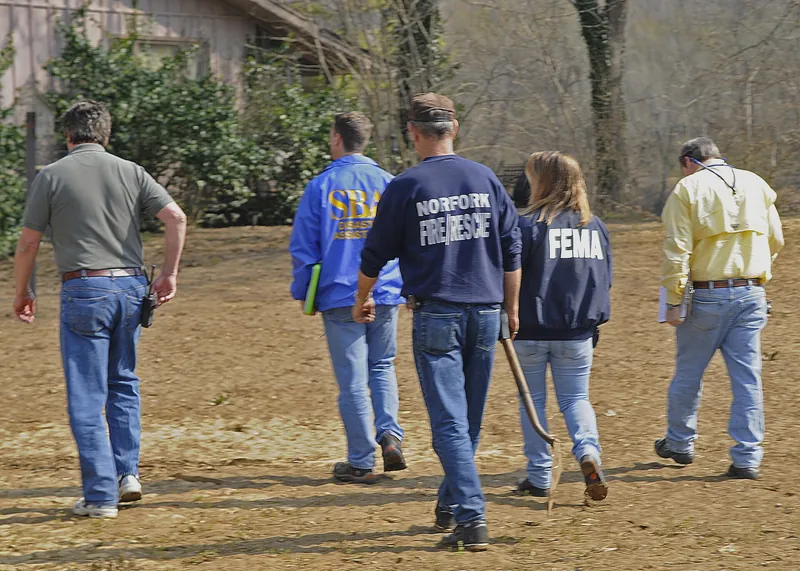
Look for a contractor who finds you instead of the other way around. After an atmospheric river or a mudslide, out-of-area crews may knock on doors. Not all are a problem, but unsolicited offers deserve the same license check and paperwork review as any other.
- No license number, or one that fails the CSLB lookup.
- A demand for a large deposit before any work begins.
- Pressure to sign on the spot, or a contract with blank lines.
- A refusal to put the scope and price in writing.
- A request to sign over your insurance payment before the scope is clear.
These are general warning signs, not a legal test. The after-storm checklist covers what to document before anyone starts work.
What questions should I ask a restoration provider?
Treat the table as a phone script and write down each reply with the date. The questions cover license, money, paperwork and how drying will be tracked. A provider who works in good faith will answer them without fuss.
| Ask | Why it matters | A workable answer |
|---|---|---|
| What is your CSLB license number and classification? | A license is required at $1,000 or more | A number that matches the CSLB lookup |
| How much is the down payment? | State limit is $1,000 or 10 percent, whichever is less | An amount at or under that limit |
| Is the estimate itemized? | A lump sum hides what each part costs | Equipment, labor and materials listed line by line |
| Which water category is this? | IICRC S500 treats clean and contaminated water differently | A category tied to the source of the water |
| How will drying be tracked? | Readings show whether materials are actually drying | Numbers recorded at each visit and shared on request |
| Which cancellation rights apply to me? | Emergency service contracts are treated differently | A plain explanation, backed by the contract text |
The water categories and classes page explains the S500 terms in that table.
Must I hire the company my insurer recommends?
Start by asking your insurer if the policy requires a specific vendor. Plenty of policyholders pick their own provider, yet the policy wording and the insurer decide what is covered, so get the answer in writing before committing to a company.
The California Department of Insurance says homeowners should find and stop leaks at the source right away, and that drying and dehumidifying can reduce the chance of mold. It also says to report any water damage claim immediately to your agent or company. Triple-I adds that policyholders should protect the property from further harm yet postpone big permanent repairs until the adjuster has inspected.
If you have trouble opening a claim, the Department of Insurance consumer hotline is 1-800-927-4357. For the claim process itself, read water damage insurance claims in California.
Does speed matter when I am picking a company?
Yes, but not at the price of skipping the checks. The EPA advises drying water-damaged areas and items within 24 to 48 hours to prevent mold growth. Make the license check and the written scope part of that window, not an extra step after it.
Most of the checks above take a few minutes by phone. If one provider will not answer them, call the next one. For the repair and rebuild side, see water damage repair in California, and for pricing context see restoration cost in California.
How does a call through this site work?
A call or request sent here reaches a local water damage restoration team that serves your area. This site sets no prices. Scope and terms come from the team that answers.
It does not rank restoration companies, so run the checks on this page on whoever you reach. You can decline and phone someone else. Read how the site works and the editorial policy for more.
Sources: IICRC S500.; EPA, A Brief Guide to Mold, Moisture and Your Home; Triple-I, Settling insurance claims after a disaster; California Department of Insurance, Residential Property Claims Guide; California Department of Insurance, file a complaint; CSLB press release 24-21 on the $1,000 handyperson exemption; CSLB, Terms of Agreement: A Consumer Guide to Home Improvement Contracts; CSLB, Hire a Contractor
Water Damage Cleanup California is the local water damage restoration line and information resource for California. When you call or send a request, it reaches a local water damage restoration team that serves your area. That team confirms whether it can reach you and gives its own scope, price and timing. Confirm them directly before you agree to anything.