The short version
Expect a water damage smell to be musty and earthy, which means materials are still damp or mold has begun. Fresheners just cover it up. Trace the source, stop the water and dry everything, ideally in the 24 to 48 hours the EPA advises. Sewage odors differ, so bring in a professional.
On this page (11)
- How would I describe a water damage smell?
- Is a musty odor proof that mold is present?
- Which odors point to which water problems?
- What causes a musty house right after the first storms of the year?
- Could my crawl space be behind the musty odor?
- Is a slab leak able to produce a musty odor?
- Why won't air fresheners solve a damp smell?
- What is the best way to track a smell to its source?
- Should I worry about a sewage odor?
- What if the odor returns after I have cleaned up?
- At what point is a restoration provider worth calling?
How would I describe a water damage smell?
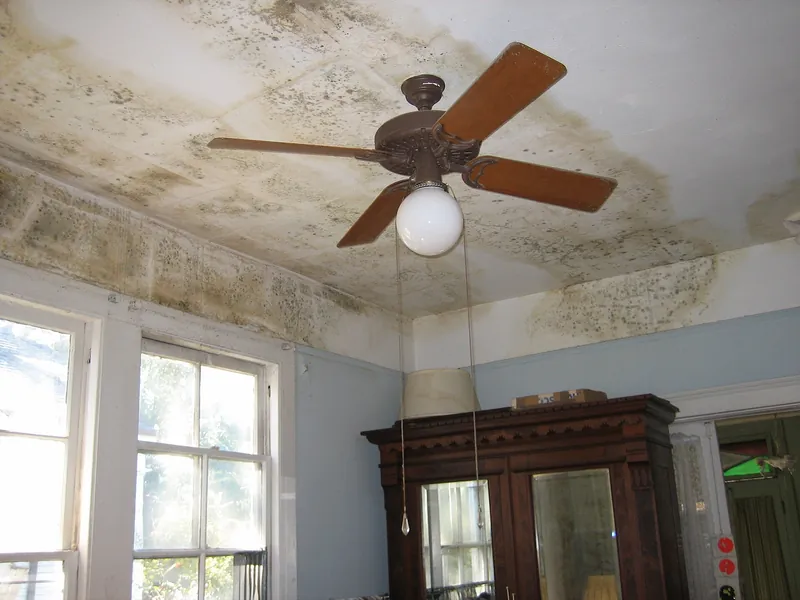
People usually call it musty, earthy and damp, the way a wet towel smells after sitting in a bag. It typically means materials stayed soaked long enough for mildew or mold to begin, or that water keeps pooling somewhere out of view. Take the odor as a clue rather than a verdict.
Other descriptions include a sour edge from carpet, the closed-in dampness of a shut closet, or a stale sweetness seeping out of a wall. All of them lead back to moisture that never left the building.
The guide sticks to what each odor suggests and what you can check before making a call.
Is a musty odor proof that mold is present?
Not necessarily, but it is reason enough to look. CDPH's renter booklet counts a mold odor among the signs of a dampness problem, and says dampness is what mold needs to grow. After a leak or a wet winter storm, presume something is damp until you prove otherwise.
Possible effects of mold, per the CDC, include nasal stuffiness, a sore throat, a cough or wheeze, stinging eyes and a rash. People with asthma or a mold allergy may react more strongly, and anyone with chronic lung disease or a weakened immune system can develop lung infections.
Odor without visible mold is common, because colonies often start behind drywall, under floor coverings or in insulation. For what to inspect and what the state does and does not regulate, read the mold after water damage guide.
Which odors point to which water problems?
Different smells lean toward different sources. Compare what you notice with the table, then check by sight and touch. A single home can carry two odors at once, so read these as common patterns instead of lab results or a firm diagnosis.
| Smell | Likely source | What to do |
|---|---|---|
| Musty and earthy | Insulation, carpet pad or drywall left wet after a leak or storm | Locate and stop the water, dry the space, and keep an eye on humidity |
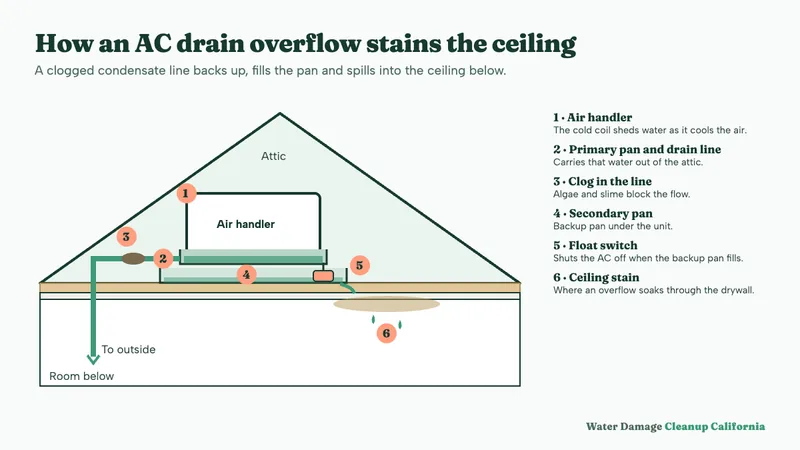
| Musty only while the system runs | A clogged drain line, a wet pan or damp ductwork | Inspect around the air handler, then see ceiling water damage |
| Sour, like laundry left damp | Carpet and pad that got soaked and dried too slowly | Peel back a corner and examine the pad; see wet carpet drying |
| Sharp sewage odor | A sewer backup, broken drain line or contaminated flood water | Keep people and pets away and read sewage backup cleanup |
| Rotten egg at one drain | Often a dried-out or clogged trap, which a plumber can verify | Run water through it; if the odor persists, call a plumber |
| Stale or sweet, from a wall or ceiling | A weeping pipe in a wall cavity, or wet insulation | Hunt for stains and soft spots using the signs of water damage list |
One warning: natural gas is given an added odor that resembles rotten egg. If it fills the house, step outside and call the gas utility.
What causes a musty house right after the first storms of the year?
When a long dry spell ends, the first heavy storm can reveal a leak at the roof or flashing. Water soaks into insulation and ceiling drywall, and the odor surfaces days afterward. NOAA Research describes atmospheric rivers as long, concentrated bands that carry moist air from the tropics.
After rain, inspect ceilings and the attic for new stains and damp insulation. Gutters and the soil beside the foundation deserve a look too, because runoff pooling at a wall can wick indoors.
Damage details are on the roof leak storm damage page, and the atmospheric river guide explains the storms themselves.
Could my crawl space be behind the musty odor?
If your house stands on a raised foundation, it could. A leaking drain or supply line, or runoff seeping in after rain, may leave insulation and subfloor damp, and air from below can rise through vents and gaps. A home on a concrete slab has no such void.
Clues include an odor strongest at floor level, soft or bouncy boards near an exterior wall, and cool, damp air from the vents. Crawl spaces are tight and may hold wiring, so let a plumber or provider inspect instead of crawling in alone.
The prevention checklist lists drainage fixes that keep water away from the foundation.
Is a slab leak able to produce a musty odor?
Yes. A supply line leaking beneath a concrete slab can keep flooring, pad and wall bases damp. You may notice a musty odor at floor level, a warm patch on the floor, or running water heard while every fixture is off.
Other clues are damp carpet edges, cupped flooring, a jump in the water bill, or a meter that keeps moving with everything shut. Not every slab leak smells, and a plumber must pinpoint the line, so verify before anything gets torn out.
Warning signs and flooring consequences are on the slab leak water damage page.
Why won't air fresheners solve a damp smell?
Sprays, candles and plug-ins hide the odor while its cause stays in place. If the material remains wet, the smell comes back and growth may continue behind the fragrance. The EPA says water-damaged areas should dry in the first 24 to 48 hours, so quick drying counts for more than any deodorizer.
Another EPA instruction: never paint or caulk over surfaces with mold on them. A coat over a damp wall traps the moisture and hides the very evidence you need to trace the source.
The sequence is straightforward: repair the water problem, dry the material, clean, and only then consider deodorizing. Frequently the smell fades once the source is dry.
What is the best way to track a smell to its source?
Lead with your nose, then bring in your eyes and hands. The odor is normally strongest close to its origin, unless the air system moves it elsewhere. Move from damp-prone spots toward the living areas, and note where the smell weakens along the way.
- Measure humidity. An inexpensive hygrometer will show it. The EPA recommends staying under 60 percent, ideally 30 to 50 percent.
- Examine the air handler. Look at the pan, the drain line and the ceiling beneath any attic unit.
- Scan ceilings and the attic for stains, particularly after rain.
- Press on surfaces. Mushy drywall, swollen baseboard and a springy subfloor all signal moisture.
- Raise a carpet corner. Sniff the pad and watch for dark spots.
- Check the plumbing. Peer under sinks, around toilets and tubs, behind the washer and beside the water heater.
- Log the pattern. Whether it shows after rain, when the system runs or at night, each timing is a clue.
A moisture meter reads within materials, not merely on the surface. Providers combine meters with thermal cameras, so when you cannot trace the source, one can usually narrow the search.
Should I worry about a sewage odor?
Yes. After a backup or flood, a sharp fecal smell signals contaminated water, which you should treat as unsafe. The IICRC S500 standard rates sewage and rising flood water as Category 3, grossly contaminated, and drying alone does not remove that risk.
The EPA says that when sewage or other contaminated water caused the damage, you should hire a professional experienced with such buildings. Leave fans off, because moving air can spread contamination. Children, pets and anyone with a health condition should stay out.
Triple-I says a typical homeowners policy and flood insurance both leave out sewer backups, which need a separate product or endorsement, so ask your agent. The CDI claims guide notes that homeowners policies do not cover flood but do cover other kinds of water damage. First steps are in sewage backup cleanup.

What if the odor returns after I have cleaned up?
An odor that comes back tells you moisture remains or a source is still active. Typical culprits are a slow leak nobody repaired, insulation or subfloor left wet, humid air that never gets controlled, or a cleaned surface resting on damp material.
Repeat the source checks listed above and record the humidity daily for a week. If readings hold above 60 percent even though surfaces look dry, the building is retaining water or admitting more.
The CDC says a flooded home should be cleaned and fully dried quickly, so a smell weeks afterward hints that part of that work was missed. For hard surfaces it names household cleaner, or soap and water, or at most 1 cup of bleach per 1 gallon of water, never combined with ammonia.
At what point is a restoration provider worth calling?
Pick up the phone if you cannot locate the source, the odor followed a flood or sewage event, or you suspect water inside walls or beneath flooring. The EPA's drying window is 24 to 48 hours, so a lingering smell may mean the window has passed.
Services differ, so ask each company if it handles moisture assessment, drying or odor work, and request readings and photos. California issues no state license for mold work, so ask about training and verify any contractor license with the CSLB.
For standing or visible water, see emergency water damage restoration. For pricing, read water damage restoration cost in California.
Sources: CDPH, Dampness and Mold for Renters in California; CDPH, Frequently Asked Questions about Mold; CDI, Residential Property Claims Guide; NOAA Research, Atmospheric Rivers; IICRC S500; Triple-I, Which disasters are covered; CDC, About Mold and Your Health; EPA, Brief Guide to Mold, Moisture and Your Home; EPA, Mold Cleanup in Your Home; CSLB, contractor license threshold
Water Damage Cleanup California is the local water damage restoration line and information resource for California. When you call or send a request, it reaches a local water damage restoration team that serves your area. That team confirms whether it can reach you and gives its own scope, price and timing. Confirm them directly before you agree to anything.