For North Bay homeowners
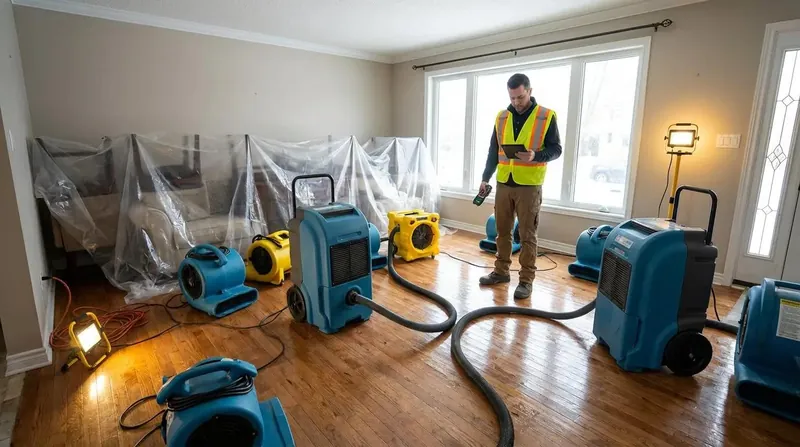
For water damage restoration in the North Bay, close the main valve, document the damage and begin drying inside the first 24 to 48 hours. Creek and river water counts as flood, which standard homeowners policies leave out. Requests come from Sonoma, Marin, Napa and Solano counties.
On this page (8)
- Which North Bay cities and ZIP codes do you take requests from?
- How do the four North Bay counties differ for a water loss?
- Does the Russian River flood homes around Santa Rosa?
- What about the Petaluma River and the bay-edge towns?
- What happens when winter rain follows a wildfire?
- Does insurance pay for flood water in the North Bay?
- What should I do in the first 24 to 48 hours?
- Do old North Bay houses and wine country buildings leak differently?
Which North Bay cities and ZIP codes do you take requests from?
We take requests for water damage restoration in the North Bay, across Sonoma, Marin, Napa and Solano counties, from Petaluma to San Rafael, Napa and Fairfield. Santa Rosa has its own city page. Which restoration team can help depends on your address, so expect the first phone call to settle whether your street is in range.
Wikipedia calls Santa Rosa the largest city in California's Wine Country, with 178,127 residents at the 2020 census. Marin's main towns line Highway 101, from Sausalito and Tiburon through Corte Madera, San Rafael and Novato.
Napa County includes Calistoga, St. Helena, Yountville and American Canyon. Solano County includes Vallejo, Fairfield, Vacaville and Benicia. Sonoma County adds Petaluma, Healdsburg, Rohnert Park, Cotati and Sebastopol.
Use the ZIP finder to check your county: Sonoma, Marin, Napa and Solano. Neighbors have their own guides: Alameda County, San Francisco and the Peninsula and Sacramento County.
How do the four North Bay counties differ for a water loss?
They differ in size, geography and county offices. Sonoma is the largest by population and holds most of the Russian River watershed. Marin sits along the bay and the Pacific, and Napa is a valley of vineyards with its own river.
Solano lies along the northern bay shore. Your county decides who issues permits and holds flood records.
| County | 2020 census | County seat | Water note from Wikipedia |
|---|---|---|---|
| Sonoma | 488,863 | Santa Rosa | Russian River, Laguna de Santa Rosa and the Petaluma River all drain here |
| Marin | 262,321 | San Rafael | Lagunitas, Miller and Novato creeks are among its watersheds |
| Napa | 138,019 | Napa | Early villages stood near valley floodplains; the Napa River runs through |
| Solano | 453,491 | Fairfield | Named for Chief Solano, whose people lived between the Petaluma and Sacramento rivers |
Figures are from the Sonoma, Marin, Napa and Solano county articles. Your tax bill shows which county your address belongs to.
Does the Russian River flood homes around Santa Rosa?
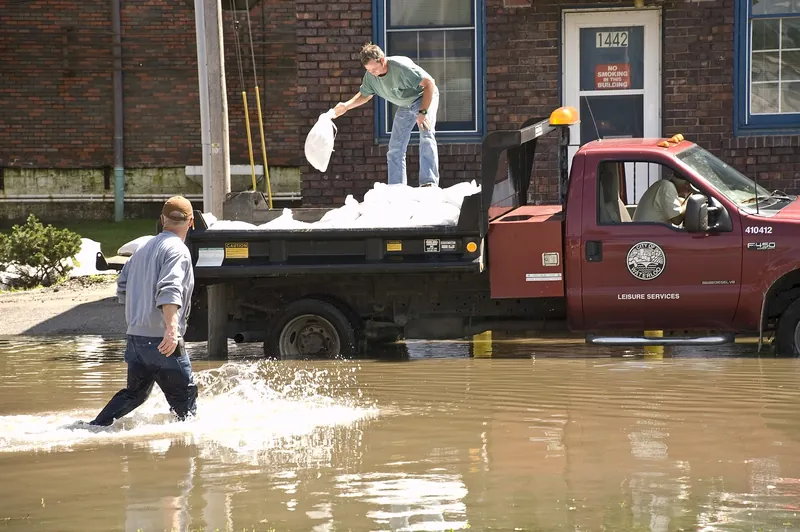
It can reach homes near the river, and the creeks that feed it matter too. Wikipedia says the Russian River rises north of Ukiah, runs through Lake Mendocino, turns west at Healdsburg and reaches the Pacific at Jenner. Whether your street floods depends on its elevation and drainage, so look up your own address.
Santa Rosa has its own water to watch. The Santa Rosa article says the city sits in the Santa Rosa Creek watershed, with Brush, Matanzas and Piner creeks, and that the creek drains into the Laguna de Santa Rosa.
The Sonoma County article describes the Laguna as the largest tributary of the Russian River. It is 14 miles long, with a flood plain of more than 7,500 acres and a 254-square-mile watershed that covers most of the Santa Rosa Plain. Six of the county's nine cities, from Healdsburg south to Cotati, sit on that plain.
Rain adds up fast in the north. Wikipedia gives Santa Rosa an average of 32.20 inches a year and says the Guerneville area typically gets about 50 inches. Water that rises from a river or creek is Category 3 under the IICRC S500 standard, so read flood damage restoration before you touch wet materials.

What about the Petaluma River and the bay-edge towns?
Low ground near the bay and its tidal rivers deserves a closer look. Wikipedia says Petaluma grew up near the farthest navigable point inland on the Petaluma River, and that the river, with Tolay Creek and Sonoma Creek, enters San Pablo Bay through the Napa Sonoma Marsh at the county's southern tip.
That article records the geography, not a flood event, so check your address on FEMA's flood maps. A tidal river and a marsh can matter when storms and high water arrive together.
Marin shows how fast a creek can turn on a town. The 2023 California floods article says a levee along Novato Creek broke during the storms from December 31, 2022 to March 25, 2023. Water stood 8 to 10 feet deep, and 3.45 square miles of fields and pastures flooded.
The same article says State Route 37 was shut for a period. Restoration teams differ on whether they can reach flooded roads quickly, so ask. Our atmospheric river guide explains why these storms hit so hard, and the after-storm checklist lists what to do first.
What happens when winter rain follows a wildfire?
Burned hillsides can shed water and soil faster than unburned ones. Wikipedia's account of the 2018 Southern California mudflows says wildfires stripped steep slopes of vegetation, which destabilized the soil, and the mudflows came a month later. That event was in Santa Barbara County, not the North Bay.
The North Bay has its own fire history. Wikipedia says the Tubbs Fire began on the night of October 8, 2017, and destroyed five percent of Santa Rosa's homes. It names the Kincade Fire in 2019, at 77,758 acres, and the Glass Fire in 2020, which affected Santa Rosa and destroyed more than 1,000 buildings.
Wikipedia adds that the Santa Rosa area lies on the Healdsburg-Rodgers Creek fault segment. The Working Group on California Earthquake Probabilities estimated at least a 27 percent chance of a magnitude 6.7 or greater quake there by 2037. A shaking event can crack supply lines and shift water heaters, so know where your main shutoff is before you need it.
These extracts do not record a debris flow in the North Bay, so treat the link between fire and rain as a risk to ask about, not a prediction. If you live below a burn scar, ask the county about runoff before the first big storm. Homes that were rebuilt or repaired after a fire can also have new drywall and insulation that hides a slow leak; see mudslide water damage for what to do when mud reaches the house.
Does insurance pay for flood water in the North Bay?
Usually not. Triple-I explains that flood damage is carved out of standard homeowners and renters policies, and the protection comes from a separate NFIP policy or a few private insurers. FEMA says the same of most homeowners insurance, so check before a storm.
Plumbing and roof leaks sit on the other side of that line. According to the NAIC, harm from a home's plumbing or a leaking roof is typically covered, but ground water, rain runoff and snow-melt are not. A creek spilling over a lawn counts as flood.
A sewer backup is a third case. Under Triple-I's summary, a typical homeowners policy leaves it out, and flood insurance does too, so the cover is bought as a separate product or endorsement.
Ask your agent what paperwork is needed before you sign for any repair. Our insurance claim guide lists what to photograph, and the FAIR Plan page explains what that program covers.
What should I do in the first 24 to 48 hours?
The first two days decide how far the damage spreads. The EPA advises drying wet areas and belongings in 24 to 48 hours, before mold takes hold, and holding indoor humidity under 60 percent, ideally between 30 and 50 percent.
- Find the main water valve and close it. Cut power to a wet room only if the panel is dry and easy to reach.
- Record the damage on video and in photos before you move furniture or tear anything out.
- Phone your insurance company and find out what it requires first.
- Ask a restoration team how moisture will be measured and how drying will be logged.
- Keep out of moving water. Ready.gov notes that six inches of it can knock an adult down.
If water came in through the roof during a storm, a tarp over the opening limits further damage while you wait. Keep receipts for anything you buy to protect the house, because Triple-I says to save them for reimbursement.
More detail is on the emergency page. If a musty smell has already set in, read mold after water damage. On a raised foundation, check the crawl space, since water can sit there unseen.
Do old North Bay houses and wine country buildings leak differently?
Often, yes, because age changes what is behind the walls. Wikipedia says almost all of Santa Rosa's houses survived the 1906 earthquake and many old neighborhoods remain, with Victorians among them. Older plumbing, roofs and foundations fail in different ways than new ones.
If your home is older, tell the restoration team what you know about past repairs and the pipe material. Aging copper and galvanized lines can develop pinhole leaks, and our water damage repair guide covers the rebuild step.
Santa Rosa's old streets show how long a house can outlast its pipes. Wikipedia notes that Railroad Square holds two rare stone buildings that predate the 1906 earthquake, so a commercial block downtown may have layers of past repair behind the plaster.
Wineries, tasting rooms and shops have their own questions about stock and downtime. Business owners can read commercial water damage. A small leak behind a counter can still ruin inventory, so photograph before you move anything.
Sources: EPA, mold and moisture; Ready.gov, floods; FEMA, flood insurance; IICRC S500; NAIC, homeowners insurance; Triple-I, disasters covered by homeowners insurance; Triple-I, settling claims after a disaster; Wikipedia articles: Santa Rosa, Sonoma County, Marin County, Napa County, Solano County, 2023 California floods and 2018 Southern California mudflows.
Coverage
Cities and communities in North Bay
Requests come from 73 cities and communities here, covering 110 ZIP codes. The cities with their own guide come first.
- American Canyon
- Annapolis
- Belvedere Tiburon
- Benicia
- Birds Landing
- Bodega
- Bodega Bay
- Bolinas
- Boyes Hot Springs
- Camp Meeker
- Cazadero
- Cloverdale
- Corte Madera
- Cotati
- Dillon Beach
- Dixon
- Duncans Mills
- El Verano
- Eldridge
- Elmira
- Fairfax
- Fairfield
- Forest Knolls
- Forestville
- Fulton
- Geyserville
- Glen Ellen
- Graton
- Greenbrae
- Guerneville
- Healdsburg
- Inverness
- Jenner
- Kentfield
- Kenwood
- Lagunitas
- Larkspur
- Marshall
- Mill Valley
- Monte Rio
- Napa
- Nicasio
- Novato
- Occidental
- Olema
- Penngrove
- Point Reyes Station
- Rio Nido
- Rio Vista
- Rohnert Park
- Ross
- San Anselmo
- San Geronimo
- San Quentin
- Sausalito
- Sebastopol
- Sonoma
- Stewarts Point
- Stinson Beach
- Suisun City
- The Sea Ranch
- Tomales
- Travis Afb
- Vacaville
- Vallejo
- Valley Ford
- Villa Grande
- Vineburg
- Windsor
- Woodacre
Water Damage Cleanup California is the local water damage restoration line and information resource for California. When you call or send a request, it reaches a local water damage restoration team that serves your area. That team confirms whether it can reach you and gives its own scope, price and timing. Confirm them directly before you agree to anything.