The short version
Water damage repair in California is the rebuild of whatever mitigation tore out, begun after readings show the structure is dry. The CSLB restricts unlicensed work to jobs of $1,000 or less with no workers or permits, and caps down payments at $1,000 or 10 percent. Some providers do not rebuild, so ask first and request an itemized estimate.
On this page (12)
- How is water damage repair different from mitigation?
- Are restoration, repair and reconstruction the same thing?
- Why hold off on rebuilding until the structure is dry?
- In what order does a rebuild after water damage proceed?
- Do California contractors need a license to repair water damage?
- What does California require in a home repair contract?
- What does it cost to repair water damage?
- Who performs the rebuild, and is a permit needed?
- Is it smart to delay repairs until the claim settles?
- What belongs in a repair estimate before you sign it?
- Can new paint and flooring blend in with what was there?
- What makes a water damage repair fail?
How is water damage repair different from mitigation?
Repair is the rebuilding phase that follows drying. Wherever materials were torn out, insulation, drywall, paint, trim, flooring and cabinets go back in. Mitigation runs first, to keep the loss from spreading. In California the two phases are frequently estimated, scheduled and even carried out by separate companies.
Some restoration teams only dry the structure, some also rebuild, and others pass the rebuild to a general contractor, so ask each one what its job includes.
The earlier phase is covered on the water mitigation page and the structural drying page. Everything below picks up where those stop.
Are restoration, repair and reconstruction the same thing?
The words overlap and companies use them loosely. The written scope is what matters, so read each line item before putting your name on anything. This table shows how the work typically splits between the mitigation phase and the rebuild that comes after it.
| Mitigation | Repair or reconstruction | |
|---|---|---|
| Aim | Keep the damage from growing | Make the rooms livable again |
| Usual work | Pumping out water, removing wet materials, drying, moisture readings | Insulation, drywall, texture, paint, trim, flooring, cabinets |
| Begins once | The source is shut off and the space is safe | Readings confirm the structure has dried |
| Documents | Dry log, equipment days, photos | Scope of work, itemized estimate, change orders |
If a word on an estimate is unfamiliar, look it up in the water damage glossary.
Why hold off on rebuilding until the structure is dry?
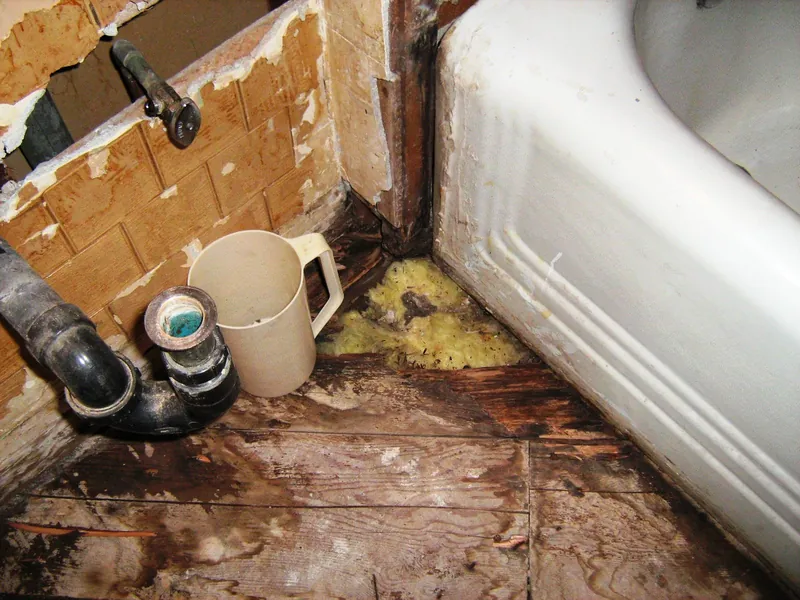
Materials that get sealed inside a wall while damp remain damp, and mold and rot both need moisture. During the first 24 to 48 hours, the EPA advises drying water-damaged areas and items to prevent mold growth, so walls should stay open until readings show the framing has dried.
The California Department of Insurance says drying wet areas and dehumidifying can help minimize the chance that mold will accompany water damage. Request the dry log before any wall is closed. It records readings at the same marked spots across several visits.
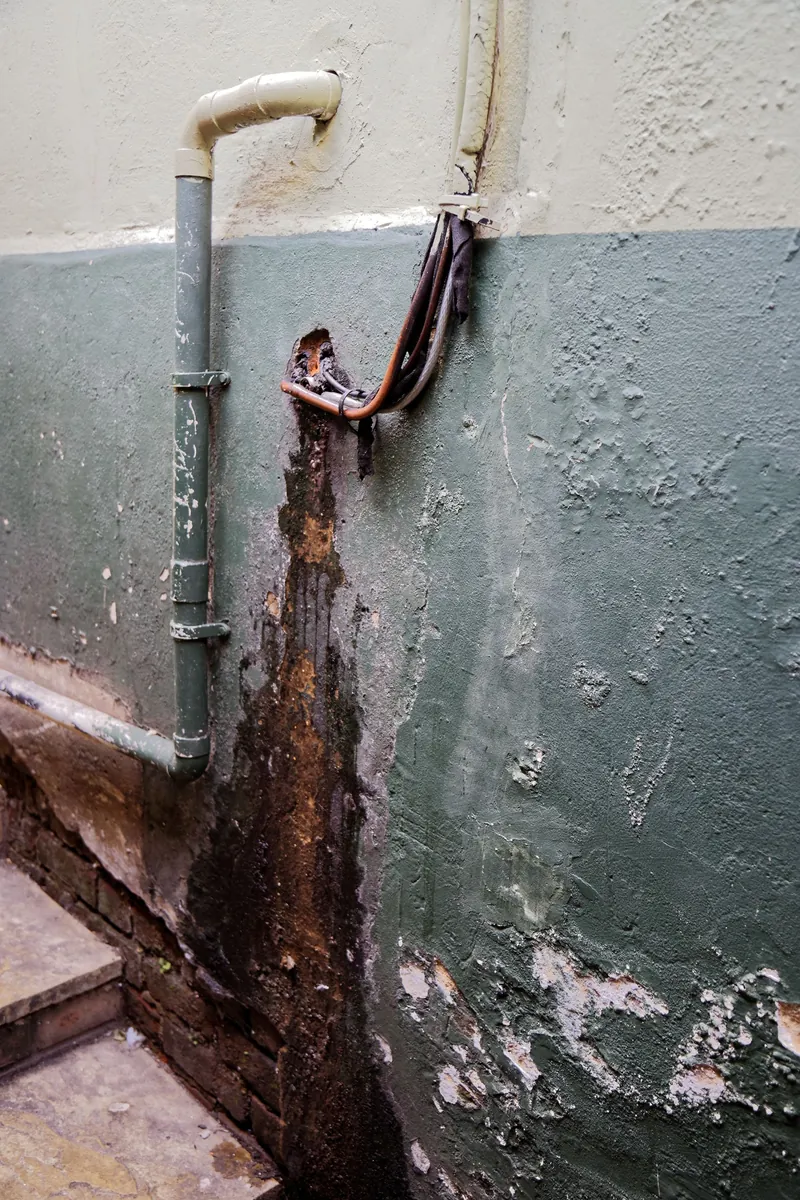

The EPA also says not to paint or caulk moldy surfaces. Should a wall that ought to be dry show stains or smell musty, read mold after water damage before anyone paints over it.
In what order does a rebuild after water damage proceed?
Anything that mitigation took out must be put back, in a sequence that lets each trade build on the last. It opens with repairing the leak itself, moves through paint and flooring, and finishes with a walk-through of the completed work.
- Confirm dry readings and fix the cause. The plumber, roofer or HVAC technician deals with the source first.
- Replace insulation in spots where wet material came out.
- Hang, tape and finish drywall. Drywall water damage repair covers when to replace and when to dry in place.
- Prime, texture and paint. A painted wall generally has to be repainted end to end to match.
- Reinstall trim and baseboard.
- Lay flooring from the bottom up: subfloor, underlayment, then the surface you see. See water-damaged floor repair.
- Reset cabinets, fixtures and appliances, then inspect the finished job with the contractor.
Ceilings follow their own steps on the ceiling water damage page, while kitchens and baths appear under bathroom and kitchen water damage.

Do California contractors need a license to repair water damage?
In most cases, yes. According to the Contractors State License Board, since January 1, 2025 an unlicensed person may take small jobs up to $1,000 only when they hire no workers and no building permit is required. That $1,000 covers labor, materials and everything else on the job.
A repair under $1,000 that needs workers or a permit requires a license in the proper classification. A rebuild after water damage seldom fits beneath that ceiling. The CSLB lists penalties for unlicensed contracting that include administrative fines of up to $15,000, up to six months in jail and fines up to $5,000.
The CSLB licenses and regulates about 285,000 contractors, and its website offers a license lookup. Do the lookup yourself instead of trusting a business card or a truck door. Since teams vary, also ask whether a licensed contractor will do the rebuild or whether it will go to a subcontractor.
What does California require in a home repair contract?
The CSLB consumer guide sets rules for deposits, payments and cancellation. A down payment on a home improvement job may not exceed $1,000 or 10 percent of the contract price, whichever is less. Later payments should track completed work rather than get ahead of it.
| Topic | What the CSLB says |
|---|---|
| Down payment | Capped at $1,000 or 10 percent of the contract price, whichever is less |
| Progress payments | Due as work gets completed, not ahead of it |
| Changes to the job | Require a written change order |
| Right to cancel | Three business days, stretching to five business days when the buyer is 65 or older |
| Refund after cancelling | Money comes back within 10 days of the request |
The guide notes an exception for emergency service and repair contracts that a consumer requests on short notice: the right to cancel ends once the contract is signed and work starts. Read the contract before signing and keep a copy. For help with a contractor problem, the CSLB lists 800-321-2752.
What does it cost to repair water damage?
We cannot quote a California price, because each provider or contractor sets its own. For rough scale, Fixr reports national costs of $1,200 to $5,000 for water damage restoration, averaging $3,000. Local labor and material prices can push an actual quote higher or lower.
The table below gathers per-square-foot ranges published by Fixr for each material, plus a ceiling range from Bob Vila. These are nationwide numbers and nobody's quote.
| Material | Published national range | Source |
|---|---|---|
| Drywall | Per square foot: $1.50 to $3 | Fixr |
| Carpeting | Per square foot: $4.75 to $10.50 | Fixr |
| Plaster | Per square foot: $6.25 to $18.75 | Fixr |
| Hardwood | Per square foot: $10 to $15 | Fixr |
| Ceiling repair | $350 to $1,250 overall | Bob Vila |
Triple-I advises gathering written bids that itemize materials and prices. What moves the total is laid out in the water damage restoration cost guide.
Who performs the rebuild, and is a permit needed?
It varies by provider. Some restoration businesses employ rebuild crews, while others quit once the structure is dry. You could also turn to a general contractor, a remodeler or separate trades. The building department for your address decides on permits, not the contractor.
One business for both phases gives you a single contact. Hiring separately lets you compare bids and choose a builder you already trust. Questions worth putting to any provider:
- Do you rebuild, or does your work end once drying is done?
- When a subcontractor does the work, who stands behind it?
- Is the rebuild priced on its own, apart from mitigation?
- If a permit is needed, who pulls it and who pays?
- What does the estimate leave out?
Whether a permit applies often differs between cosmetic work such as paint and structural, electrical or plumbing work. Ask your city or county building department before work starts, and get the answer on paper. The guide to choosing a restoration company has a longer checklist.
Is it smart to delay repairs until the claim settles?
Get the home dry now, and pause major permanent repairs until the claim is clear. Triple-I advises protecting the property from further damage and letting the adjuster assess it before major permanent repairs begin. Waiting protects your evidence and your coverage.
Hold on to damaged materials, or photos of them, until the adjuster has visited, and save receipts. California regulations give an insurer fifteen calendar days to acknowledge a claim after notice and forty calendar days to accept or deny it after proof of claim (10 CCR 2695.5 and 2695.7).
The California Department of Insurance says homeowners policies do not cover flood damage but do cover other kinds of water damage, and that mold damage from a covered peril may be covered. The water damage insurance claim guide lays out the sequence, and FAIR Plan water damage applies if the FAIR Plan insures your home.
What belongs in a repair estimate before you sign it?
Look for a scope written line by line that names rooms and materials and states what is excluded. A single lump sum hides gaps. Tie each item removed during tear-out to a rebuild line, and confirm nothing is billed twice.
- Scope: which rooms, how many square feet, what materials, what grade of finish.
- Exclusions: items left out, such as paint colors, putting appliances back, permit fees and hauling debris away.
- Change orders: the written process for pricing and approving surprises.
- Payments: amounts due at signing and at each stage, measured against the CSLB limits above.
- Warranty: the coverage the contractor offers and its length, spelled out on paper.
Practices vary from provider to provider, so get each answer straight from the source before committing.
Can new paint and flooring blend in with what was there?
Not always, so bring it up before the work begins. Paint fades, flooring lines get discontinued and wall texture varies from one hand to another, which means a fresh patch beside an older wall can stand out even when the workmanship is sound.
Typical fixes include painting a wall out to its corner, replacing flooring across a continuous run, and recording the agreed materials in writing. Matching may or may not be paid by your insurer, depending on the policy, so ask rather than assume.
- Paint: have the whole wall done, not one spot.
- Texture: ask to see a sample patch before the wall is finished.
- Flooring: find out the plan if that exact product is no longer sold.
- Cabinets and trim: ask who will match stain and profile, then have it added to the estimate.
What makes a water damage repair fail?
Most failures come from rebuilding before the cause was fixed or before the structure dried. The cause could be a pinhole leak in aging copper, a water heater in the garage, a roof penetration or an attic air handler drain. Fix the source first, or the stain comes back.
Begin with the page that fits your damage:
- Slab leaks beneath a concrete floor.
- Water heater leaks in a garage or closet.
- Roof leaks after a storm.
- Burst pipes and supply-line failures.
If water is still coming in, start with emergency water damage help. To learn where providers accept requests near your ZIP code, browse the service areas or ask for a connection.
Sources: EPA, A Brief Guide to Mold, Moisture and Your Home; EPA, Mold Cleanup in Your Home; CSLB, Handyperson Exemption to Increase to $1,000 in 2025; CSLB, Terms of Agreement: A Consumer Guide to Home Improvement Contracts; California Department of Insurance, Residential Property Claims Guide; 10 CCR 2695.5; 10 CCR 2695.7; Fixr, Water Damage Restoration Cost; Bob Vila, How Much Does Water Damage Restoration Cost?; Triple-I, Settling insurance claims after a disaster.
Water Damage Cleanup California is the local water damage restoration line and information resource for California. When you call or send a request, it reaches a local water damage restoration team that serves your area. That team confirms whether it can reach you and gives its own scope, price and timing. Confirm them directly before you agree to anything.