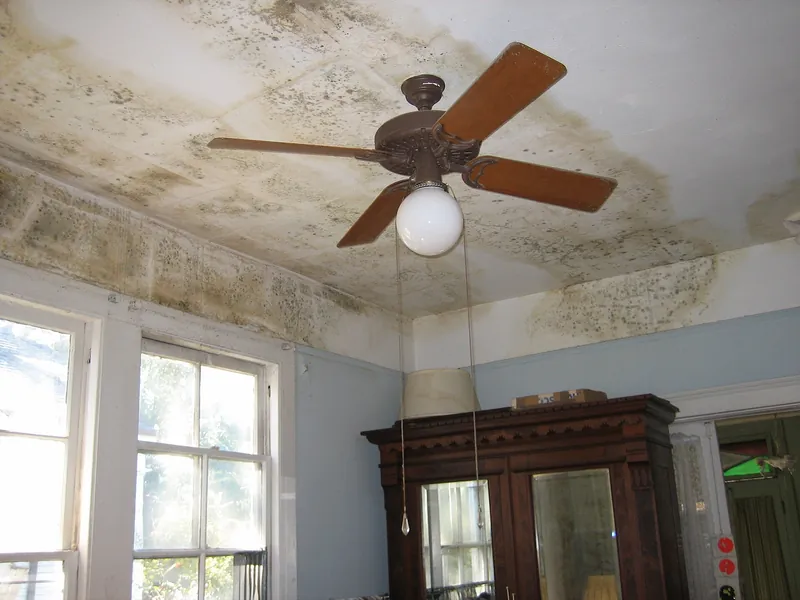
The short version
Mold after water damage in California begins wherever materials stay damp, which is why the EPA advises drying inside 24 to 48 hours. A patch smaller than roughly 10 square feet is usually a homeowner job. The state issues no license for mold assessors or remediators, so verify credentials and contractor licenses on your own.
On this page (11)
- How quickly does mold take hold once a California home gets wet?
- Is there a state license for mold inspectors or remediators in California?
- What does the Toxic Mold Protection Act actually do?
- How can I spot mold after a leak or flood?
- Which parts of a California house hide mold most often?
- When is DIY mold cleanup reasonable, and what is the 10 square foot guideline?
- What steps head off mold right after a leak?
- Does mold after a leak threaten health?
- Will a California homeowners policy pay for mold?
- What are a renter's options when mold appears in California?
- At what point should I bring in a restoration provider?
How quickly does mold take hold once a California home gets wet?
Mold needs a damp surface to start, and the EPA says to dry wet areas and belongings in the first 24 to 48 hours to head it off. State public health guidance makes the same point simply: manage the dampness and you manage the mold. How long things stay wet matters more than climate.
The California Department of Insurance (CDI) echoes this in its claims guide, telling owners to locate and stop leaks at the source, then dry and dehumidify, and cautioning that delayed cleanup can let mold begin.
An unnoticed winter roof leak can keep a wall wet for weeks, and a pinhole leak in an old pipe can do likewise beneath a floor. Acting fast keeps a water mitigation job a drying job rather than a mold job.
Is there a state license for mold inspectors or remediators in California?
There is not. The California Department of Public Health (CDPH) states that California has no legal requirement for training, licensing or certification of mold assessors or remediators, and no state regulations covering mold inspection, assessment or remediation. Many owners assume otherwise.
CDPH adds that national groups such as NORMI, NAMRI and the IICRC issue credentials, which it lists for information only and does not endorse. A credential may help, but it is not a state license.
Building work follows separate rules. The Contractors State License Board (CSLB) says a license is needed for projects over $1,000 in labor, materials and other costs, or for any job of any size that involves hired workers or permits. A company rebuilding drywall after mold must still meet those rules. How to choose a restoration company covers license checks.
CDPH further says California has no science-based exposure limits for indoor mold, so no test result can tell you a number is safe.
What does the Toxic Mold Protection Act actually do?
It is a state law, Health and Safety Code section 26100 and following, which names itself the Toxic Mold Protection Act of 2001 in its opening section. It tells CDPH to study exposure limits and assessment standards. It does not create any licensing system for mold work.
Most people encounter section 26148, which requires residential landlords to hand prospective tenants a CDPH booklet on mold health risks before a rental or lease agreement. CDPH's renter booklet says that duty applies from January 1, 2022.
The Act does not protect a homeowner facing a leak, and it does not make a mold company state-approved. Renter rights are in the tenant and condo guide.
How can I spot mold after a leak or flood?
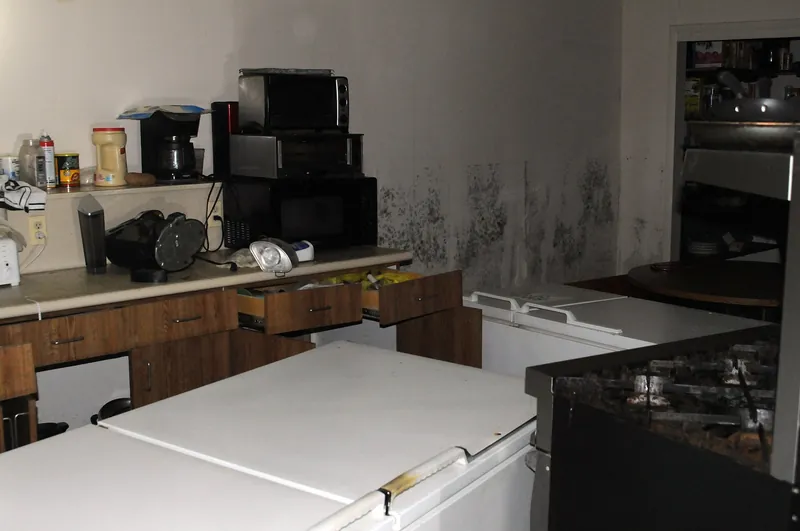
CDPH's renter booklet names visible mold, a moldy odor, visible water damage such as stains, peeling paint, warped floors or rotting wood, and damp or moist materials. Any single one is reason enough to start searching for the water behind it.
- Odor. A musty smell that comes back after airing out the room usually means damp material close by. Common odors are sorted in the water damage smell guide.
- Visible growth. Spots or fuzzy patches in many colors may show on walls, ceilings and trim. Color cannot tell you the type.
- Stains and peeling. A ceiling ring or bubbling paint shows water reached that spot, even if it has since dried.
- Warped or soft materials. Cupped flooring, swollen baseboard and spongy drywall suggest moisture within.
Growth out of sight is common, so a wall that looks clean proves nothing. More to check is on the signs of hidden water damage page.

Which parts of a California house hide mold most often?
Mold settles where water soaked in and air could not circulate: within walls, beneath flooring, above ceilings and near appliances. The relevant spots depend on how your house is built, so use the table as a checklist and skip rows that do not apply.
| Place | Water source | Clues |
|---|---|---|
| Wall bases and flooring in a slab home | A supply line leaking under the slab, an appliance hose or an overflow | Damp carpet edges, cupped boards, a musty odor at floor level |
| Crawl space, where the house has one | A drain or supply leak, or runoff entering after a downpour | Damp insulation, a musty smell coming through floor vents, soft subfloor |
| Ceilings and attic | A roof leak or an air handler drain line that backs up | Brown rings, drooping drywall, dark patches on framing |
| Cabinets beneath sinks | A slow drip at a trap, supply line or dishwasher hose | Swollen cabinet bottoms, a sour smell, discolored wood |
| Near the water heater, often in a garage | Pipe connections or a failing tank | Rust at the base, a damp wall beside it, stained drywall |
Leaks in the slab itself are covered under slab leak water damage, and soaked flooring and padding under wet carpet drying.
When is DIY mold cleanup reasonable, and what is the 10 square foot guideline?
According to the EPA guide, if the moldy area totals under about 10 square feet, around a 3 ft by 3 ft patch, you can in most cases do the work yourself. Bigger areas, growth inside walls and anything linked to sewage call for a professional.
For hard surfaces the CDC names household cleaner, soap and water, or at most 1 cup of household bleach in 1 gallon of water. Do not mix bleach with ammonia or other cleaners. Put on rubber boots, gloves and goggles, and open a window.
The EPA further advises against painting or caulking a moldy surface, since sealing it in hides the problem while dampness persists. Materials soaked through, like carpet pad or insulation, are typically discarded rather than scrubbed.

What steps head off mold right after a leak?
Shut off the water, then start drying and separating what is wet. Speed beats product choice, because the drying window is only 24 to 48 hours. Safety comes first whenever water stands near outlets or the electrical panel.
- Cut off the source. Close the main water shutoff, or handle the failed appliance or roof opening first.
- Make the power safe. Keep out of standing water near outlets, and have someone who can stay dry switch power off at the panel.
- Carry out what you can. Move rugs, boxes and soaked furniture to a dry area so the floor can air out.
- Document everything with photos before throwing anything away, and keep receipts, as Triple-I advises.
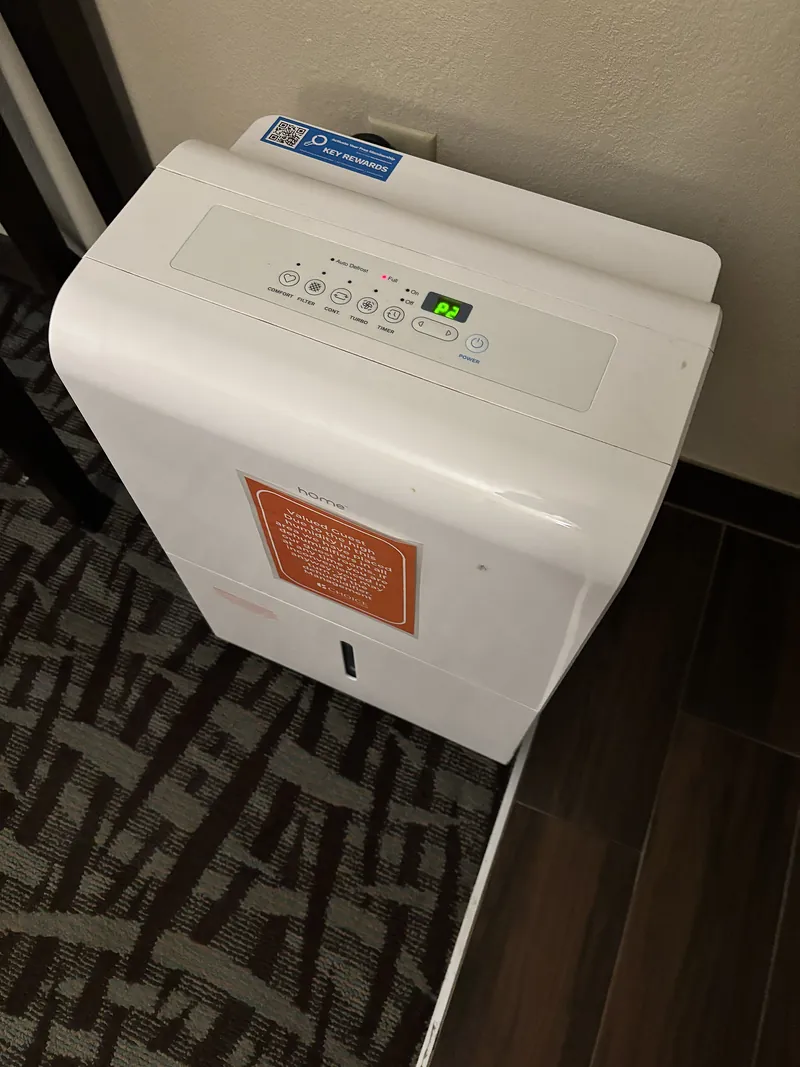
- Dry the space. Run fans and a dehumidifier and hold humidity under 60 percent; the EPA's ideal is 30 to 50 percent.
- Notify your insurer, then a provider if drywall, insulation or flooring stayed wet.
The restoration cost guide answers pricing questions. If a sewer line was the source, start with sewage backup cleanup.
Does mold after a leak threaten health?
It may. Per the CDC, mold can bring on nasal stuffiness, a sore throat, coughing or wheezing, stinging eyes or a skin rash. Those with asthma or a mold allergy can respond more strongly, and people with weak immune systems or chronic lung disease can develop lung infections.
If anyone at home has symptoms near a damp area, keep them clear of it and speed the drying. Avoid tearing out large wet sections on your own, because disturbing them can release spores into the air.
Sewage and outside flood water belong to a separate category. The IICRC S500 standard classes them as Category 3, grossly contaminated water, and the EPA says to hire a professional experienced with buildings damaged by contaminated water.
Will a California homeowners policy pay for mold?
In some cases. CDI's claims guide says mold damage resulting from a covered peril may be covered under a homeowners policy. The NAIC adds that policies often exclude mold cleanup costs, so the water's source and your policy wording settle the question.
Triple-I says policies do not pay for damage from lack of maintenance, mold or pests. A leak ignored for months is therefore harder to claim than a sudden pipe failure. Report any water loss promptly, as CDI advises, and keep cleanup receipts.
The insurance claim guide walks through the process, and FAIR Plan water damage addresses that policy type. Standard homeowners policies exclude flood, so it needs separate cover.
What are a renter's options when mold appears in California?
Notify the landlord in writing and keep copies. Under Health and Safety Code section 17920.3, a dwelling is substandard when dampness or visible mold endangers occupants' health, and CDPH says the owner must then correct it. The same section leaves out minor mold on surfaces that normally collect moisture.
The CDPH FAQ adds that the housing code treats both mold and dampness as substandard conditions the owner must remediate if a code enforcer cites them. Mold at work falls under Cal/OSHA.
Civil Code section 1941.1 links habitability to section 17920.3 and to working plumbing and a weatherproof roof and walls. The tenant guide has details and renters insurance.
At what point should I bring in a restoration provider?
Make the call if materials stayed wet beyond 48 hours, mold spreads past a small patch, or the water cannot be traced. Call sooner if the water was dirty. A provider can measure moisture inside materials, something eyes and nose cannot do.
Restoration teams differ in what they offer. Ask whether each handles drying, mold assessment or removal. Since California has no state mold license, ask what training supports the work, and request moisture readings and photos.
For active water, see emergency water damage restoration. After a storm, the after-storm checklist can guide you.
Sources: CDPH, Frequently Asked Questions about Mold; CDPH, Dampness and Mold for Renters in California; Health and Safety Code 26100, Toxic Mold Protection Act; Health and Safety Code 17920.3; Civil Code 1941.1; CDI, Residential Property Claims Guide; CSLB, handyperson exemption; EPA, Brief Guide to Mold, Moisture and Your Home; EPA, Mold Cleanup in Your Home; CDC, About Mold and Your Health; NAIC, Homeowners Insurance; Triple-I, Which disasters are covered; Triple-I, Settling claims; IICRC S500
Water Damage Cleanup California is the local water damage restoration line and information resource for California. When you call or send a request, it reaches a local water damage restoration team that serves your area. That team confirms whether it can reach you and gives its own scope, price and timing. Confirm them directly before you agree to anything.