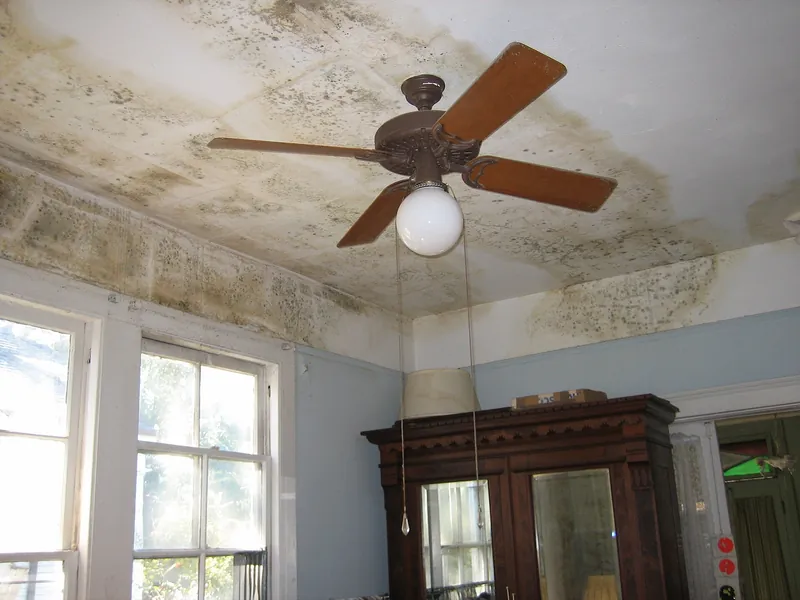
The short version
An AC condensate leak in California means the drain line or pan under your cooling unit has overflowed. Turn the system off, catch the water, photograph the damage and call an HVAC contractor for the drain. Wet ceilings and insulation need drying within the first 24 to 48 hours, per the EPA, to head off mold.
On this page (10)
- What is an AC condensate leak and how does it damage a house?
- How can I tell my AC drain is leaking water into the house?
- What should I do first when my AC is dripping water?
- Why do AC condensate drain lines clog?
- Does an attic air handler leak harm ceilings and insulation?
- How soon can mold grow after an AC leak?
- Who fixes the drain, and who dries the wet ceiling?
- Does homeowners insurance cover AC condensate water damage?
- What does drying and repair after an AC leak cost in California?
- How do I keep the AC drain from clogging again?
What is an AC condensate leak and how does it damage a house?
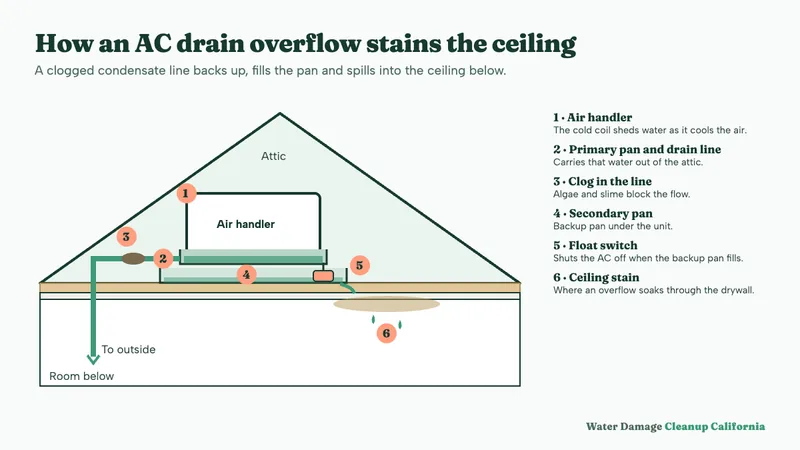
An AC condensate leak happens when the water your cooling system pulls out of the air has nowhere to go. The drain line clogs, the pan under the unit fills, and the overflow soaks whatever sits below. ENERGY STAR warns that a plugged drain can cause water damage in the house and affect indoor humidity levels.
A cooling coil sweats the way a cold glass does on a warm day. That water is normally carried away through a small pipe and a catch pan. If your air handler hangs in the attic, a closet or the garage, the spill usually shows up first as a ceiling stain or a wet closet floor.
The water starts out cleaner than a toilet or sewer leak, but it picks up dust and slime on its way down. It keeps soaking materials for as long as the system runs.
| Where the unit sits | First place damage appears | What it tends to soak |
|---|---|---|
| Attic | A ceiling stain or sag below the unit | Insulation, drywall, light fixtures, paint |
| Closet or hallway | A wet floor and a damp wall behind the unit | Carpet, baseboards, the lower strip of drywall |
| Garage | Puddles or stains beside the unit | Stored boxes, shared walls with living space |
| Crawl space | Often nothing visible for a long time | Subfloor, joists, insulation under the floor |
If the water is already coming through a ceiling, the ceiling water damage page explains what a sagging ceiling needs.
How can I tell my AC drain is leaking water into the house?
Look for water near the indoor unit, a stain on a ceiling or wall below it, a musty smell when the system runs, or an AC that shuts itself off. Some units have a float switch that stops the cooling when the pan fills. Each clue has a harmless look-alike, so match them up.
| Clue | What it points to | Other explanations |
|---|---|---|
| Water under or beside the unit | A full pan or a cracked drain connection | A nearby water heater or a supply line |
| Brown ring on the ceiling | Repeated overflow above that spot | A roof leak or a bathroom upstairs |
| AC stops while the house is warm | A float switch doing its job | A tripped breaker or a thermostat problem |
| Musty smell near vents | Damp insulation or a wet pan | A dirty filter or old ductwork |
| Drain pipe outside stays dry | A clog somewhere along the line | A mild day with little cooling |
Compare the stain with the weather. A spot that grows only on days the AC runs, and stays quiet on dry cool days, points toward the drain and away from the roof. The signs of hidden water damage guide covers stains and smells from other sources.
What should I do first when my AC is dripping water?
Switch the AC off at the thermostat, then at the breaker if the unit is wet or the water is near wiring. Catch the drip with a bucket, move belongings out of the way, and take photos. Then call an HVAC contractor for the drain and a restoration team for anything soaked.
- Turn off the cooling. A running unit keeps making water, and a wet air handler is an electrical hazard.
- Put a bucket or towels under the drip and lift furniture, boxes and rugs off the wet area.
- Photograph the stain, the pan and the drain pipe before you touch anything.
- Keep the area ventilated with a fan pointed at the wet surface if the power circuit there is dry and safe.
- Phone an HVAC contractor and say that the drain is suspected and that the system is switched off.
- Request a restoration team if ceilings, walls or floors are wet. The what to do after water damage guide lists the steps for the first hours.
A ceiling that bulges with trapped water is a separate emergency. Do not poke it from directly underneath, and read the emergency help page if water is still moving.
Why do AC condensate drain lines clog?
Dust, slime and debris build up inside a small pipe that stays damp all summer. Over a cooling season that film thickens until the water backs up into the pan. Nothing about the clog is mysterious, which is why ENERGY STAR lists a drain inspection in a standard maintenance visit.
- Slime and algae grow in a pipe that is damp and warm for months.
- Dirt and fibers arrive when a filter is dirty or missing, so they pass over the coil and wash into the drain.
- Kinks and sags in the pipe hold water in low spots where debris settles.
- Rust or cracks in an old metal pan let water escape sideways, even when the drain flows well.
- Frozen coils melt into more water than the line was sized to carry, which can overwhelm a drain that normally copes.
ENERGY STAR also tells homeowners to inspect, clean or change air filters once a month. That habit keeps dirt off the coil and out of the line. For leak sources that are not the AC, the water damage prevention guide has a wider checklist.
Does an attic air handler leak harm ceilings and insulation?
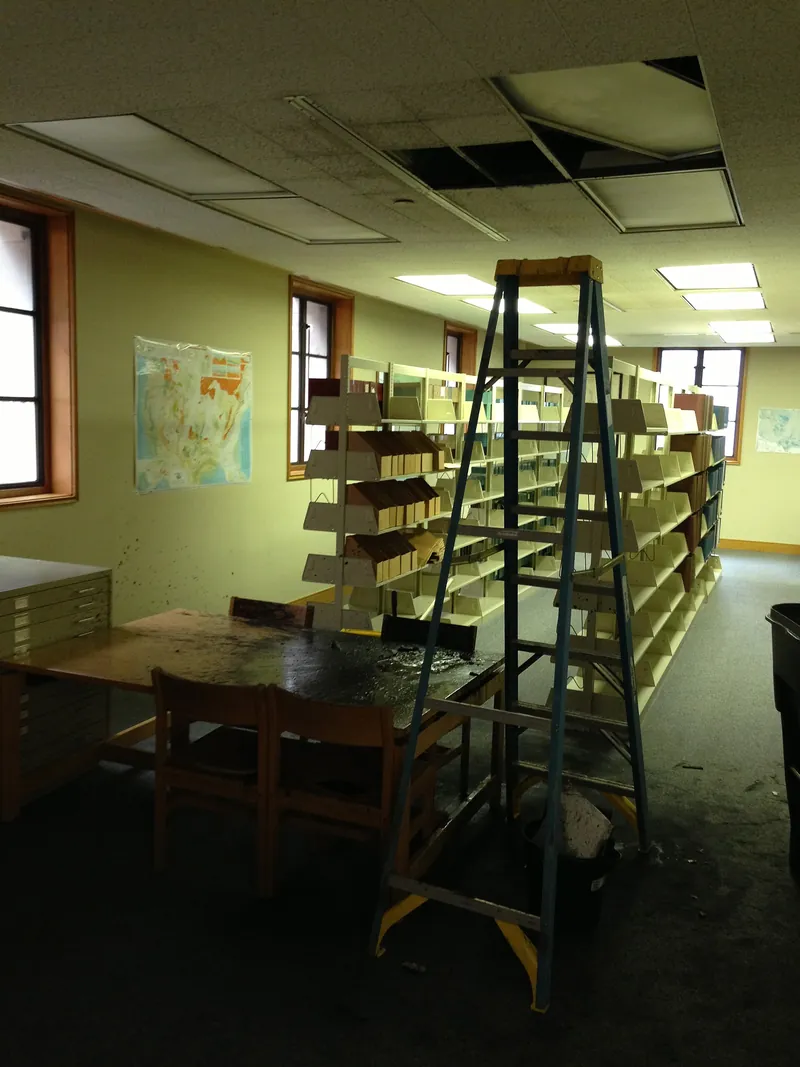
Yes. Water drops into the insulation first, where it spreads and holds, then soaks the ceiling drywall from above. The stain you see is usually the visible edge of a larger wet area, and wet insulation stops insulating until it dries.

- Drywall can stain, soften and sag, and paint may bubble before the board looks wet.
- Insulation that stays wet can hold moisture against the ceiling for a long stretch.
- Recessed lights and fans can collect water, so keep those circuits off until an electrician says otherwise.
- Stored items in an attic or closet absorb water and can mold if they stay boxed.
The drywall page explains when a ceiling can dry in place and when sections come out. Restoration teams decide on site, and each one handles scope differently, so ask what they plan to remove and why.
How soon can mold grow after an AC leak?
Mold can start when materials stay wet. The EPA says to dry water-damaged areas and items during the first 24 to 48 hours to prevent mold growth. An AC drip that runs for weeks behind a ceiling or closet wall is the kind of slow leak that gives mold time.
- The EPA recommends keeping indoor humidity below 60 percent, ideally between 30 and 50 percent.
- The EPA says not to paint or caulk moldy surfaces.
- The EPA notes that a moldy patch smaller than about 10 square feet can in most cases be handled by the occupant.
- The CDC lists a stuffy nose, sore throat, coughing, wheezing and burning eyes as mold effects, and warns people with asthma or a mold allergy of stronger reactions.
If the dark patch is larger, sits above the ceiling where you cannot see it, or keeps returning, bring in a professional. The mold after water damage guide covers California mold rules, and the indoor humidity page explains what readings mean.
Who fixes the drain, and who dries the wet ceiling?
An HVAC contractor fixes the drain, a restoration team dries the wet materials, and a drywall or paint contractor rebuilds afterward. Mixing these up wastes time, because drying a ceiling before the drain is fixed only invites the next overflow and a second round of damage.
- HVAC contractor: clears or replaces the drain, checks the pan and float switch, and finds out why it clogged.
- Restoration team: removes soaked insulation or drywall if needed, dries the structure and records moisture readings.
- Drywall, paint or flooring contractor: repairs and finishes once readings show the area is dry.
- Insurer: decides what the policy pays after its own review.
The Contractors State License Board offers a license lookup on its Hire a Contractor page. A call reaches a local water damage restoration team, and the guide to choosing a company lists questions to ask. You are never obliged to hire anyone.
Does homeowners insurance cover AC condensate water damage?
Often, but the policy decides. Triple-I lists accidental discharge or overflow of water from plumbing, heating, air conditioning and similar systems among the named perils on standard forms. The same source says lack of maintenance and mold are not covered, so a long-ignored clog can be argued over.
The NAIC says homeowners policies often exclude mold costs. The California Department of Insurance tells homeowners to find and stop leaks at the source and notes that drying and dehumidifying help limit mold. Photos and a dated repair invoice help show that you acted fast.
Report early and ask your insurer in writing what it covers, including the drain repair itself. Under 10 CCR 2695.5, an insurer must acknowledge a claim no more than 15 calendar days after notice. Under 10 CCR 2695.7, it must accept or deny within 40 calendar days of proof of claim.
The water damage insurance claim guide walks through the process. Renters and condo owners face extra questions, covered on the renters, landlords and condos page.
What does drying and repair after an AC leak cost in California?
No verified California price for this kind of job is on file here, so none is given. Fixr's national guide, updated in 2025, shows water damage restoration ranging from $1,200 to $5,000 with a national average of $3,000. An AC overflow that is caught early often sits at the small end of any range.
- Fixr prices Class 1 damage at $150 to $400, Class 2 at $500 to $1,000 and Class 3 at $1,000 to $3,000.
- Fixr puts drywall restoration at $1.50 to $3 per square foot.
- The IICRC S500 standard counts supply-line water as Category 1 and washer or dishwasher water as Category 2, and a restoration team rates your water on site.
These are national reference figures, not quotes. Ask each restoration team for a written scope and price before work begins. The restoration cost guide explains what moves a bill up or down, and the categories and classes page covers the labels.
How do I keep the AC drain from clogging again?
Change or clean the filter every month, schedule a pre-season check, and test the drain before the hot weather. ENERGY STAR advises an annual contractor check-up before the cooling season, with spring best for cooling systems, because contractors get busy once summer arrives.
- Inspect, clean or change the air filter once a month during the cooling season, as ENERGY STAR advises.
- Ask the contractor to inspect the condensate drain and the pan at every annual visit.
- Look at the pan and the drain outlet when you change a filter, and note any standing water.
- Ask the contractor whether a float switch is installed, which shuts off cooling when the pan fills.
- If the house sits empty for part of the year, read the second home leak monitoring guide.
Keep each contractor invoice with your records, since it shows the system was maintained.
Sources: ENERGY STAR, Maintenance Checklist; EPA mold and moisture guide; EPA, Mold cleanup in your home; CDC, About Mold and Your Health; Triple-I, Which disasters are covered by homeowners insurance; NAIC, Homeowners Insurance; California Department of Insurance, Residential Property Claims Guide; 10 CCR 2695.5; 10 CCR 2695.7; Fixr, Water Damage Restoration Cost; IICRC S500; CSLB, Hire a Contractor.
Water Damage Cleanup California is the local water damage restoration line and information resource for California. When you call or send a request, it reaches a local water damage restoration team that serves your area. That team confirms whether it can reach you and gives its own scope, price and timing. Confirm them directly before you agree to anything.