The short version
Water damaged floor repair in California begins with shutting off the leak, pulling up standing water and drying quickly. Hardwood hit by clean water is often recoverable when the subfloor dries as well, laminate rarely is, and flood or sewage exposure calls for replacement. EPA guidance is to dry within 24 to 48 hours.
On this page (13)
- What are the first steps after water reaches a floor?
- Which flooring materials handle water best and worst?
- What is the difference between cupping, crowning and buckling?
- Will hardwood survive a leak in a California home?
- Does a slab or a crawl space change how floors get wet?
- Is it realistic to dry a wood floor on my own?
- How do laminate and vinyl plank hold up after a leak?
- Does tile come through a leak unharmed?
- Can moisture stay hidden in the subfloor?
- How should I handle floors touched by flood water or sewage?
- How do I know whether to replace a floor or keep drying it?
- What does floor water damage repair cost in California?
- Is floor damage covered by a California homeowners policy?
What are the first steps after water reaches a floor?
Cut off the water, lift anything sitting on the wet surface and get air moving across it. Water damaged floor repair in California works best when drying begins early, since boards and the layers beneath hold moisture long after the top looks normal again.
- Cut off the supply. Turn the fixture stop or the main valve, or get a plumber to repair the leak. A floor cannot dry while more water keeps coming.
- Turn off the breaker serving the wet rooms, provided the panel is reachable without stepping in water.
- Clear the room. Take out rugs, boxes and furniture, and set wooden legs on foil or plastic so their stain does not seep into the finish.
- Take photos before cleaning anything, capturing gaps, lifted edges and discoloration.
- Start fans and a dehumidifier. Leave space heaters out of it, because rapid heat can split and warp boards.
- Contact your insurer and a restoration team. To prevent mold growth, the EPA advises that water-damaged areas and items be dried within 24 to 48 hours.
Do not sand, seal or refinish until moisture readings show dry wood. For a failed pipe, the burst pipe page walks through shutting the water off, and water damage repair outlines the larger process.
Which flooring materials handle water best and worst?
Every material breaks down differently, so what is underfoot says a lot about whether it survives. Solid wood frequently bounces back when drying starts quickly. Laminate is the toughest to rescue. Tile itself holds up, though the layers under it may not.
| Flooring | What water does | Can it be dried? | Replacement signs |
|---|---|---|---|
| Solid hardwood | Boards swell and cup, and may later crown or lift | Often, when the water was clean and the subfloor dries as well | Lifting boards, dark stains, a musty odor that will not fade |
| Engineered wood | The glued layers swell and may separate | Sometimes, after a light soaking | Peeling layers, bubbles, edges that stay up |
| Laminate | The fiberboard core swells along the seams | Rarely, once the core has soaked through | Crumbling edges, planks that stop locking together |
| Vinyl plank | The plank shrugs off water, but seams let it past | Usually the plank; the base below is the worry | Curling edges, trapped water, a smell |
| Tile | The tile is fine; water moves through grout lines | Usually, once the bed beneath is checked | A hollow ring, cracked grout, a soft base |
Read the table as a general guide, not a ruling on your floor. Before anyone decides what stays, a restoration team should measure moisture in both the flooring and the subfloor. Carpet is covered separately under wet carpet drying.
What is the difference between cupping, crowning and buckling?
Each term names a way wood deforms as it takes on moisture, and each hints at the water's path. Cupped boards curl up at the edges, crowned boards bulge in the middle, and buckling is the extreme case where boards heave away from the subfloor.
- Cupping: the bottom of the board absorbed more than the top did. That often suggests a slow leak or damp ground below the floor.
- Crowning: the upper face soaked up more, or someone sanded a cupped floor before it had finished drying.
- Buckling: boards swell enough to rise in a ridge, usually after a big or prolonged soaking.
Gentle, even drying may calm mild cupping. Boards that have buckled seldom settle flat, so hold off on permanent decisions until the readings come back dry.
Will hardwood survive a leak in a California home?
Often it does, provided the water was clean, drying began promptly and the subfloor can dry out too. Dense hardwood absorbs water slowly and releases it slowly, which gives you a short window to act before lasting harm sets in.
The odds drop when water stood for days, brought contamination or seeped up from below over weeks. Dark staining, a persistent musty smell and boards separating from the subfloor lean toward replacement. Readings on the boards can show which situation you face. Restoration teams differ, so ask if they dry wood floors in place.
Does a slab or a crawl space change how floors get wet?
It does, because the foundation shapes how water arrives and how it escapes. Plenty of Southern California and Central Valley homes rest on concrete slabs, while older houses often stand on raised foundations above a crawl space. Yours could be either one.
- On a slab: wood is typically glued or floated over concrete. A leaking pipe in or beneath the slab can push moisture upward, and concrete lets go of it slowly.
- Over a crawl space: boards rest on a wood subfloor with open air below. A leak under the house can soak the subfloor from underneath, and a damp crawl space can keep it that way.
Tell any restoration team which foundation you have, and ask how they plan around it. A floor that cups without any spill on top may point to a pipe problem; the slab leak page lists the warning signs.
Is it realistic to dry a wood floor on my own?
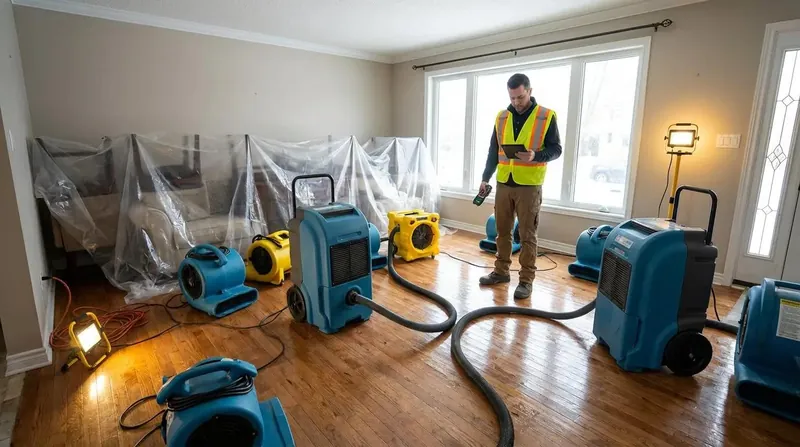
For a small, clean spill that you notice right away, yes. Mop or vacuum the water, run fans and a dehumidifier, and watch that the boards stay flat. Bigger losses need professional equipment and moisture readings rather than a box fan and a guess.
Restoration teams often bring drying mats that draw moisture out of the surface, plus dehumidifiers and air movers. They record readings on boards and subfloor and continue until the numbers level off. The EPA says indoor humidity should stay under 60 percent, ideally 30 to 50 percent.
Drying need not mean ripping up the whole floor. Removing a few boards by a wall can let air get to the subfloor. Equipment is described on the structural drying page.
How do laminate and vinyl plank hold up after a leak?
After a true soaking, laminate is the floor most likely to be replaced. Its compressed fiberboard core swells at the seams and never shrinks back. Vinyl plank typically makes it through, although water can slide beneath and stay pressed against the base.
- Laminate: puffed seams, crumbling edges and planks that no longer lock mean the affected section usually comes up. Swapping a few bad planks is sometimes possible.
- Vinyl plank: curling edges, a smell or a soft base usually mean the planks get lifted so the layer under them can dry.
When a floor looks fine but smells musty or feels springy, believe the moisture meter before your eyes. If odor is your main clue, the water damage smell page can help.
Does tile come through a leak unharmed?
The tile itself generally does. Water does not damage it, yet it can slip through grout lines and gather in the mortar bed or subfloor below. That concealed layer is where problems usually start, well before anything appears on the surface.
Rap on the tiles. A hollow sound, cracked grout or a soft, damp base suggests the layers underneath got wet. Showers and sinks sit directly over a subfloor, so bathrooms and kitchens are frequent culprits; bathroom and kitchen water damage shows where those leaks hide.
Can moisture stay hidden in the subfloor?
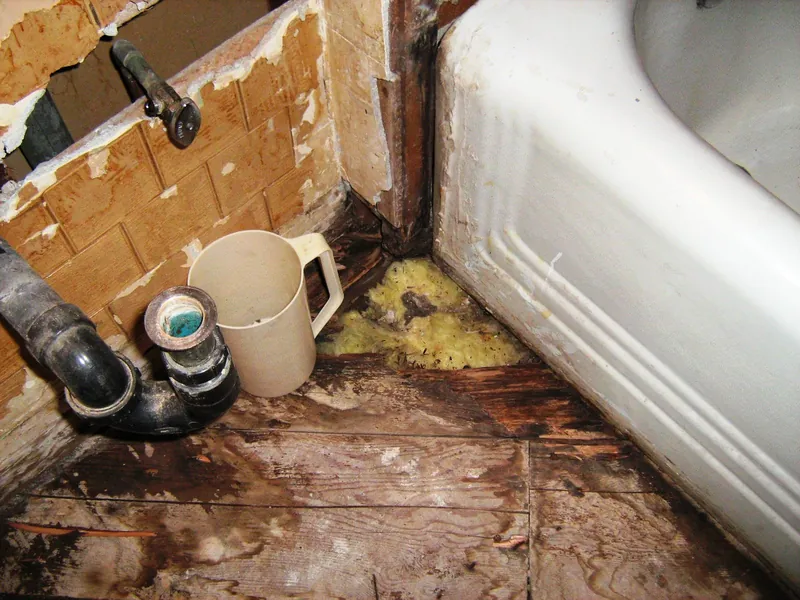
It can, and that is a frequent reason floors fail weeks after the leak. Water creeps beneath the flooring through seams and along walls, then settles between layers that air never touches. A floor that looks dry may be resting on a soaked layer.
Watch for a springy feel, boards that start cupping after the surface dried, baseboards that remain damp and an odor with no obvious origin. A restoration team may pull up some boards or drill small holes to reach that layer. Left wet, plywood and similar panels weaken and can rot.

How should I handle floors touched by flood water or sewage?
Assume contamination and expect porous flooring to come out. The IICRC S500 standard rates rising flood water, outside surface water and sewage as Category 3, grossly contaminated. Wood, laminate and anything over a pad generally cannot be cleaned to a safe standard.
The EPA advises hiring a professional experienced with contaminated-water damage. NOAA's account of the winter of 2022 to 2023 says flooding struck the Central Valley, Salinas Valley and Santa Cruz Mountains, so storm water reaching floors in this state is not unusual. Wear boots and gloves, and keep children and pets away.
Before discarding anything, read flood damage restoration and sewage backup cleanup.
How do I know whether to replace a floor or keep drying it?
Replacement makes sense once a material cannot go back to a flat, stable form, or when the water was contaminated. A drying attempt is worth it if the water was clean, work started fast and the floor is solid wood or something else that tolerates moisture.
| Situation | Usual call |
|---|---|
| Clean water, fast start, solid hardwood | Attempt drying, then check that it lies flat |
| Weeks of dampness from underneath, black staining | Plan on replacement plus a subfloor inspection |
| Laminate with puffed seams | Replace the affected section |
| Floor exposed to sewage or flood water | Porous flooring gets removed |
A dried floor can sometimes be sanded and refinished, but only once readings prove the wood is dry. Refinishing early invites crowning and locks moisture in. When a partial repair works, the tricky bit is blending new boards with the old finish and color.
What does floor water damage repair cost in California?
Cost depends on the flooring type, the square footage and whether the subfloor took damage. Fixr's national figure for hardwood restoration is $10 to $15 per square foot, and Bob Vila reports $200 to $500 for floor restoration, citing Angi and HomeAdvisor data. Neither number is a California quote.
That spread reflects the distance between a light drying job and a complete tear-out, and each restoration team sets its own prices. Triple-I recommends written bids that itemize materials and prices, and CSLB cautions that a down payment should not exceed 10 percent of the contract price. See the restoration cost page for how a bill adds up.
Is floor damage covered by a California homeowners policy?
That turns on what caused it. The California Department of Insurance says homeowners policies exclude flood damage but cover other kinds of water damage. The NAIC adds that damage from plumbing or a roof leak is typically covered, whereas ground water and rain runoff are not.
Triple-I notes that policies do not pay for damage from lack of maintenance, so a leak that went unnoticed for a long time may be contested. It also advises photographing the damage and holding on to damaged items until the adjuster has visited.
Under California rules an insurer must acknowledge a claim within 15 calendar days, then accept or deny it within 40 calendar days of proof of claim. The CDI hotline is 1-800-927-4357. The insurance claim guide has the details.
Sources: EPA mold and moisture guide; EPA mold cleanup in your home; IICRC S500 standard; NOAA NESDIS, Atmospheric Rivers Hit West Coast; Fixr, Water Damage Restoration Cost; Bob Vila, Water Damage Restoration Cost; Triple-I, Settling claims; Triple-I, Which disasters are covered; NAIC, Homeowners Insurance; CSLB press release 24-21; CDI, Residential Property Claims Guide; 10 CCR 2695.5; 10 CCR 2695.7.
Water Damage Cleanup California is the local water damage restoration line and information resource for California. When you call or send a request, it reaches a local water damage restoration team that serves your area. That team confirms whether it can reach you and gives its own scope, price and timing. Confirm them directly before you agree to anything.