The short version
How long water damage takes to dry depends on the materials and the water, so no single day count is reliable. The EPA says to dry wet areas in the first 24 to 48 hours and to hold indoor humidity under 60 percent, ideally 30 to 50 percent. Moisture readings, not feel, show when a structure is done.
On this page (8)
- How long does water damage take to dry?
- What humidity level shows a room is drying out?
- What slows drying in a California home?
- Does the water class change how long drying takes?
- How do providers decide the structure is truly dry?
- Can I dry water damage myself with fans and a dehumidifier?
- What steps help a wet room dry faster?
- What happens if drying drags past 48 hours?
How long does water damage take to dry?
No honest source gives one number of days, because it depends on what got wet and how long it stayed that way. The EPA's benchmark covers the start: dry wet areas and items in the first 24 to 48 hours to keep mold from taking hold. Full structural drying takes as long as the building needs.
Think of two timelines. The first is urgent: water out, wet belongings moved, air moving, humidity falling. The second is the slower job of drying what soaked in, such as framing, subfloor and insulation, until readings show it is done.
A provider you are connected with can only estimate after taking moisture readings in your home, and estimates differ between providers. Be wary of anyone who names an exact finish date before looking at the structure.
What humidity level shows a room is drying out?
The EPA says to keep indoor humidity below 60 percent, and ideally between 30 and 50 percent relative humidity. Those are the targets to watch. A room that stays above them while fans run is telling you moisture is still coming out of something nearby.
The EPA notes that a small moisture or humidity meter, an inexpensive instrument at many hardware stores, costs $10 to $50. One in the room gives you a daily reading instead of a guess.
- Above 60 percent. This is over the EPA's limit, so keep drying and look for hidden wet spots.
- 30 to 50 percent. This is the EPA's ideal band for a dry home.
- Windows or pipes beaded with water. The EPA lists condensation as a sign of high humidity, so act on the surface and the source.
The indoor humidity guide explains how to read these numbers after a leak.
What slows drying in a California home?
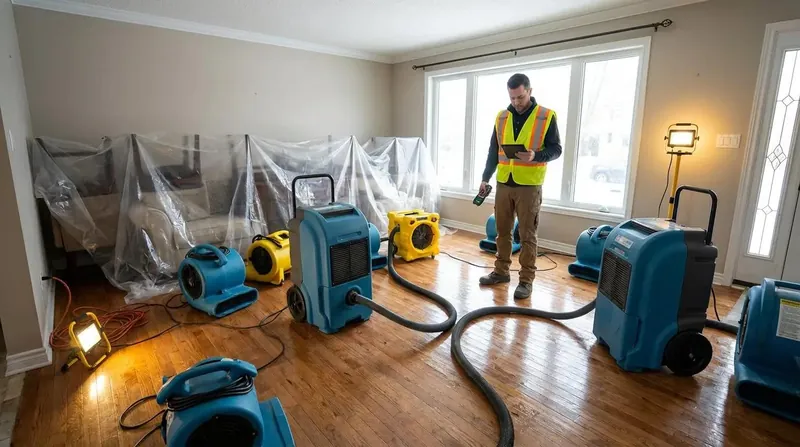
Thick, absorbent or enclosed materials hold water longest. Insulation, carpet pad and the cavity behind drywall dry slowly because air barely reaches them. Dirty water, a hidden leak that keeps running and a late start also push the finish line back. The table maps common California situations.
| Situation | Why drying drags | Read more |
|---|---|---|
| Leak under a concrete slab | Water soaks flooring from below, and the source must be found and fixed before drying can finish | Slab leaks |
| Raised foundation with a crawl space | Wet insulation and subfloor sit in a space with little airflow | Crawl spaces |
| Roof leak that ran for weeks | Attic insulation and ceiling drywall absorb water long before a stain shows | Roof leaks |
| Storm runoff or sewage | Contaminated materials may need removal, not drying | Storm and flood damage |
| Wet carpet and pad | Padding holds water against the floor beneath it | Wet carpet |
If a leak stays active, nothing will dry. CDI's claims guide tells owners to find and stop leaks at the source before anything else.
Does the water class change how long drying takes?
It changes both the work and the bill. Damage classes sort jobs by how much water the structure took in, and the larger the class, the more drying a job needs. Fixr, a cost publisher, lists flat national ranges by class, shown below as national figures, not California prices.
| Damage class | Fixr national range | What it tells you |
|---|---|---|
| Class 1 | $150 to $400 | The lowest tier in Fixr's list |
| Class 2 | $500 to $1,000 | A middle tier |
| Class 3 | $1,000 to $3,000 | The highest tier in Fixr's list |
Fixr puts overall restoration costs at $1,200 to $5,000 with a national average of $3,000. California prices differ, and providers set their own, so the restoration cost guide is the place to compare.
Categories, meaning how clean the water was, matter as well. The categories and classes guide covers both. The IICRC S500 standard calls sewage and outside flood water Category 3.
How do providers decide the structure is truly dry?
They measure instead of judging by feel. A surface can feel dry while the framing behind it is not, so a provider should check moisture inside materials and compare it with a dry reference. Ask to see the readings on the first visit and again at the end.
The process follows a known order: stop the source, extract standing water, remove what cannot be saved, dry what can, and verify.
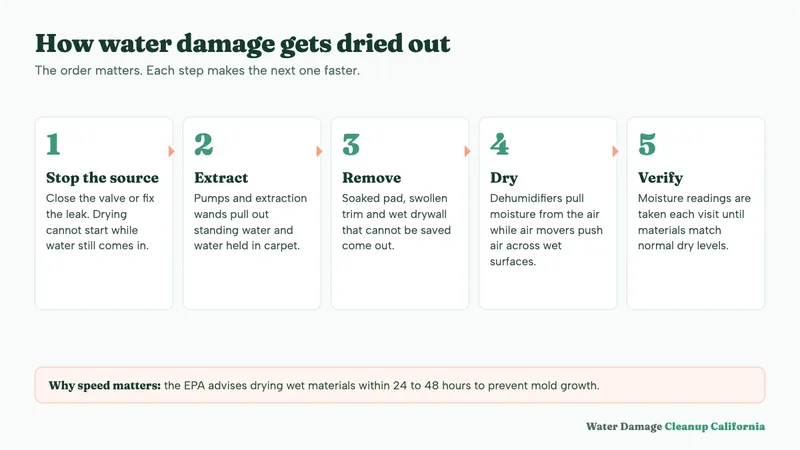
Restoration teams differ in equipment and methods, so ask what each one measures and how often. The structural drying page describes this stage of the job.
Can I dry water damage myself with fans and a dehumidifier?
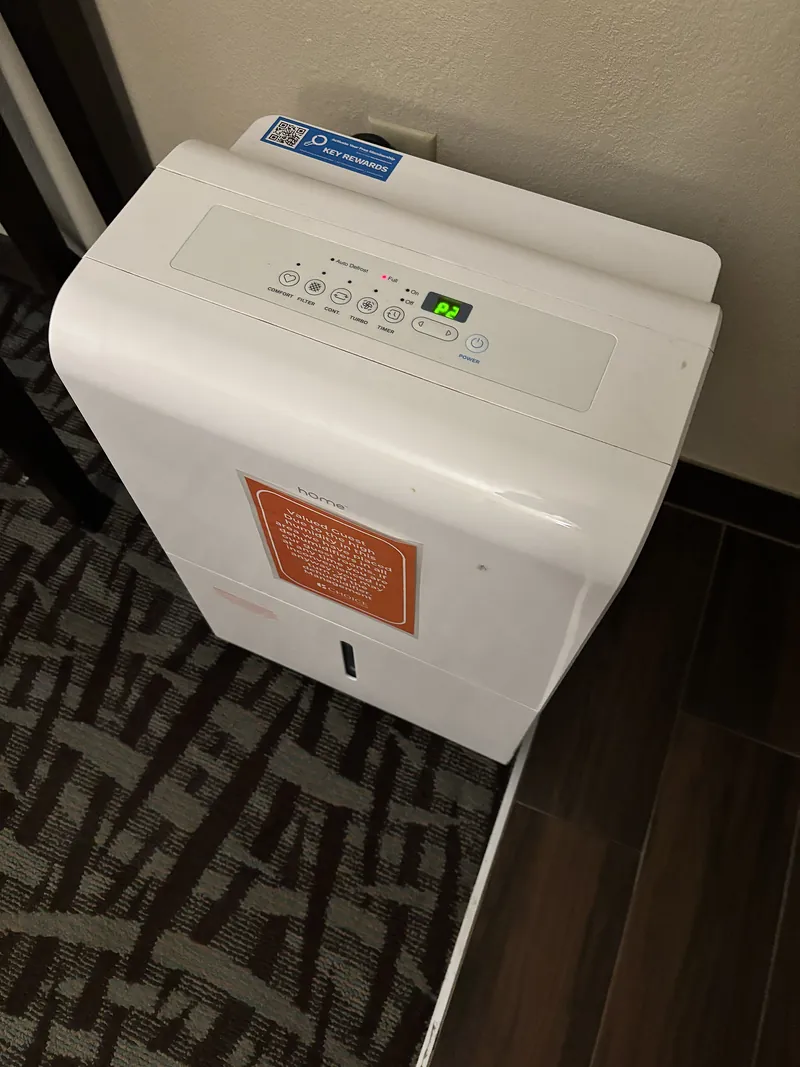
For a small, clean spill, often yes. The EPA suggests using air conditioners or dehumidifiers when needed, and the CDC says to remove carpets and upholstery that were soaked and cannot be dried right away. Wet insulation, soaked drywall and dirty water are beyond a household fan.
A dehumidifier lowers room humidity but cannot pull water out of a closed wall cavity by itself. Keep a meter in the room and watch the trend.

When contaminated water is involved, the EPA says to hire a professional experienced with buildings damaged by contaminated water. Do not try that cleanup alone.
What steps help a wet room dry faster?
Fix the water source first, then clear the room and move air. Speed counts because the EPA's window is only 24 to 48 hours. Each step below shortens how long materials stay wet, and safety around electrical outlets comes before all of it.
- Stop the source. Close the main shutoff or deal with the failed appliance or roof opening.
- Make the power safe. Stay out of standing water near outlets and have someone dry switch off the panel.
- Photograph the damage before moving or discarding anything, as Triple-I advises.
- Clear the floor. Lift rugs, boxes and soaked furniture to a dry area so air can reach the surfaces.
- Run fans and a dehumidifier and aim for the EPA's 30 to 50 percent humidity, or at least under 60 percent.
- Request a provider if drywall, insulation or flooring stayed wet, and ask for moisture readings.
The what to do after water damage guide covers the first day in detail.
What happens if drying drags past 48 hours?
Mold becomes a real risk. The EPA's 24 to 48 hour window exists because damp materials left longer can grow mold, and CDI warns that delayed cleanup can let it begin. That does not mean mold is certain, only that the margin for error has shrunk.
If materials stayed wet beyond that window, have them checked rather than waiting for a smell. The mold after water damage guide covers signs and California rules. Insurance can also be affected, so notify your insurer promptly and keep receipts, as covered in the claims guide.
A local water damage restoration team confirms availability, scope and price itself when you call. For active water, see emergency water damage help.
Sources: EPA, Brief Guide to Mold, Moisture and Your Home; EPA, Mold Cleanup in Your Home; CDC, About Mold and Your Health; Fixr, Water Damage Restoration Cost; CDI, Residential Property Claims Guide; Triple-I, Settling claims; IICRC S500
Water Damage Cleanup California is the local water damage restoration line and information resource for California. When you call or send a request, it reaches a local water damage restoration team that serves your area. That team confirms whether it can reach you and gives its own scope, price and timing. Confirm them directly before you agree to anything.