The short version
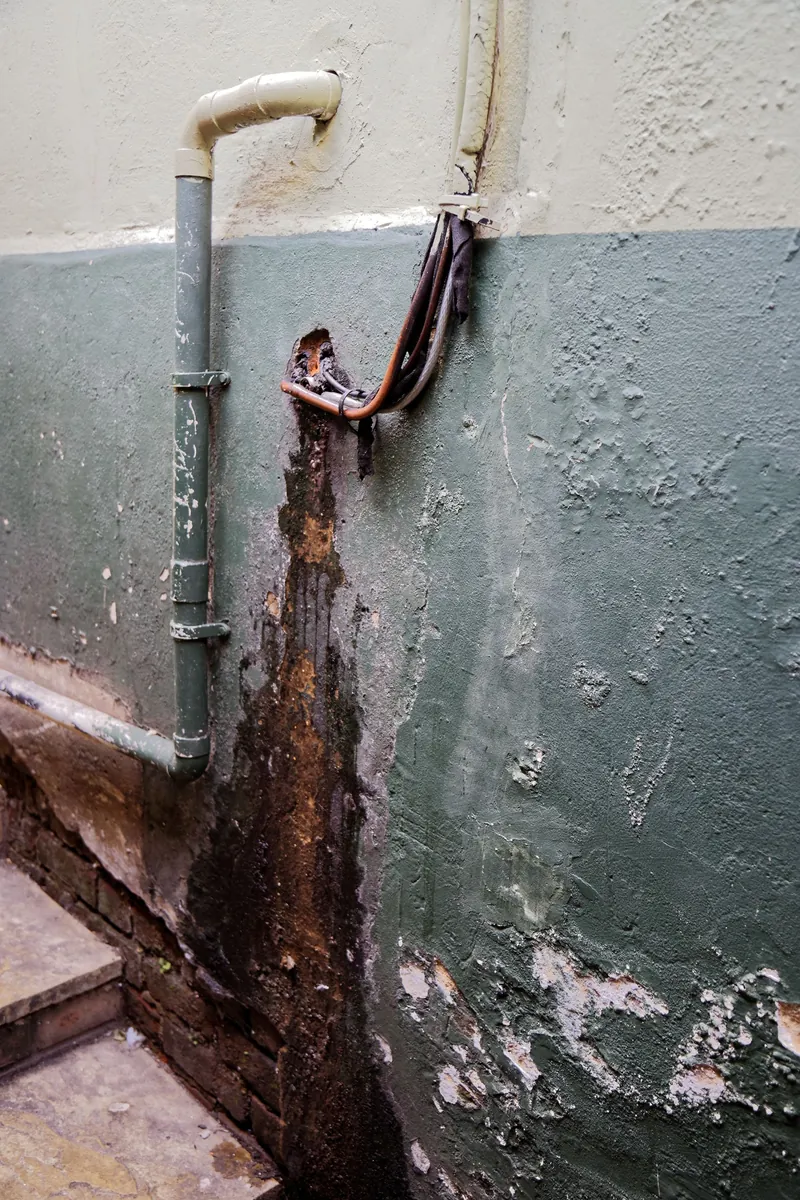
After burst pipe water damage in California, shut the nearest valve or the main, let a low faucet drain the lines, photograph the scene, and bring in a plumber for the pipe plus a restoration team for the water. Aim to dry wet materials during the first 24 to 48 hours so mold has no chance.
On this page (10)
- What do I do first when a supply line splits open at home?
- Can a pipe split in a California house without any freezing weather?
- What is the safe way to warm up a frozen pipe?
- Do earthquakes damage pipes enough to flood a home?
- Which parts of a California home are most likely to have a pipe failure?
- How can I confirm a pipe is leaking where I cannot see it?
- Will my California homeowners insurance pay for a burst pipe?
- What are the steps and California time limits for a burst pipe claim?
- Which water category does a burst pipe fall into, and how does drying proceed?
- What can I do now to avoid a burst pipe in the next cold snap or quake?
What do I do first when a supply line splits open at home?
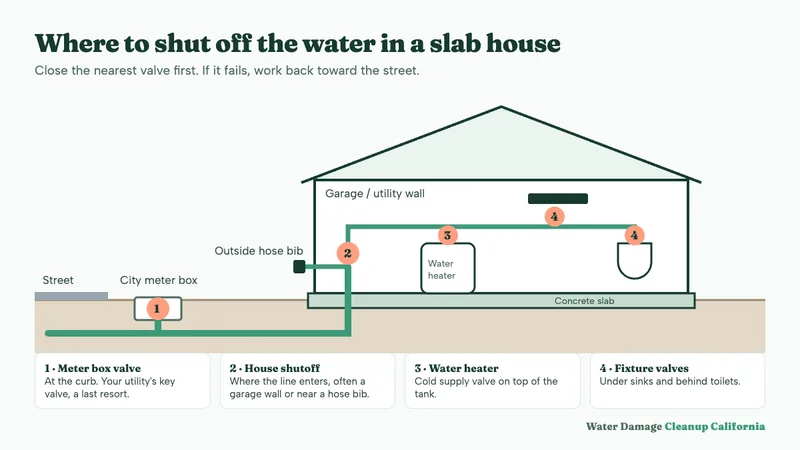
With burst pipe water damage in California, step one is cutting off the water. Turn the valve nearest the break, or the main house valve if you cannot tell where it starts. After that, empty the lines, stay off wet floors near outlets, and begin recording what happened.
- Turn off the closest valve, or the main if the source is unclear. Many homes keep it on an exterior wall, in the garage or by the meter box. Do not touch the utility's own valve at the street.
- Kill the power to soaked rooms at the breaker, but only when the panel is dry and reachable without wading through water.
- Run the lowest faucet so the pipes drain and pressure drops.
- Take photos and video of the pipe, the water and each wet item before moving anything.
- Phone a plumber about the pipe and your insurer about the claim.
- Request a restoration team to pull out water and dry the building while the plumber works.
Water gathering above a ceiling is a reason to keep out from beneath it. Safe draining is explained on the ceiling water damage page, and emergency water damage restoration gives the broader view.
Can a pipe split in a California house without any freezing weather?
Yes, since cold is just one trigger. Pipes also give way at tired joints, corroded stretches and fittings that have reached the end of their life. Wear can cause a failure in any month, and water may flow inside a wall, attic or crawl space for days unnoticed.
Aging copper and galvanized supply lines can develop pinhole leaks, meaning tiny corrosion holes that spray or weep under pressure. One of them can saturate a patch of drywall for weeks. A plumber can say whether the pipe is failing at one point or along its whole length.
Pressure plays a part as well. A line under steady strain wears out faster, and the high water pressure page explains the mechanism and what a plumber can test.
Earthquakes are a third trigger, handled in a separate section below. Mountain communities add a fourth: a hard freeze in the foothills or the Sierra can crack bare pipe in a cabin or garage.
What is the safe way to warm up a frozen pipe?
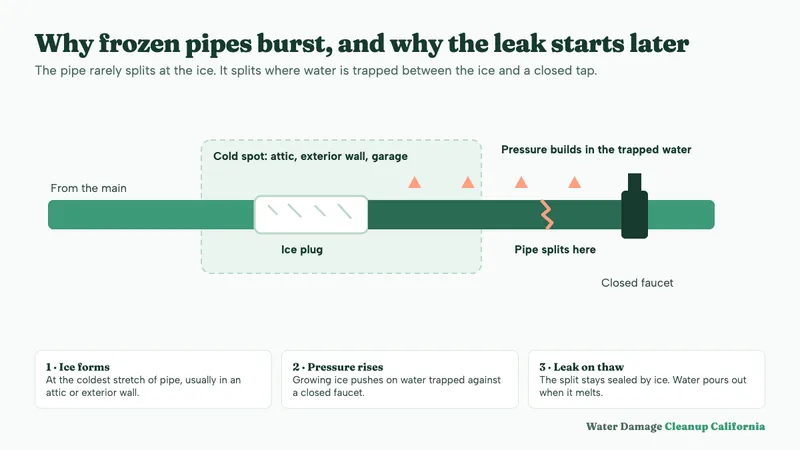
Leave the faucet open and apply heat gradually. The American Red Cross names an electric heating pad, a hair dryer, a portable space heater placed away from anything flammable, or towels dipped in hot water. Begin at the faucet end and move toward the frozen stretch.
- Keep the tap open so thawing water can escape.
- The Red Cross warns against every open-flame tool, including a blowtorch, a kerosene or propane heater and a charcoal stove.
- When the frozen part is out of reach, for example inside a wall, stop and phone a plumber.
- If the pipe has already split, shut the main valve before adding any heat.
Once the ice has melted, go through the house for drips, soft drywall and fresh ceiling stains. A pipe that thaws dry may still be cracked, and the crack can appear only when water flows again.
Do earthquakes damage pipes enough to flood a home?
They can. Shaking may yank a supply line free, crack a fitting or knock over a water heater. Insurance treats the resulting water as a separate question: standard homeowners policies exclude earthquake damage, while certain earthquake policies do pay for water released inside the dwelling.
The California Department of Insurance says homeowners insurance does not cover earthquake damage, except fire. It adds that earthquake insurance does not cover water damage from outside your home, such as a sewer or drain back-up.
One sample California Earthquake Authority policy does not exclude water released from water heaters, refrigerators or supply pipes inside the dwelling when an earthquake directly causes it. Consider that a single sample. Your own policy and deductible determine any payment.
The department further notes that an insurer can deny claims not reported within one year of when you first noticed, or should have noticed, the damage. After a quake, inspect the water heater and the lines beneath sinks, and read the water heater leak page for the strapping rules.
Which parts of a California home are most likely to have a pipe failure?
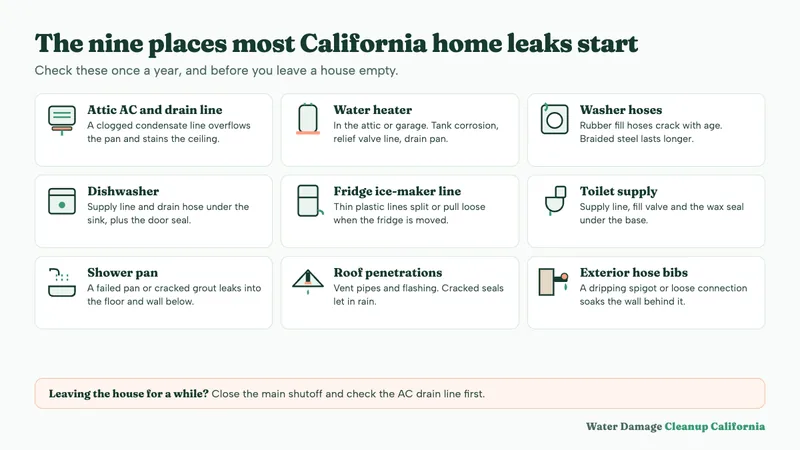
Trouble tends to start where pipes are concealed, unheated or stressed. The table pairs common locations with the first clue and the right call. Which locations apply depends on the house, because slab and raised-foundation homes route their plumbing differently.
| Spot | Reason for failure | Early clue | Call |
|---|---|---|---|
| Crawl space pipes | Found only where the foundation is raised. Cold, damp and corrosion all reach them | Musty odor, a floor above that feels soft or cold | Plumber, then a restoration team |
| Attic supply pipes | Big temperature swings and thin insulation | A ceiling stain or drip below the pipe run | Plumber, then a restoration team |
| Garage plumbing and heater supply | No heat, easy to bump, and rattled by quakes | Water across the garage floor | Plumber |
| Outside walls and hose bibs | Cold travels through the wall and chills the pipe | Damp drywall, paint that bubbles, spray at the spigot | Plumber |
| Lines below a slab | Corrosion or shifting ground, not cold | A warm floor spot, running-water noise, a meter that moves | Plumber with leak detection |
Under-slab lines act differently from a freeze burst, and the slab leak page lists their warning signs. The signs of water damage guide helps you check each room.
How can I confirm a pipe is leaking where I cannot see it?
Look for slow clues that build over several days: stains that spread, paint that bubbles, a musty odor, and a water bill that rises although usage has not. Each suggests a concealed leak. Pin down the source before anyone cuts into a wall.
- Switch everything off and watch the water meter. A moving dial means water is escaping somewhere.
- Inspect ceilings and walls for new stains, soft areas or warm patches.
- Shine a flashlight into the attic from the hatch if that is safe, and do not step between the joists.
- Request a pressure test or leak detection from a plumber instead of cutting blindly.
- Have moisture readings taken on doubtful surfaces so the wet zone gets a measured boundary.
Attic moisture can also come from an air conditioner or the roof. Compare notes with the roof leak and storm damage page before blaming a pipe.
Will my California homeowners insurance pay for a burst pipe?
Frequently, provided the water was sudden and accidental. Standard forms, says Triple-I, name accidental discharge or overflow of water from plumbing as a peril, and freezing of those systems is on the list too. Your own policy wording makes the final call.
The NAIC reports that plumbing-related water damage is typically covered, whereas ground water and rain runoff are not. The California Department of Insurance says homeowners policies do not cover flood but do cover other kinds of water damage.
Triple-I further notes that damage from poor upkeep is not covered and that mold is often excluded or limited. The department says mold caused by a covered peril may be covered, so ask your insurer how your policy handles mold.
Coverage normally applies to the harm the water did. Paying for the pipe repair itself, and leaks that ran a long time, are the areas where disputes most often arise.
FAIR Plan homes face a different question, which the FAIR Plan page explains. The water damage insurance claim guide lays out the whole process.
What are the steps and California time limits for a burst pipe claim?
Report the loss at once, keep the property from suffering further harm, and put off large permanent repairs until the adjuster has inspected. The California Department of Insurance says to report any water damage claim immediately to your agent or company representative.
Triple-I also recommends saving receipts, taking photos or video of the loss, and holding on to ruined items until the adjuster arrives. It suggests collecting written bids from licensed contractors, with materials and prices itemized line by line.
The state's Fair Claims Settlement Practices Regulations put the insurer on a clock. Section 2695.5 requires an insurer to acknowledge a claim, send forms and start investigating no more than 15 calendar days after notice. Section 2695.7 gives it 40 calendar days from proof of claim to accept or deny.
Should the insurer need extra time, it must tell you in writing within those 40 days and again every 30 calendar days. Once it accepts a claim, payment is due within 30 calendar days. A denial has to be written and state its reasons.
If you reach a standstill, the department's consumer line is 1-800-927-4357, and a complaint can be filed on the California Department of Insurance help page. For an argument over the amount, read about public adjusters, whose fee Triple-I says can reach 15 percent of the settlement.
Which water category does a burst pipe fall into, and how does drying proceed?
Under IICRC S500, a burst supply line normally counts as Category 1, or clean water. The category can worsen if the water stands, collects dirt or soaks materials for a long time, so the restoration team verifies it on site. Drying then runs in a fixed sequence.
- Stop the source and pull out standing water.
- Take out wet materials that cannot be rescued, like soaked insulation or swollen drywall.
- Dry the structure using air movers and dehumidifiers.
- Record readings on each visit to show progress.
- Rebuild only once the materials read dry.
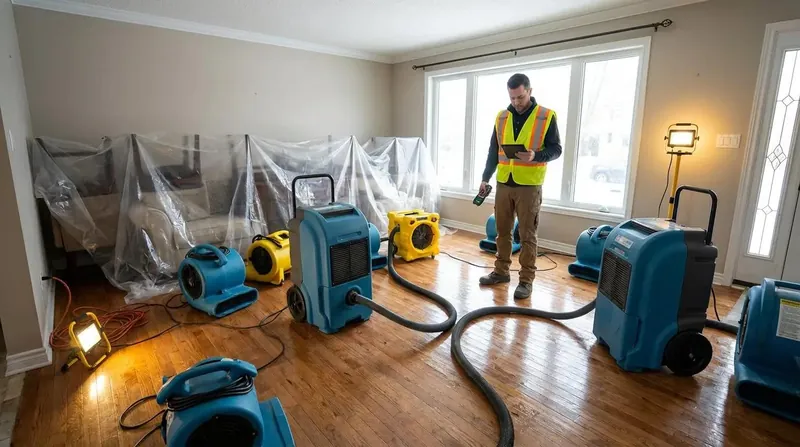
Per the EPA, mold growth is best prevented by drying water-damaged areas and items during the first 24 to 48 hours. See water removal and structural drying, plus mold after water damage if the area stayed wet. Services differ among restoration teams, so confirm the scope directly.
What can I do now to avoid a burst pipe in the next cold snap or quake?
Insulate exposed pipes, learn where your shutoff is, and keep the heat running in cold weather. The Red Cross advises a thermostat setting of at least 55 F while you are away, a steady setting day and night, and a drip of cold water from faucets on exposed pipes.
- Wrap pipes in the attic, garage and crawl space with pipe insulation.
- Detach outdoor hoses and cover hose bibs in mountain areas.
- Leave cabinet doors open under sinks on outside walls so room air can reach the pipes.
- Confirm the main shutoff turns before an emergency.
- Ask a plumber to examine old galvanized or corroded copper lines and the water pressure.
- Strap the water heater so a quake is less likely to rip its connections loose.
A year-round checklist sits in the water damage prevention guide. For a home that stands empty for long periods, see second home leak monitoring.
Sources: American Red Cross, Frozen Pipes; California Department of Insurance, Residential Property Claims Guide; California Department of Insurance, Earthquake Insurance; California Earthquake Authority, sample Homeowners Choice policy; 10 CCR 2695.5; 10 CCR 2695.7; California Department of Insurance, file a complaint; Triple-I, Which disasters are covered by homeowners insurance; Triple-I, Settling insurance claims after a disaster; NAIC, Homeowners Insurance; IICRC S500; EPA mold and moisture guide.
Water Damage Cleanup California is the local water damage restoration line and information resource for California. When you call or send a request, it reaches a local water damage restoration team that serves your area. That team confirms whether it can reach you and gives its own scope, price and timing. Confirm them directly before you agree to anything.