The short version
Storm water damage restoration in California starts with safety: stay out of standing water near power, photograph everything and report the loss. Homeowners policies exclude flood but can cover rain through a storm-damaged roof, so ask how your insurer classifies it. Treat flood water as contaminated and get wet materials dried quickly.
On this page (11)
- What counts as storm and flood water damage in a California home?
- How do atmospheric rivers turn into water damage here?
- How does storm water get into a house?
- What should I do first when storm water is already inside?
- Is it a flood or a roof leak, and does the difference matter?
- How dirty is storm and flood water, and what does that change?
- Who handles which part of the cleanup?
- Does insurance pay for storm and flood damage in California?
- How do I document the damage and keep a claim moving?
- How can I get ready before the next storm?
- What else should I know before the rain arrives?
What counts as storm and flood water damage in a California home?
It is water that reaches the house from outside during or after a storm: rain driven through a roof or wall, runoff pouring over a threshold, a street that fills and spills into a garage, or a creek that leaves its banks. Where it came from changes the cleanup and the insurance answer.
Most California homes see little rain for months, then a wet week tests every seam at once. Water can arrive from above, from the side or from below, and often from more than one direction in the same storm.
This site is the local water damage restoration line and information resource, and a call reaches a local water damage restoration team. If a storm has already put water inside, the flood damage restoration page describes what restoration teams usually do.
How do atmospheric rivers turn into water damage here?
An atmospheric river is a long band of moist air from the tropics. NOAA says about 30 to 50 percent of annual precipitation in the West Coast states falls in just a few of these events. When one stalls, the ground saturates and runoff has nowhere to go.
- NOAA's satellite service reports that from late December 2022 into January 2023, a series of nine atmospheric rivers brought more than 32 trillion gallons of rain across California.
- The National Weather Service says flooding disasters from December 26, 2022 through March 19, 2023 cost an estimated $3.5 billion and led to over 20 deaths.
- The NWS Weather Prediction Center says downtown Los Angeles took roughly 65 percent of its seasonal rainfall in 48 to 60 hours in the storm of early February 2024.
Our atmospheric river guide explains the storms in more depth. The short lesson is that a few days can matter more than a whole winter of light rain.
How does storm water get into a house?
Through the roof, the walls, the doors and the ground around the foundation. Each path leaves its own pattern, and the pattern tells you who to call. A stained ceiling points up. A wet baseboard in one corner points to the grade outside. A muddy line across the floor points to rising water.
| Entry point | What it looks like | First thing to check |
|---|---|---|
| Roof, vents, chimney | Brown stains, dripping at light fixtures, a sagging ceiling | The attic, if you can reach it safely |
| Windows and doors | Water on sills, wet trim, swollen jambs | Failed caulk or a blocked sill drain |
| Walls at ground level | Damp baseboards, bubbling paint low on one side | Soil, planters or paving sloping toward the house |
| Garage door and thresholds | A water line and silt at the door and across the floor | Where the street or driveway drains |
| Rising or flowing water | A mud line on walls, silt in every room | Local alerts and whether it is safe to enter |
| Drains and sewers | Water or sewage welling from a floor drain or tub | Whether the sewer line is surcharged |
Rain through the roof is covered on the roof leak page, and sewage that pushes up through a drain is covered on the sewage backup page.
What should I do first when storm water is already inside?
Get people and pets to safe, dry ground, shut off electricity to wet areas if you can reach the panel without stepping in water, and stay out of any room with standing water until you are sure the power is off. Safety comes first, then photos, then cleanup.
- Check the weather and alerts before going back in. A second wave often follows the first.
- Turn off power to wet rooms from a dry spot, or leave the house and call your utility if you cannot reach the panel safely.
- Photograph and film every wet room, the water line and the source before you move anything.
- Call your insurer to report the loss and ask how it will be classified.
- Lift small items onto counters or blocks, and pull up rugs that can still be saved.
- Send a request for a restoration team, then confirm timing and scope with whoever calls you back.
The after-storm water checklist covers the first day in more detail, and what to do after water damage gives the general sequence.
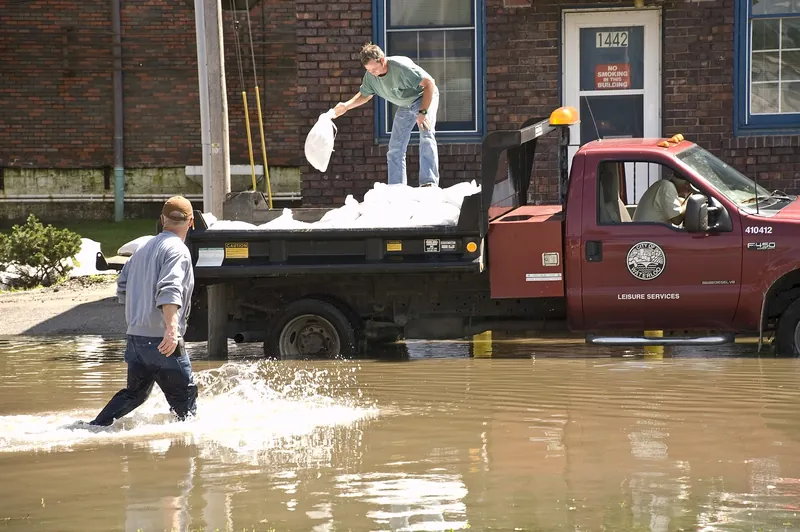

Is it a flood or a roof leak, and does the difference matter?
It matters a great deal for insurance. The California Department of Insurance says homeowners policies do not cover flood damage but do cover other kinds of water damage, such as rain through a roof opening caused by wind or another covered cause. How the adjuster labels the water decides the claim.
Fresh from a storm, that line gets blurry. Rain that runs off the hillside and across your floor is surface water. Rain that enters through a broken window or storm-damaged roof is a different thing on paper, even though the carpet is equally wet.
- The NAIC says damage from ground water, rain runoff or snow-melt is typically not covered, while a roof leak typically is.
- Ask your insurer in writing how it is classifying your loss, and note the date and name of whoever answers.
- Keep the damaged roofing or window material if it can be saved, since it may show the cause.
How dirty is storm and flood water, and what does that change?
Treat it as contaminated. The IICRC S500 standard places rising flood water and outside surface water in Category 3, the grossly contaminated class. Rain that came through a roof is usually cleaner at first, but it picks up dust and insulation on the way down.
That classification shapes the work. Soaked porous materials such as carpet pad and insulation are normally removed rather than dried in place, and hard surfaces are cleaned before drying starts. The categories and classes guide explains the system.
- The CDC advises cleaning and drying out fully and quickly, within 24 to 48 hours after a flood, and removing soaked carpet and upholstery that cannot be dried right away.
- The CDC also recommends rubber boots, gloves and goggles, and never mixing bleach with ammonia or other cleaners.
- The EPA says to dry water-damaged areas and items within 24 to 48 hours to prevent mold, and to call in a professional experienced with contaminated water when sewage is involved.
Mold follows slow drying. The mold after water damage guide covers timing and California's mold rules.
Who handles which part of the cleanup?
Several trades may be involved, and one restoration team rarely covers all of them. A restoration team pumps and removes water, takes out ruined materials and dries the structure. A roofer or window contractor closes the opening. An electrician checks wiring that got wet. Your insurer decides what the policy pays.
- Standing water: see water removal and extraction.
- Wet walls, floors and cavities: see structural drying.
- Belongings: see contents cleaning and pack-out.
- Rebuilding after drying: see water damage repair.
After a widespread storm, restoration teams may be stretched thin, and they differ in what they take on, so confirm availability, price and scope directly. The Contractors State License Board offers a license lookup on its Hire a Contractor page, and the guide to choosing a company lists questions to ask.
Does insurance pay for storm and flood damage in California?
Sometimes, and it depends on how the water got in. Flood is excluded from standard homeowners policies, and FEMA says most homeowners insurance does not cover flooding. Flood cover is a separate policy, and the California Department of Insurance says it generally takes effect 30 days after purchase.
- The Triple-I says sewer backups are not covered by a typical homeowners policy or by flood insurance, and are usually a separate endorsement.
- The Department of Insurance says a policy may cover a mudslide when a recent wildfire or another covered peril caused it, and that mold from a covered peril may be covered.
- The Department also reports that fewer than 5 percent of California homes had flood insurance through the National Flood Insurance Program in September 2019.
For flood policies, the California flood insurance guide goes further. Never assume your address is in or out of a flood zone. Use FEMA's map service and the state's MyFloodRisk tool to check it.
How do I document the damage and keep a claim moving?
Photograph before you clean, keep receipts and hold damaged items until the adjuster visits. Triple-I advises taking reasonable steps to prevent further damage, but delaying major permanent repairs until the adjuster has assessed the loss and seen what was ruined.
California sets deadlines for insurers. Under 10 CCR 2695.5(e), an insurer must acknowledge your claim within 15 calendar days of notice. Under 2695.7(b), it must accept or deny within 40 calendar days of proof of claim, and a denial must be in writing and say you may ask the Department of Insurance to review it.
- Write down when the water arrived, how high it rose and which alerts you saw.
- Record the water line with a tape measure in the frame.
- List ruined belongings with approximate ages.
- Collect written bids with materials and labor on separate lines.
The Department's residential claims guide says to contact it if you have trouble opening a claim. The insurance claims guide covers the rest.
How can I get ready before the next storm?
Work from the outside in. Water takes the easiest route, so give it a better one than your doorway. Do these jobs in dry weather, since a forecast three days out is too late for most of them, and a missed gutter can cost you a ceiling.
- Clear gutters, downspouts and yard drains, and aim downspouts away from the foundation.
- Check the roof, flashing, vents and window seals for gaps.
- Make sure soil and paving slope away from the walls.
- Know where the main water shutoff and the electric panel are.
- Photograph every room so a later claim has a before picture.
What else should I know before the rain arrives?
Never walk or drive through flooded streets. Ready.gov warns that six inches of moving water can knock a person down and a foot can sweep a vehicle away, and floodwater hides debris and open drains. The prevention guide adds more steps for storm season. If storm water is already inside, send a request through this site and it will reach a local water damage restoration team that serves your area. Contacting us does not obligate you to hire anyone.
Sources: NOAA Research, Atmospheric Rivers; NOAA NESDIS, Atmospheric Rivers Hit West Coast; NWS California Nevada River Forecast Center, December 2022 and January 2023 storms; NWS Weather Prediction Center, February 2024 event review; California Department of Insurance, Residential Property Claims Guide; California Department of Insurance, Flood Insurance Resources; California Department of Insurance, Climate Insurance Working Group report; 10 CCR 2695.5; 10 CCR 2695.7; NAIC, Homeowners Insurance; FEMA, Don't Have Flood Insurance; Triple-I, Which disasters are covered by homeowners insurance; Triple-I, Settling insurance claims after a disaster; IICRC S500; CDC, About Mold and Your Health; EPA mold and moisture guide; EPA, Mold cleanup in your home; Ready.gov, Floods; CSLB, Hire a Contractor.
Water Damage Cleanup California is the local water damage restoration line and information resource for California. When you call or send a request, it reaches a local water damage restoration team that serves your area. That team confirms whether it can reach you and gives its own scope, price and timing. Confirm them directly before you agree to anything.