The short version
Crawl space water damage in California affects homes on raised foundations when pipes leak, runoff pools or soil moisture condenses on framing. Stop the source, keep clear of dirty water, photograph what you can see from the hatch and call a plumber and a restoration team. The EPA advises drying within the first 24 to 48 hours.
On this page (11)
- What counts as crawl space water damage in a California home?
- How does water get under a house?
- How can I look at my crawl space safely?
- What should I do first if there is standing water under the house?
- Is the water under my house clean or contaminated?
- Who pumps out the crawl space, and who fixes the cause?
- How do restoration teams dry a wet subfloor and crawl space?
- Will mold or rot grow in a wet crawl space?
- Does a ground cover or vapor barrier help keep a crawl space dry?
- Does homeowners insurance cover crawl space water damage?
- What does crawl space water removal and drying cost in California?
What counts as crawl space water damage in a California home?
Crawl space water damage means standing water, wet soil or soaked framing in the shallow gap under a raised floor. If your house sits on a raised foundation, that gap exists. If it sits on a concrete slab, it does not, and the slab leak page fits better.
Some houses stand on raised foundations and others on slabs, so check your own instead of assuming. A small access hatch in a closet, hallway or exterior wall usually leads to the space.
The damage is easy to miss because nobody goes down there. By the time a floor feels soft, moisture may have been working on the framing for a long while. The table shows the usual sources and how they appear upstairs.
| Source | What you may notice | Who handles the cause |
|---|---|---|
| Supply or drain pipe leak | Damp smell, bouncy floor, higher bill | Plumber |
| Heavy rain and runoff | Water pooling under the house after storms | Grading or drainage contractor |
| Sewer or drain backup | Foul odor, dirty water, slow drains | Plumber, then a specialist restoration team |
| Soil moisture and condensation | Dark, damp framing and a musty smell | Contractor who sets up ground cover and drainage |
| Frozen pipe that split | Sudden water after a mountain cold snap | Plumber |
A crawl space is never a one-cause problem for long. Water from one source soaks insulation, which then holds moisture against the floor above.
How does water get under a house?
Water arrives from two directions: through the soil and from the building's own pipes. The Department of Energy says moisture can enter a crawlspace through the soil as liquid water or vapor, and vapor can condense on floor joists. Plumbing leaks and storm runoff add to it.
- Rain and runoff reach the foundation when the ground slopes toward the house or gutters dump near it. The DOE points to site grading, perimeter drainage and sound irrigation practices for vented crawlspaces.
- Pipes run through the space and can leak slowly at joints, valves and old fittings.
- Sprinklers set too close to the foundation can soak the soil beside it.
- Frozen pipes are a risk in cold areas, since the Red Cross lists supply pipes in crawl spaces among the pipes most at risk of freezing.
- Sewage can reach the space from a broken drain line or a backup.
Winter storms can bring a lot of water at once. The atmospheric river page and the storm and flood damage page cover what heavy rain does to a house, and the burst pipe page covers pipe failures.
How can I look at my crawl space safely?
Only look from the hatch unless the area is dry, well lit and free of electrical hazards. Standing water near wiring, a sewage smell or a cramped, rotted space is a reason to stop and call for help. A flashlight and a phone camera from the opening reveal a lot.
- Switch off power to anything in the crawl space if water is near it, and leave that decision to an electrician if you are unsure.
- Photograph standing water, wet soil, dripping pipes and dark, damp framing.
- Note whether the water looks clear or cloudy and whether it smells like sewage.
- Listen for dripping and look for a pipe with water beading on it.
- Do not crawl into water that could be contaminated or touch your skin without gloves and boots.
Spiders, rodents and sharp debris live down there too. If the space is tight or the water is deep, a restoration team or plumber can take the first look. The signs of hidden water damage guide lists what to watch for indoors.
What should I do first if there is standing water under the house?
Stop the source if you can, protect the floor above, and call the right trade. Shut the main valve if a pipe is leaking, and wait for a storm to ease before anyone goes under. Take photos first and call your insurer early.
- Turn off the main water valve if you think a pipe is the source, then watch whether the water level stops rising.
- Keep people and pets away from the hatch if the water looks dirty, smells like sewage or sits near wiring.
- Photograph the water, the pipes and the access hatch from a safe spot.
- Move rugs, boxes and furniture off floors that feel damp or soft.
- Call a plumber if a pipe is suspect, or a drainage contractor if runoff is the cause.
- Request a restoration team to pump out and dry the space. The what to do after water damage guide covers the first day.
If the water is rising fast, treat it as an emergency and read the emergency help page.
Is the water under my house clean or contaminated?
It depends on the source. The IICRC S500 standard places supply-line water in Category 1, grey water such as washer or dishwasher discharge in Category 2, and sewage or rising flood water from rivers and outside surfaces in Category 3. A restoration team rates the water on site.
| IICRC category | Typical source under a house | What it means for the job |
|---|---|---|
| Category 1, clean | A broken supply line | Pump out and dry, but it can worsen if left |
| Category 2, grey | A washer or dishwasher drain | Removal of porous materials is more likely |
| Category 3, contaminated | Sewage, runoff or flood water | Specialist work and protective gear |
The EPA says sewage or other contaminated water damage calls for a professional experienced with buildings damaged by contaminated water. Water that sat in a crawl space for a while can also pick up soil and debris. See sewage backup cleanup and the categories and classes page for more.
Who pumps out the crawl space, and who fixes the cause?
A restoration team removes the water and dries the structure, while a plumber or drainage contractor fixes the source. Both are needed, in the right order. Drying a space that is still taking on water only starts the clock again.
- Plumber: finds and repairs the leaking pipe or drain line.
- Drainage or grading contractor: redirects runoff away from the foundation.
- Restoration team: pumps out water, removes soaked insulation, dries framing and records readings.
- Insulation or flooring contractor: rebuilds once readings show dry.
The Contractors State License Board has a Hire a Contractor page with a license lookup. A call reaches a local water damage restoration team, and the guide to choosing a company lists questions to ask. Restoration teams differ on crawl space access, so confirm that yours handles it.
How do restoration teams dry a wet subfloor and crawl space?
Restoration teams pump out standing water, remove wet insulation, and run air movers and dehumidifiers until the framing and subfloor reach dry readings. Because the space is cramped, they may set equipment in the crawl space or dry the floor from above.
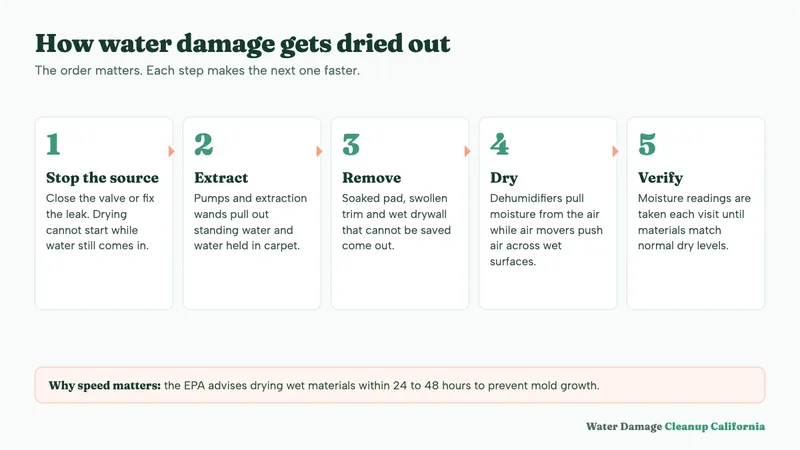
- Water is extracted first, and the source is stopped before drying starts.
- Wet insulation under the floor often comes out because it can hold moisture against the subfloor.
- Equipment runs while the restoration team logs readings on joists, subfloor and soil surfaces.
- Floor coverings may be lifted so the subfloor can dry from above.
The structural drying page explains the process, and the drying time guide covers what slows it down. Hardwood above a wet crawl space can cup, so see water-damaged floors too.
Will mold or rot grow in a wet crawl space?
It can. The DOE says moisture in crawlspaces can promote mold and rot along floor joists and rim joists. The EPA says drying water-damaged areas during the first 24 to 48 hours prevents mold growth, and a slow leak can stay wet far longer.
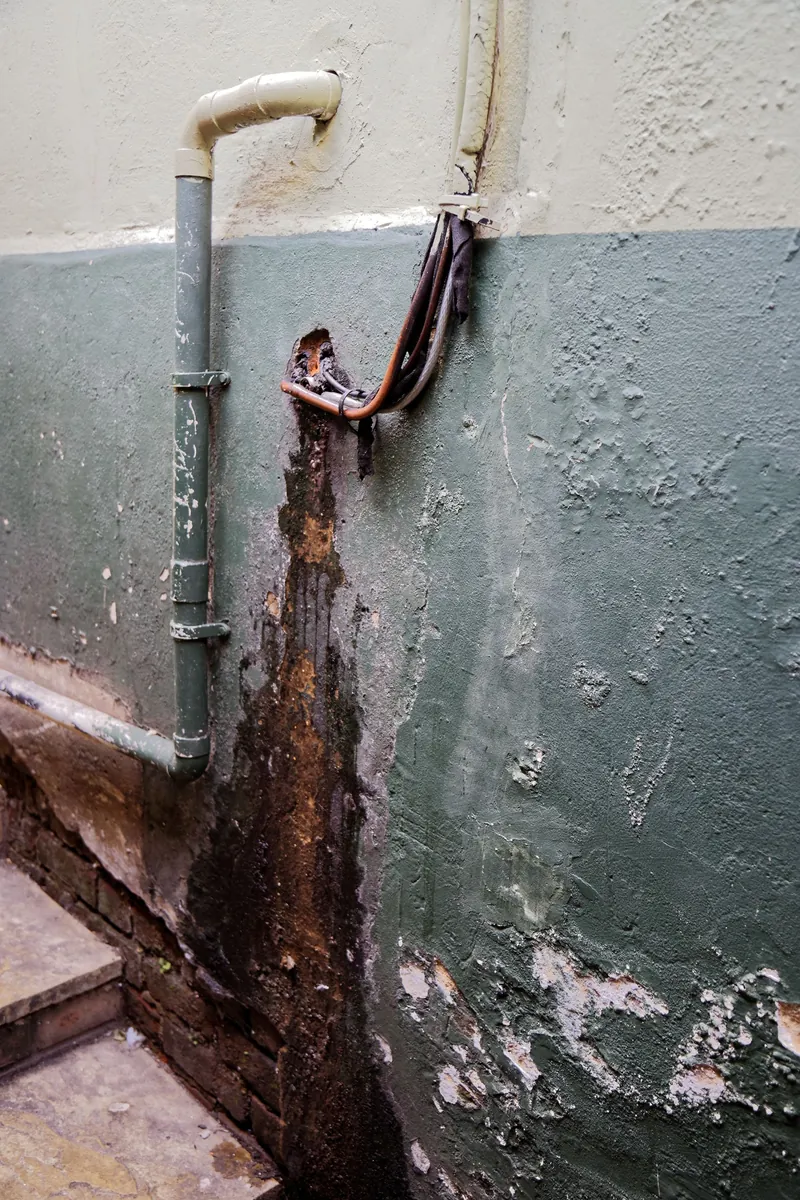

- Per the EPA, indoor humidity should stay under 60 percent, with 30 to 50 percent ideal.
- Painting or caulking over mold is not advised, the EPA says.
- For a patch under about 10 square feet, the EPA says the occupant can usually do the cleaning.
- The CDC names a stuffy nose, sore throat, coughing, wheezing and burning eyes as mold effects.
Damp, musty air under a house can reach the rooms above. Concealed or large growth needs a professional. The mold after water damage guide covers California rules, and the water damage smell page helps with odors.
Does a ground cover or vapor barrier help keep a crawl space dry?
It helps with moisture from the soil, though it does not stop a leaking pipe or flooding. The DOE says to cover the crawlspace floor with heavy polyethylene sealed to the walls and piers, whether the space is vented or unvented. It also helps keep soil gases out.
- The DOE specifies sheeting of at least 6 mil.
- Seams should lap 6 to 12 inches and be sealed with sealant or tape, per the DOE.
- The DOE says to seal around pipes and lap the sheeting at least 6 inches up walls and piers.
- For bulk water in vented crawlspaces, the DOE points to grading, perimeter drainage and irrigation practices.
Treat this as general guidance, not a plan for your house. A contractor who works on crawl spaces can tell you what fits your foundation. The water damage prevention guide adds other habits.
Does homeowners insurance cover crawl space water damage?
It depends on where the water came from. The NAIC says water damage from a home's plumbing is typically covered, while damage from ground water or rain runoff is not. The California Department of Insurance says homeowners policies do not cover flood damage.
FEMA says most homeowners insurance does not cover flooding, and Triple-I says sewer backups are not covered under a typical policy. Triple-I also says policies do not cover damage from lack of maintenance or mold. Read your policy and ask your insurer in writing.
Under 10 CCR 2695.5, an insurer must acknowledge a claim no more than 15 calendar days after notice. Under 10 CCR 2695.7, it must accept or deny within 40 calendar days of proof of claim.
The water damage insurance claim guide explains the process. Condo owners should also see the HOA responsibility page.
What does crawl space water removal and drying cost in California?
No verified California price for crawl space work is on file here, so none is given. Fixr's national guide, updated in 2025, shows water damage restoration from $1,200 to $5,000, with a national average of $3,000. Cramped access can push a job outside that range.
- Fixr lists clean-water extraction at $3.75 to $4.25 per square foot, gray water at $4.10 to $6.50 and black water at $7 to $7.50.
- Fixr prices Class 1 damage at $150 to $400, Class 2 at $500 to $1,000 and Class 3 at $1,000 to $3,000.
These are national reference figures, not quotes. Get written bids with materials and prices listed line by line, as Triple-I advises. The restoration cost guide explains what moves a price.
Sources: DOE, Crawlspace Capillary Break; American Red Cross, Frozen Pipes; IICRC S500; EPA mold and moisture guide; EPA, Mold cleanup in your home; CDC, About Mold and Your Health; NAIC, Homeowners Insurance; FEMA, Don't have flood insurance; Triple-I, Which disasters are covered by homeowners insurance; Triple-I, Settling insurance claims after a disaster; California Department of Insurance, Residential Property Claims Guide; 10 CCR 2695.5; 10 CCR 2695.7; Fixr, Water Damage Restoration Cost; CSLB, Hire a Contractor.
Water Damage Cleanup California is the local water damage restoration line and information resource for California. When you call or send a request, it reaches a local water damage restoration team that serves your area. That team confirms whether it can reach you and gives its own scope, price and timing. Confirm them directly before you agree to anything.