The short version
What to do after water damage in California: get clear of wet electrical hazards, shut off the water, photograph everything, call your insurer and begin drying. The EPA puts the drying window at 24 to 48 hours. Bring in a restoration provider when walls, floors or ceilings stayed wet.
On this page (11)
- What should I do first when I find water damage in my California home?
- How do I make the house safe before I touch anything?
- How do I stop the water at its source?
- What should I photograph and write down before cleanup?
- When should I call my insurance company?
- Can I make temporary repairs before the adjuster arrives?
- What can I dry myself in the first 24 to 48 hours?
- Is the water clean, or does that change what I do?
- What is different after a storm, flood or mudslide?
- When do I need a restoration provider instead of doing it myself?
- What mistakes make water damage worse?
What should I do first when I find water damage in my California home?
Protect people before property. Stay out of standing water near outlets, cut the power to wet areas if you can do it from a dry spot, then stop the water at its source. Photos, a call to your insurer and drying all come after those three moves.
The order matters. A photo taken before cleanup is worth more than one taken after, and a leak that is still running will undo any drying you do.
- Get everyone clear of wet floors near outlets, appliances and the electrical panel.
- Shut off the water at the fixture, the house shutoff or the street meter box.
- Photograph and film the damage and the source before you move anything.
- Call your insurance agent or company and ask what the policy covers.
- Start drying the space and lift out what you can safely carry.
- Call a restoration provider when walls, floors or ceilings stayed wet.
How do I make the house safe before I touch anything?
Treat wet rooms as electrical hazards until proven otherwise. Ready.gov warns people not to touch electrical equipment that is wet or while standing in water, and to turn the electricity off only if it is safe to do so. If reaching the panel means crossing a wet floor, leave it.
Ready.gov's after-flood advice also calls for heavy work gloves, protective clothing and boots, and says children should not take part in disaster cleanup. People with asthma, lung conditions or a weakened immune system should stay out of buildings with indoor leaks or visible mold.
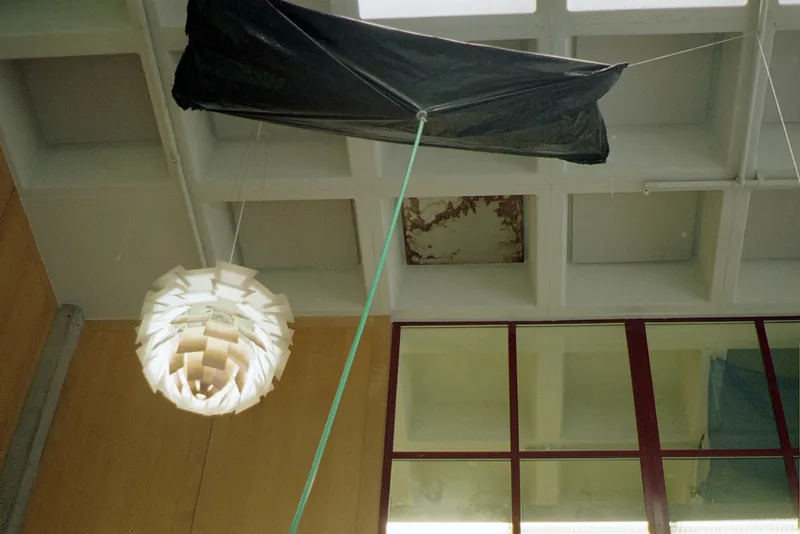
If a ceiling is bulging with trapped water, do not stand under it. The ceiling water damage page shows how to drain one safely. Run any generator or gasoline-powered tool only outdoors and away from windows, as Ready.gov advises.
If the water is dark and foul, leave the room. Sewage has its own page, sewage backup cleanup.
How do I stop the water at its source?
Close the nearest shutoff valve. The California Department of Insurance (CDI) tells homeowners to try to find and stop leaks at the source right away, because water that keeps coming will soak more material and give mold a place to start. Know three valves: the fixture stop, the house shutoff and the meter box.
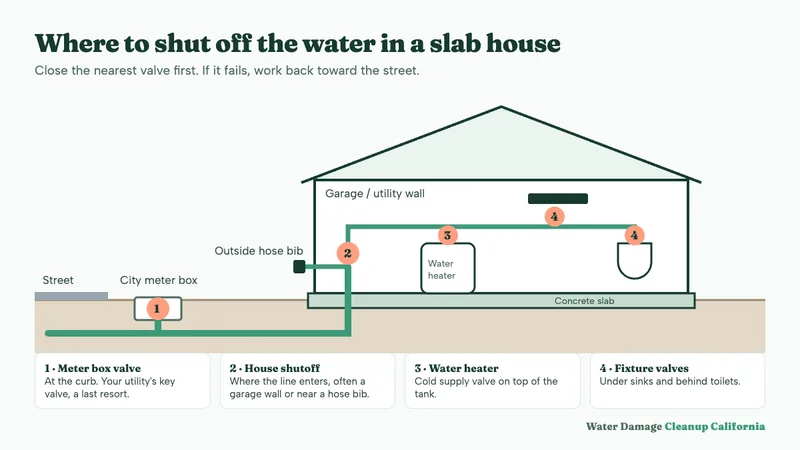
Where the water comes from changes what you do next. The table sorts the common California sources by the first move, and each row links to a page that goes deeper.
| If the water is from | First move | Read next |
|---|---|---|
| A split or frozen pipe | Close the house shutoff, then open a faucet to relieve pressure | Burst pipe damage |
| A leak under a slab floor | Shut the house valve and watch whether the meter keeps moving | Slab leak damage |
| A roof opening in a storm | Catch drips, move belongings, cover the opening only if it is safe | Roof leak damage |
| A water heater or appliance | Close the supply valve and unplug the appliance if the cord is dry | Water heater leaks |
| Runoff, flooding or mud | Wait for authorities to say it is safe, then see the storm sections below | Post-wildfire flood damage |
If a pipe froze in a mountain-area freeze, the American Red Cross says never to thaw it with a blowtorch, kerosene or propane heater, or any open flame. Warm it gently with a heating pad, a hair dryer or hot wet towels instead.
What should I photograph and write down before cleanup?
Record everything before you move or discard it. Triple-I, the insurance industry's information group, advises you to photograph or video the damage, keep receipts for what you spend and hold off throwing out damaged items until the adjuster has visited. These records carry most of the weight in a claim.
Start with the source, then walk room by room. Shoot wide shots first, then close-ups of the wettest spots.
- The source. The broken fitting, appliance, roof area or drain, with the shutoff valve you closed.
- The water line. A stain or wet edge on walls, trim and cabinets, with a tape measure in the frame.
- Belongings. Furniture, electronics, rugs and boxes, with model labels visible where you can.
- Dates. A written note of when you noticed the water and what you did, hour by hour.
The insurance claim guide picks up from here.
When should I call my insurance company?
Call as soon as the water is stopped and you have photos. CDI's residential claims guide says you must report the damage to your agent or company representative to start a claim, and that you should report any water damage immediately. Early notice also protects your options if the loss grows.
The CDI guide lists questions worth asking on that first call: does the policy cover the damage, how long will the claim take, will you need repair estimates and what is the deductible. Write down the claim number, the name of the person you spoke with and the date.
Coverage depends on the water's source. CDI says homeowners policies do not cover flood damage but do cover other kinds of water damage, such as rain entering through a hole made by a covered event. The NAIC adds that a plumbing leak or roof leak is typically covered, but ground water, rain runoff and snowmelt are not.
FEMA states that most homeowners insurance does not cover flooding. For storm losses, see FAIR Plan water damage and the atmospheric river guide.
Can I make temporary repairs before the adjuster arrives?
Yes, and CDI urges it. The department says one of the most important steps after a loss is making temporary repairs to prevent more damage, such as covering a roof, wall, door or window opening with plastic sheeting or plywood. Do it only where it is safe for you.
According to CDI, an insurer will reimburse reasonable costs to protect the property if you save the receipts. The same guide cautions you to beware of contractors who push you to spend a lot on temporary repairs, and says payments for them count toward the total settlement.
Triple-I gives matching advice: protect the property with reasonable steps, and wait on large permanent repairs until an adjuster has looked at the damage. Tarping, pumping and drying are protection. Replacing flooring and cabinets is repair, and it can wait for the adjuster.

What can I dry myself in the first 24 to 48 hours?
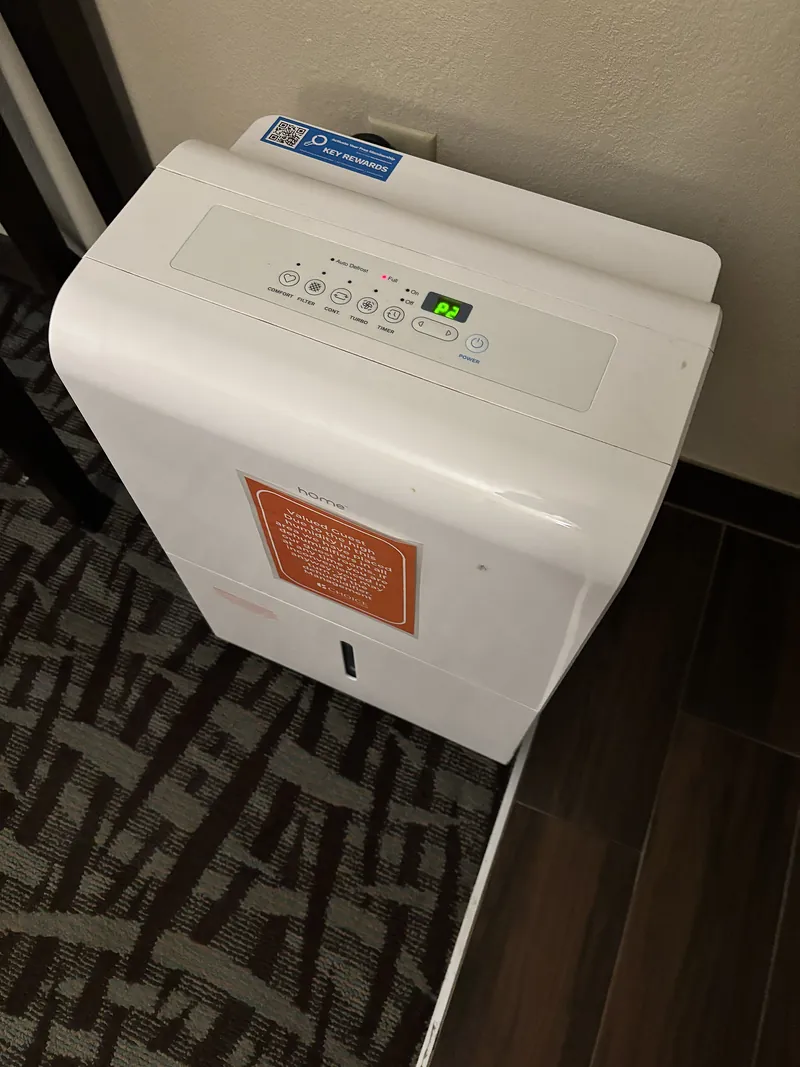
You can do the basics: lift out what is portable, open windows if the air outside is drier, and run fans and a dehumidifier. To keep mold from growing, the EPA wants wet areas and belongings dry inside 24 to 48 hours, and the CDC names the same window after a flood.
The EPA says humidity indoors should stay under 60 percent, and 30 to 50 percent is the ideal range. A cheap hygrometer from a hardware store lets you check the number instead of guessing from how the room feels.
Know the limits of this work. Fans and a dehumidifier dry surfaces and air. They do not reach soaked insulation, the cavity behind baseboards or the layer under a floating floor. The CDC says to pull out soaked carpets and upholstery that will not dry quickly.

Moisture trapped in a wall can show up later as a stain or a musty odor. The signs of water damage guide and the mold after water damage page explain what to watch for.
Is the water clean, or does that change what I do?
It changes a lot. The IICRC S500 standard sorts water into three categories: clean water from a supply line or burst pipe, grey water from a washer, dishwasher or toilet overflow without waste, and grossly contaminated water such as sewage or rising flood water.
For the contaminated category, the EPA says to hire a professional who has worked on buildings damaged by contaminated water, so do not wade in and scrub.
The page on water damage categories and classes goes through each type. If you cannot tell which category you have, treat it as the more serious one and ask a provider to assess it.
What is different after a storm, flood or mudslide?
Safety and timing change. Ready.gov says to go back inside only after authorities declare it safe, to avoid wading in floodwater, to avoid driving except in emergencies and to wear heavy gloves, boots and protective clothing during cleanup. Six inches of moving water can knock a person down.
One foot of moving water can sweep a vehicle away. After a storm, photograph the high-water mark inside and outside, and note where runoff entered. Insurers separate rain through a roof opening from water that rose or flowed over the ground.
The after-storm checklist covers the details, and the flood damage service page explains what that work involves. Ready.gov says flood coverage usually takes up to 30 days to take effect, so it cannot be bought after the water arrives.
When do I need a restoration provider instead of doing it myself?
Bring one in when water reached walls, flooring or ceilings, when it sat longer than 48 hours or when the source was dirty. Moisture meters can find water you cannot see. The EPA says an area under about 10 square feet of mold can in most cases be handled yourself.
Restoration teams differ in what work they take on, so confirm the scope directly. The emergency restoration page and water removal page describe the typical services.
Before you sign, check the license and the contract terms. The Contractors State License Board (CSLB) says an unlicensed person may complete projects up to $1,000 only if they hire no workers and no permits are needed, and that includes all labor and materials.
CSLB's consumer guide sets the cap at $1,000 or 10 percent, whichever is less. For help comparing providers, use how to choose a restoration company.
What mistakes make water damage worse?
The common ones are waiting, throwing things out too early and tearing into walls without a plan. CDI warns that delay in cleanup can result in mold growth, and the EPA says not to paint or caulk a moldy surface, since sealing it in hides a problem that is still damp.
- Skipping the shutoff. Drying a room while the pipe still drips only restarts the clock.
- Discarding before documenting. Triple-I advises keeping damaged items on hand until the adjuster has been out.
- Mixing cleaners. The CDC says never to mix bleach with ammonia or other cleaners, and on hard surfaces to stay at or under 1 cup of bleach per 1 gallon of water.
- Ignoring a slow leak. Triple-I notes that neglected maintenance is not covered, so a leak you knew about for months is harder to claim.
Once cleanup is behind you, read the prevention guide.
Sources: CDI, Residential Property Claims Guide; Ready.gov, Floods; Triple-I, Settling claims after a disaster; Triple-I, Which disasters are covered; NAIC, Homeowners Insurance; FEMA, flood insurance FAQ; EPA, Brief Guide to Mold, Moisture and Your Home; EPA, Mold Cleanup in Your Home; CDC, About Mold and Your Health; IICRC S500; American Red Cross, Frozen Pipes; CSLB, handyperson exemption; CSLB, Terms of Agreement consumer guide
Water Damage Cleanup California is the local water damage restoration line and information resource for California. When you call or send a request, it reaches a local water damage restoration team that serves your area. That team confirms whether it can reach you and gives its own scope, price and timing. Confirm them directly before you agree to anything.