The short version
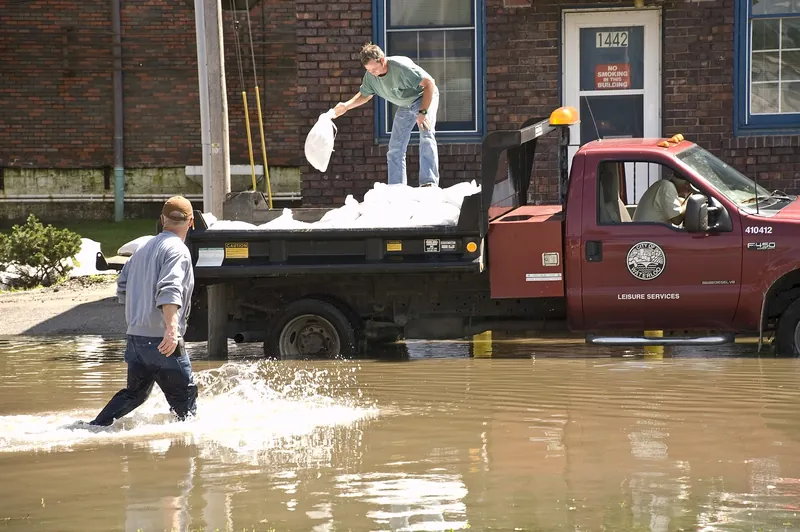
Post wildfire flood cleanup in California begins with safety: stay out of the flow path, wait for an all-clear and photograph everything. Mudflow damage cleanup can involve hazardous debris and specialist work, so restoration teams confirm what they handle. Policies typically exclude mudslide unless a recent wildfire caused it, so ask your insurer how it classified the loss.
On this page (11)
- What should I do first after a mudslide or debris flow reaches my home?
- What is a debris flow, and how is it different from a flood?
- Why do burned hillsides send mud into neighborhoods?
- What happened in Montecito in January 2018?
- Where else do mudslides hit California homes?
- What does mud do inside a house?
- Does homeowners insurance cover mudslide damage in California?
- How do I document mudslide damage and keep a claim moving?
- Who removes the mud and who dries the house?
- What health and safety risks come with mud and debris?
- How do I prepare if I live below a burn area?
What should I do first after a mudslide or debris flow reaches my home?
Get everyone out of the path and stay out until officials say it is safe. Mud on a slope can keep moving, and a second surge often follows the first. Once the ground has settled and the building is judged safe to enter, post wildfire flood cleanup begins with protecting what you can and recording what happened.
- Follow evacuation and road-closure orders from your county and local fire or sheriff's office, and do not drive through mud or moving water.
- Check on neighbors only if you can do it without stepping onto unstable ground.
- Turn off gas, power and water if you can reach the shutoffs safely, and stay out of any room where mud touches outlets or the panel.
- Photograph and film the mud line on walls, the debris outside and every damaged item before you move anything.
- Call your insurer to report the loss, then request a restoration team for the wet, muddy interior.
- Wear boots, gloves and goggles for any cleanup, and keep children and pets out of the mud.
The after-storm water checklist adds the steps that apply once the rain stops.
What is a debris flow, and how is it different from a flood?
A debris flow is a fast slurry of water, mud, rock and plant material that rushes down a slope or canyon. A flood is mostly water spreading over land. The difference matters indoors, because thick mud packs into rooms, ruins finishes and carries soil and whatever else it picked up on the way.
People say mudslide, mudflow and debris flow almost interchangeably. The California Department of Insurance lists "flood, mudslide, debris flow" side by side in its 2025 statement on coverage.
Inside the house, that means two cleanups in one: bulk mud has to be shoveled out before anyone can judge what is wet underneath it. Fine silt works into carpet, baseboards and wall cavities, and it holds moisture long after the surface looks dry.
For water that rises slowly from a creek or storm drain rather than rushing down a hillside, the flood damage restoration page describes how that cleanup differs.
Why do burned hillsides send mud into neighborhoods?
Fire strips the plants and roots that hold soil and slow rain. USGS says fire can dramatically alter how water moves across the landscape, so even a small storm can trigger flash floods and debris flows on steep burned slopes. The risk is highest right after the fire.
USGS reports that debris-flow activity is concentrated in the rainy seasons soon after a fire, while the flash-flood hazard can last longer. It publishes postfire debris-flow hazard assessments that estimate likelihood and volume for given rainfall.
- Homes below a burn scar can be hit even when the rain falls miles uphill.
- Canyon mouths and the fans of dirt spreading out from them carry the flow toward houses.
- A burned slope can fail in a storm that would have been harmless before the fire.
Ask your county emergency office whether your street sits below a recent burn area, and read its alerts before each storm.
What happened in Montecito in January 2018?
It is the best-documented debris-flow disaster in the state. USGS researchers describe a burst of intense rain on January 9, 2018 that fell on the Thomas Fire burn area above Montecito, before the fire was fully contained. The flows poured down the fans where homes stood.
- The USGS study of the event estimates about 680,000 cubic meters of sediment moved, with the flow damage including 23 fatalities, at least 167 injuries and 408 damaged homes.
- According to Wikipedia's account of the 2018 Southern California mudflows, about half an inch of rain fell in five minutes near 3:30 a.m., and a 30-mile stretch of US 101 closed.
- The same article says the flows came about a month after a series of major wildfires and caused at least $177 million in property damage.
The lesson for homeowners is timing. The slope failed weeks after the fire, in the dark, during a short burst of rain rather than a long soaking one.
Where else do mudslides hit California homes?
Anywhere steep ground meets heavy rain, and not only below burn scars. Long wet spells saturate hillsides until they give way. After the winter of 2022 and 2023, the California Geological Survey mapped more than 700 reported landslides due to rainfall, NOAA's satellite service reported.
NOAA says a series of nine atmospheric rivers hit the West Coast from late December 2022 into January 2023, with flooding, power outages and mudslides across the Central Valley, the Salinas Valley and the Santa Cruz Mountains. Our atmospheric river guide explains why these storms drop so much rain.
Slides also close highways and cut off neighborhoods, so a home can be undamaged yet unreachable for a while. If the road to your address is closed, tell your insurer and any restoration team you contact.
What does mud do inside a house?
It pushes in through doors and low windows, settles into floors and wall bases, and dries into a hard crust. The IICRC S500 puts rising flood water and outside surface water in Category 3, the grossly contaminated class, and mud arrives the same way, so soaked porous materials are normally removed rather than saved.
| What the mud reached | What usually happens | Who to ask |
|---|---|---|
| Carpet and pad | Removed and discarded, since they cannot be washed clean of silt | A restoration team |
| Drywall and insulation | Cut out above the mud and water line, then the cavity is dried | A restoration team |
| Hard floors and tile | Shoveled, rinsed and checked underneath for trapped moisture | A restoration team or flooring contractor |
| Furniture and contents | Sorted into items to wash, to pack out or to throw away | A restoration team that handles contents |
| Ducts, water heater, appliances | Inspected, and often replaced if mud got inside | An HVAC, plumbing or appliance technician |
| Mud and rock outside the walls | Hauled off the property before the interior can dry | An excavation or debris-removal contractor |
The bottom row is not restoration work, and restoration teams differ on what they take on. Ask each one before you rely on it.
Does homeowners insurance cover mudslide damage in California?
Usually not, with one important exception. The California Department of Insurance says homeowners and commercial policies typically exclude flood, mudslide and debris flow, unless a recent wildfire or another covered peril directly or indirectly caused it. Your policy wording and your adjuster decide.
- In February 2025, the Department of Insurance issued a Bulletin reminding insurers of their duty to cover mudslide damage caused by recent wildfires that weakened hillsides.
- The NAIC says damage from ground water or rain runoff is not covered.
- FEMA says most homeowners insurance does not cover flooding. Flood cover is a separate policy, and the Department of Insurance notes it generally takes effect 30 days after purchase.
Whether a mudslide counts as flood or as wildfire damage can decide the whole claim, so ask your insurer in writing how it classified the loss. The FAIR Plan guide covers the added gaps if you hold that kind of policy.
How do I document mudslide damage and keep a claim moving?
Photograph first, clean second, and save every receipt, because paperwork is how a loss gets proven. Triple-I advises reasonable steps to prevent more damage but no major permanent repairs until the adjuster has seen the loss. Keeping damaged items until the visit helps you prove them.
- Write down the date and time the mud arrived, the rainfall and any alerts you received.
- Record the mud line on each wall with a tape measure in the shot.
- Keep damaged belongings in one dry spot until the adjuster looks, and list each with its approximate age.
- Save receipts for hauling, temporary repairs and drying.
- Collect written bids with materials and prices on separate lines.
California's claim rules set deadlines for the insurer too. Under 10 CCR 2695.5(e), it must acknowledge your claim within 15 calendar days of notice. Under 2695.7(b), it has 40 calendar days after proof of claim to accept or deny, and a denial must be in writing.
The Department of Insurance claims guide says to contact it if you have trouble opening a claim. More detail sits in the insurance claim guide.
Who removes the mud and who dries the house?
Two different kinds of work follow a slide. Heavy mud and rock outside usually go to an excavation or debris crew, often arranged through the county or your insurer. A restoration team handles the interior. This site covers the interior water damage only.
Inside, the order is roughly shoveling, removal of what cannot be saved, cleaning, then drying. Water removal and structural drying explain the later steps, and contents pack-out covers belongings that need washing elsewhere.
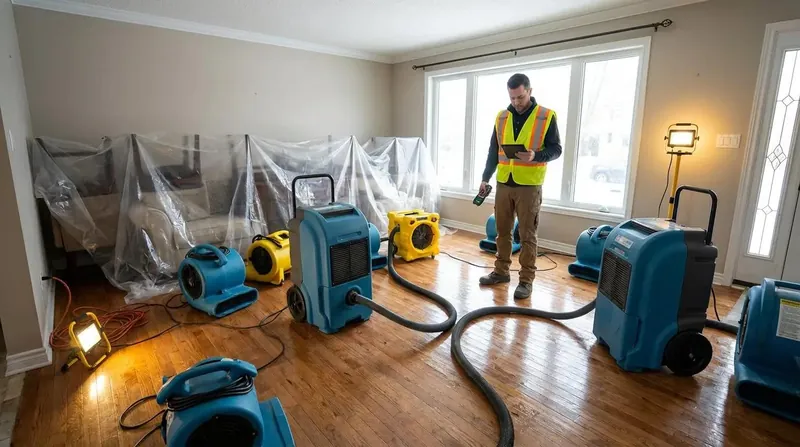
Debris-flow cleanup can involve hazardous debris, and some of it is specialist work. Mud can carry soil, sewage, fuel, ash and household chemicals, and burned material may be mixed in. Restoration teams differ on whether they take on that work, so ask each one directly whether it handles hazardous debris or only the interior.
Ask any restoration team how it handles mud specifically, since some jobs are mostly shoveling and hauling and some are mostly drying. Get the scope in writing, and tell your insurer who you hire, so the invoices match the claim.
Services vary, and after a widespread event restoration teams may be stretched thin. Confirm timing and scope directly with each one.
What health and safety risks come with mud and debris?
Mud from outside can carry soil, sewage and chemicals, so treat it as contaminated and protect your skin, eyes and lungs. Moving water is dangerous even when shallow: Ready.gov says six inches of moving water can knock a person down and a foot can sweep a vehicle away.
- The CDC advises cleaning and drying out fully and quickly, within 24 to 48 hours after a flood, and removing soaked carpet and upholstery that cannot dry right away.
- The CDC also recommends rubber boots, gloves and goggles, and never mixing bleach with ammonia or other cleaners.
- The EPA says to dry water-damaged areas within 24 to 48 hours to prevent mold, and to keep indoor humidity below 60 percent.
Stay out of buildings with cracked foundations or shifted walls until they are inspected. For mold that follows, read the mold after water damage guide.
How do I prepare if I live below a burn area?
Learn your risk before the rain arrives. Check county alerts, know your evacuation route, and decide in advance when you will leave. Preparing the building helps less than leaving early, because debris flows can arrive faster than a warning spreads.
- Sign up for your county's emergency alerts and keep a go-bag packed through the rainy season.
- Photograph every room now, so a later claim has a before picture.
- Ask your agent how your policy treats mudslide, flood and wildfire-caused loss, and whether a flood policy makes sense for your address.
- The water damage prevention guide covers drainage and gutters.
If mud or water has already entered the house, send a request through this site and it will reach a local water damage restoration team that serves your area.
Sources: USGS, Montecito Debris-Flow Event (Geosphere); USGS Landslide Hazards Program, postfire debris-flow hazards; Wikipedia, 2018 Southern California mudflows; NOAA NESDIS, Atmospheric Rivers Hit West Coast; California Department of Insurance, February 4, 2025 press release; California Department of Insurance, Flood Insurance Resources; California Department of Insurance, Residential Property Claims Guide; 10 CCR 2695.5; 10 CCR 2695.7; NAIC, Homeowners Insurance; FEMA, Don't Have Flood Insurance; Triple-I, Settling insurance claims after a disaster; IICRC S500; Ready.gov, Floods; CDC, About Mold and Your Health; EPA mold and moisture guide.
Water Damage Cleanup California is the local water damage restoration line and information resource for California. When you call or send a request, it reaches a local water damage restoration team that serves your area. That team confirms whether it can reach you and gives its own scope, price and timing. Confirm them directly before you agree to anything.