The short version
When a water heater leaks in California, shut the cold inlet valve, cut the power or turn the gas control off, and photograph everything. Then reach a plumber for the tank and a restoration team for the water. Bracing is required by state law, and drying should begin in the first 24 to 48 hours.
On this page (11)
- How do I react when water starts pouring from my water heater?
- What makes a tank water heater start to leak?
- Does it matter that my water heater stands in the garage?
- Is there a California law about strapping a water heater?
- Could a quake cause my water heater to leak, and will insurance pay?
- Should the T&P relief valve ever discharge?
- Can a drain pan under the heater prevent water damage?
- Does homeowners insurance pay when a water heater leaks?
- What steps does a California water heater claim involve?
- Which water category applies to a heater leak, and what does drying involve?
- What can I do to stop a water heater leak before it starts?
How do I react when water starts pouring from my water heater?
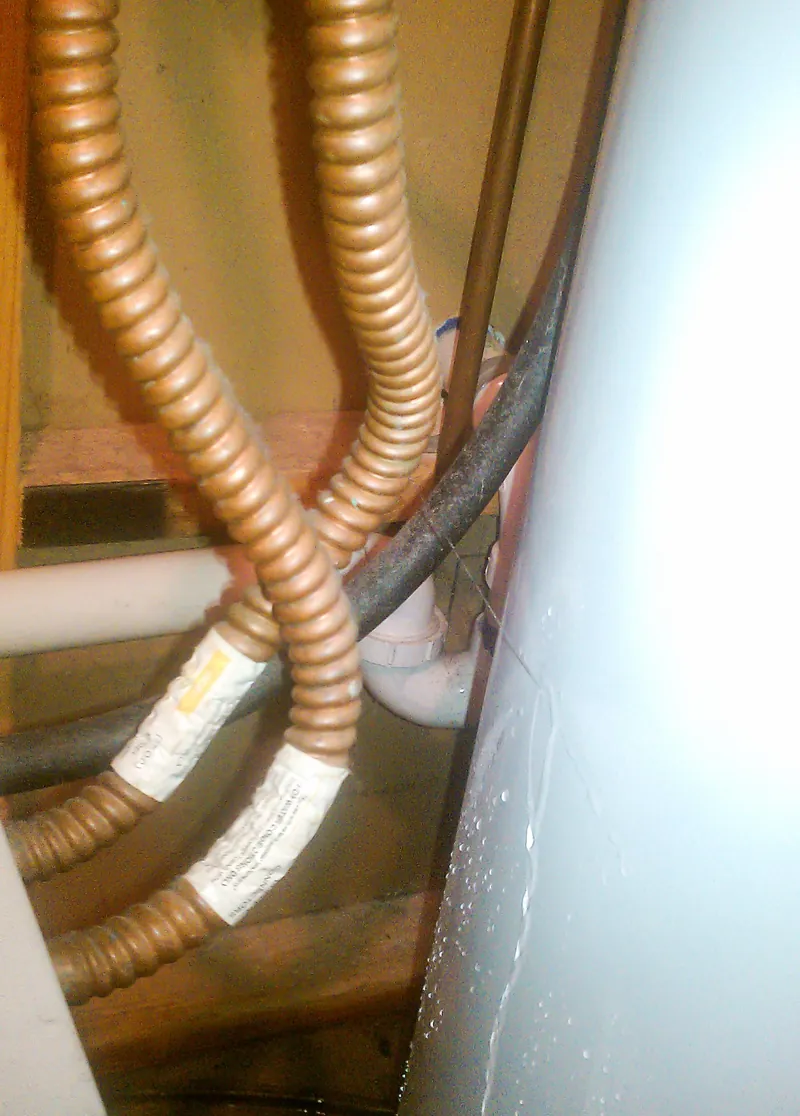
Turn the cold supply valve above the tank to closed, then take away the power or fuel. Stay off wet floors, away from outlets and off ladders until the area is safe. Most California heaters live in a garage, closet or utility room, so the water often travels toward a shared wall or hallway.
- Rotate the cold inlet valve clockwise on top of the tank. If it is seized, shut the main house valve.
- Turn an electric heater off at its breaker, provided the panel is dry and reachable without wading.
- Put a gas heater's control on off. Smell gas? Get outside and call 911 or your gas utility from there.
- Photograph the tank, its rating label and each wet surface before anything is moved or discarded.
- Call a plumber for the heater itself.
- Call a restoration team to pull out and dry the water.
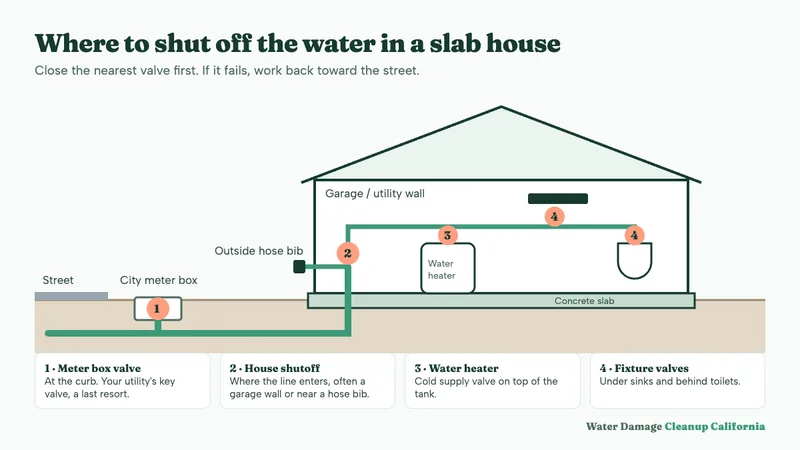
Pulling out standing water is restoration work, and the water removal page describes it. When the tank has emptied into a ceiling below, read ceiling water damage before touching the drywall.
What makes a tank water heater start to leak?
A tank unit leaks because a part has worn out, a joint has loosened or pressure has built up inside. The spot where water shows up is the strongest hint at the cause. The table pairs what you see with a probable source and a safe first check.
| What you see | Probable cause | Harmless first check | Call |
|---|---|---|---|
| Drips off the top pipes | Inlet or outlet fittings that are worn or loose | Shut the inlet valve and see if the dripping stops | Plumber |
| Water around the base, wet shell | A tank that has corroded through | Look for rust streaks and a steady trickle out of the shell | Plumber, often to replace the unit |
| Drip from the pipe next to the relief valve | The valve venting pressure, or a worn valve | Check if it drips only while the burner or element is on | Plumber |
| Moisture by the drain valve | A drain valve that is loose or worn | Make sure the handle is closed all the way | Plumber |
| Floor wet, tank dry | A different line, a washer or condensation | Follow the water uphill from the lowest wet point | Plumber or appliance technician |
Water through the shell means the tank itself is finished, and mending it is rarely possible. Ask the plumber to name the cause so you know if the job is a fitting or the entire unit.
Does it matter that my water heater stands in the garage?
It does. A garage tank typically leaks onto concrete, sending water to the lowest door threshold, the foot of a wall or any room sharing the slab. Harm often surfaces in a laundry room or hallway instead of beside the tank.
Put stored boxes and fabric items up off the wet floor, and wear shoes while doing so. Concrete absorbs little, but drywall along the bottom of a garage wall draws water up fast.
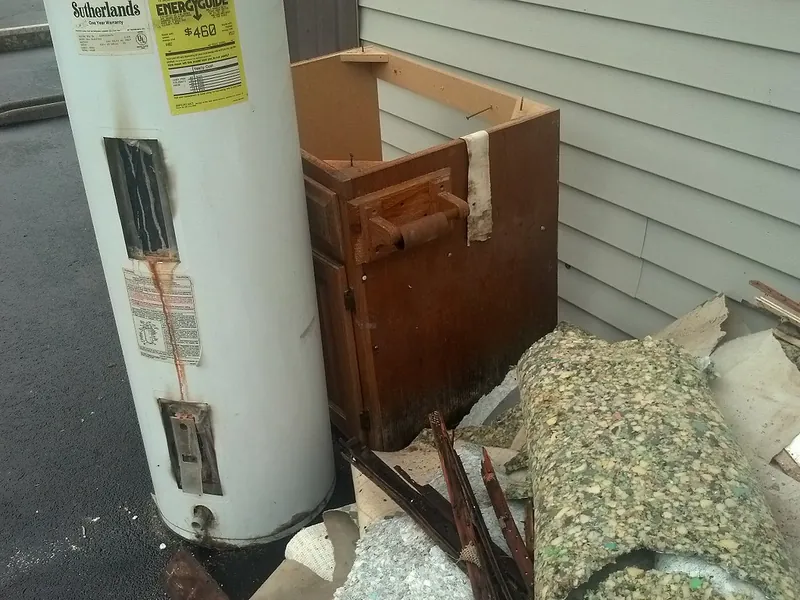
A heater in an interior closet behaves differently. Its water goes straight into the flooring and neighboring walls, and in a house with a raised foundation it can drip down into the crawl space. The water-damaged floors page covers wood, laminate and tile after they get wet.
When a tank weeps at its base, it is signaling the end of its service life. Delay seldom makes the fix cheaper.
Is there a California law about strapping a water heater?
Yes. Health and Safety Code section 19211 requires every new and replacement water heater, as well as every existing residential one, to be braced, anchored or strapped against falling or sideways movement in an earthquake. The law applies to a standard heater of up to 120 gallons.
The text on the Seismic Safety Commission site contains two further points relevant to owners and tenants.
- Anyone selling real property that has a water heater must give the buyer a written certification that the bracing requirement is met.
- A landlord cannot evict a tenant on the grounds that eviction is needed to comply.
The bracing guidelines from the Division of the State Architect state that the building and plumbing codes call for at least two sets of straps. That document is from 2004, so ask a plumber what the current California Plumbing Code and your city demand.
Could a quake cause my water heater to leak, and will insurance pay?
A heater that tips over can rip its pipes loose and spill the tank into the room. Payment depends on the policy. The California Department of Insurance says homeowners policies exclude earthquake damage other than fire, so water from a fallen tank is frequently an earthquake-policy matter.
A sample policy from the California Earthquake Authority does not exclude water damage resulting from the release of water from a water heater, refrigerator or supply pipe inside the dwelling when an earthquake directly causes it. It is one example only, so your own policy and deductible control.
The Department of Insurance guide also names bracing the water heater to a wall among the retrofits that may reduce premiums. It adds that an insurer can deny claims not reported within one year of when you first noticed, or should have noticed, the damage.
Should the T&P relief valve ever discharge?
The temperature and pressure relief valve is a safety part that opens once heat or pressure in the tank passes safe limits. A rare release can be normal. A valve that drips constantly is a problem and needs a plumber.
Constant dripping may mean high water pressure, a worn valve or a heater set too hot. Do not cap, plug or tighten the discharge pipe, since doing so defeats the safety function.
- Keep kids and pets clear of the pipe, because the water may be hot.
- See whether the valve opens whenever the heater starts a heating cycle.
- Have the plumber test the valve and measure system pressure.
- If the valve keeps opening, read about high water pressure.
Treat a discharge that has soaked a floor or wall as a leak and begin drying. Water mitigation explains the opening stage of that work.
Can a drain pan under the heater prevent water damage?
A pan collects a slow leak, and when it is piped to a safe outlet it carries the water out of the building. That helps with drips and minor failures but cannot hold a tank that ruptures all at once.
The pan works only when it is clean and its line is open. Scale, dirt and lint clog both, and a pan with no line just fills and overflows. Ask a plumber whether your arrangement is set up correctly.
- Glance into the pan for water, rust flakes or scale every time you walk past.
- Verify that the line is open and ends somewhere harmless.
- Keep cardboard and paper out of the pan.
- Consider a leak sensor in the pan that sends alerts to your phone.
Washers, dishwashers and other leak sources near a heater are covered on the appliance leak page.
Does homeowners insurance pay when a water heater leaks?
The water damage is often covered, though the heater is not. Triple-I explains that standard forms name accidental discharge or overflow of water from plumbing, heating and household appliances as a covered peril, while damage from lack of maintenance is excluded.
The NAIC adds that plumbing-related water damage is typically covered. A worn tank that failed in a moment may be judged differently from one that seeped for months, so ask your insurer how it classifies the cause.
A replacement tank is normally your own expense. The soaked drywall, flooring and insulation are what a claim may pay for. Hold on to the old tank, or at least photos of its label and the failure, until the adjuster has come.
The insurance claim guide goes through the entire process.
What steps does a California water heater claim involve?
Contact your insurer or agent first, keep the property from further harm, and wait on major permanent repairs until the adjuster has inspected. Triple-I further recommends photographing the damage, keeping receipts and holding on to damaged items until the adjuster visits.
State claim regulations set the timetable. Section 2695.5 gives an insurer no more than 15 calendar days to acknowledge a notice of claim. Section 2695.7 allows no more than 40 calendar days after proof of claim to accept or deny, and a denial must be written and state its reasons.
When a claim will not open, the Department of Insurance lists a Consumer Hotline at 1-800-927-4357. Save every receipt for the plumber, the new tank and the drying.
Which water category applies to a heater leak, and what does drying involve?
Water from a heater's supply line or tank is normally Category 1, or clean water, according to IICRC S500. Time and contact with dirty materials can lower that category, so the restoration team verifies it on site before settling on a drying plan.
- Stop the source and pull out standing water.
- Take out materials beyond saving, like soaked insulation or swollen drywall.
- Dry the area using air movers and dehumidifiers.
- Log moisture readings on each visit to show progress.
- Rebuild only after the materials read dry.
To prevent mold growth, the EPA recommends drying water-damaged areas and items in the first 24 to 48 hours. The CDC says soaked carpets and upholstery that cannot be dried right away should be removed.
The equipment is described under structural drying. Restoration teams differ in what they offer, so confirm the scope with whichever team you reach.
What can I do to stop a water heater leak before it starts?
Inspect the heater regularly and replace it before it gives out. Look for rust, dampness at the base and a relief valve that drips, and keep the space around the tank clear and well lit so a small leak stands out.
- Locate the cold inlet valve and confirm it turns.
- Look over the tank, pipes and pan each time you are in the garage or utility room.
- Ask a plumber about flushing the tank and testing the relief valve.
- Keep the drain pan and its line unobstructed.
- Check that the tank is strapped to the wall, as state law requires.
- Install a leak sensor or automatic shutoff valve when the heater sits over living space.
The water damage prevention guide supplies a complete checklist, and signs of water damage helps you spot a hidden leak early. If the water came from a split pipe, see burst pipe water damage.
Sources: Health and Safety Code 19210-19217 (California Seismic Safety Commission); Division of the State Architect, Earthquake Bracing of Residential Water Heaters; California Department of Insurance, Earthquake Insurance; California Department of Insurance, Residential Property Claims Guide; California Earthquake Authority, sample policy; 10 CCR 2695.5; 10 CCR 2695.7; Triple-I, Which disasters are covered; Triple-I, Settling insurance claims; NAIC, Homeowners Insurance; IICRC S500; EPA mold and moisture guide; CDC, About Mold and Your Health.
Water Damage Cleanup California is the local water damage restoration line and information resource for California. When you call or send a request, it reaches a local water damage restoration team that serves your area. That team confirms whether it can reach you and gives its own scope, price and timing. Confirm them directly before you agree to anything.