The short version
Water pressure too high means a static reading above 80 psi, the point where plumbing codes expect a pressure reducing valve. Test with a gauge on a hose spigot at several times of day, aim for the 35 to 60 psi range plumbers often use, and ask a plumber to install or adjust a regulator.
On this page (9)
- How do you know if your water pressure is too high?
- What does high water pressure do to your plumbing?
- How do you test water pressure at home?
- What do the pressure numbers mean?
- What is a pressure reducing valve and where does it go?
- Who is responsible for installing a pressure regulator?
- Can a pressure regulator cause problems of its own?
- Does homeowners insurance cover damage from high water pressure?
- What should you do if high pressure already caused a leak?
How do you know if your water pressure is too high?
Pressure above 80 pounds per square inch (psi) is the usual line. The City of Tustin says you may need a pressure reducing valve when pressure is more than 80 psi, and that sustained pressure above that level can damage on-site plumbing and affect fixtures. A gauge reading is the only reliable way to know.
Strong pressure feels good in the shower, which is why the problem hides. Nothing looks wrong until a washer hose splits or a faucet starts to drip. This page explains the risk, how to measure it and who handles the fix. If a leak has already started, the signs of water damage guide shows what to look for.
What does high water pressure do to your plumbing?
It puts constant strain on every pipe, hose, valve and tank in the house. The U.S. Department of Energy's Building America guide says pressure above 80 psi can rupture pipes and damage fixtures. Parts do not fail at once; they wear faster, and the weakest one gives out first.
The same guide says keeping pressure at or below 60 psi reduces the likelihood of leaking faucets, leaking water heaters, ruptured pipes and burst hoses. It also notes that municipal supply mains are pumped, and in some cases the pressure in them can exceed 200 psi, which is why a regulator at the house matters.
The weak points tend to be the same ones every home has:
- Washer and dishwasher hoses. See appliance leak damage.
- The water heater and its connections. See water heater leaks.
- Faucet washers, toilet fill valves and supply lines.
- Older pipe and joints that were already near the end of their life.
The EPA's WaterSense program adds a cost side. It says a faucet dripping once per second can waste more than 3,000 gallons per year, and that fixing easily corrected household leaks can save about 10 percent on a water bill.
How do you test water pressure at home?
Screw a pressure gauge onto an outdoor hose spigot or a laundry connection, turn off everything that uses water, and read the dial. That reading is static pressure, the pressure when water is not flowing. Hardware stores sell the gauges, and a plumber can do the test too.
- Turn off water use inside and out, including the ice maker and irrigation.
- Attach the gauge to a hose connection ahead of any shutoff for that line.
- Open the spigot and read the dial once the needle settles.
- Write the number down with the time of day.
- Repeat at another time, such as late at night and again in the morning.
- Compare the readings to the ranges in the table below.
Repeat readings matter because pressure moves. The Building America guide describes a standard that looks at whether pressure is unlikely to regularly exceed 60 psi at a home on a daily or seasonal basis. A single reading can miss a high point.
What do the pressure numbers mean?
Three figures cover most of what homeowners need: 60 psi, the WaterSense target; 35 to 60 psi, the range plumbers often set a regulator to; and 80 psi, the point where regulators are expected. The table shows what each source says and what to do with a reading.
| Static reading | What the sources say | Next step |
|---|---|---|
| 60 psi or below | The EPA WaterSense home specification asks for static pressure of 60 psi or less | Nothing to change. Retest now and then |
| Above 60, up to 80 psi | Above the WaterSense target, below the usual code line | Ask a plumber if a regulator makes sense |
| Above 80 psi | Tustin says owners are responsible for a PRV above this, per the Uniform Plumbing Code | Have a plumber install or adjust a regulator |
| Readings that swing | Supply pressure changes with the daily and seasonal cycle | Log several readings and show them to the plumber |
These are reference points, not a diagnosis. Your local water utility and building department set the rules that apply to your address.
What is a pressure reducing valve and where does it go?
A pressure reducing valve (PRV) is a regulator on the main supply that lowers incoming pressure to a steady, lower setting. It cannot raise pressure. The Building America guide says it belongs ahead of the fixture piping, where water enters the home, so every fixture sits downstream.
Tustin notes most plumbing professionals recommend a PRV setting between 35 and 60 psi. It adds that if a PRV already exists, it may only need an adjustment. A high reading on a home that already has one is worth a plumber's visit before you replace anything.
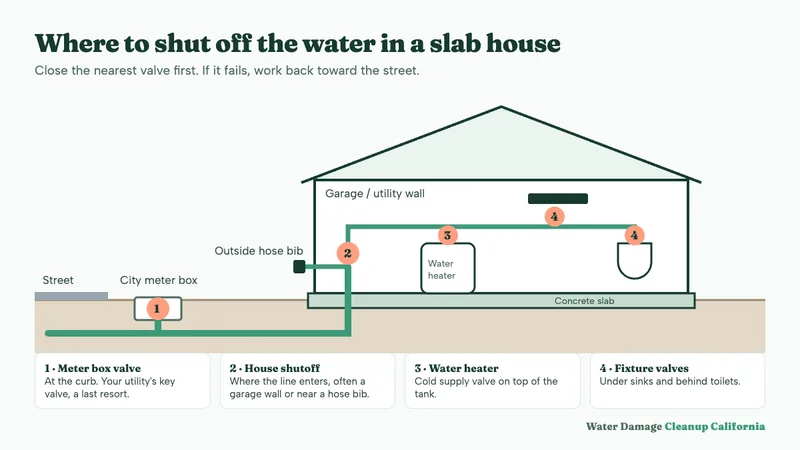
The diagram below shows the usual shutoff points in a slab house, and a crawl-space or older home will differ. If you cannot find a regulator, that does not prove there is none.
Who is responsible for installing a pressure regulator?
In many places, the owner. Tustin says that under the Uniform Plumbing Code, property owners are responsible for installing and maintaining their own PRV whenever static pressure exceeds 80 psi. Other California utilities have their own wording, so call yours before you assume.
That split matters in practice. The utility controls pressure up to the meter, and you control everything after it. Ask the utility what pressure it delivers to your street, and ask a plumber to measure it at your house, since the two can differ.
Replacing a regulator is plumbing work. If a permit applies where you live, your city or county building department will say so. Providers and plumbers differ in what they offer, so confirm scope and terms before you agree to anything.
Can a pressure regulator cause problems of its own?
Yes, in one case. The Building America guide warns that a PRV creates a closed system, and thermal expansion can then raise pressure in some cases. When water heats up in a closed system, it has nowhere to go, and pressure inside the pipes climbs.
That is a reason to have a plumber look at the whole setup, not only the regulator. Ask whether the home needs anything to handle expansion, since the answer depends on the water heater and the plumbing layout.
A gauge left on the line, or a second reading taken after a hot shower, can show whether pressure rises when the heater runs. Share that reading with the plumber.
Does homeowners insurance cover damage from high water pressure?
It may cover the resulting water damage, depending on the policy and the cause. Triple-I says named perils on standard forms include accidental discharge or overflow of water from plumbing and household appliances. It also says policies will not cover damage due to lack of maintenance, and that maintaining the home is the owner's responsibility.
That second line is why pressure matters on paper. A sudden burst may be treated one way and a slow leak that went on for months another way. Your insurer decides, and the policy wording governs, so ask before you assume.
The NAIC says water damage from a home's plumbing is typically covered, while ground water and runoff are not. For the steps after a loss, see the insurance claim guide. Triple-I also says to photograph the damage and to hold off on major permanent repairs until the adjuster has assessed it.
What should you do if high pressure already caused a leak?
Close the water at the main and call a plumber to stop the source. Then dry the area, because the EPA advises drying water-damaged areas and items within 24 to 48 hours to prevent mold growth. Measure pressure before anyone replaces the part that failed.
Skip the pressure check and the new part may face the same strain. A burst pipe or hose is a Category 1 event under the IICRC S500 water categories, meaning clean supply water.
For a wider view of what prevents these losses, read the prevention guide or browse the water damage guides. If a restoration provider is needed, the contact form can connect you with one.
Sources: City of Tustin, High Water Pressure; DOE Building America Solution Center, Service Water Pressure; EPA WaterSense, Fix a Leak Week; Triple-I, Which disasters are covered by homeowners insurance; Triple-I, Settling insurance claims after a disaster; NAIC, Homeowners Insurance; EPA, A Brief Guide to Mold, Moisture and Your Home; IICRC S500.
Water Damage Cleanup California is the local water damage restoration line and information resource for California. When you call or send a request, it reaches a local water damage restoration team that serves your area. That team confirms whether it can reach you and gives its own scope, price and timing. Confirm them directly before you agree to anything.