The short version
For church water damage, name one person to lead, stop the source, photograph everything, call your insurer and start drying in the first 24 to 48 hours. The EPA advises that window to prevent mold. Check your own policy, since church coverage differs from a homeowners policy, and confirm scope and pricing with any provider.
On this page (8)
- Why does water damage hit churches and nonprofit buildings differently?
- Who should be in charge when a church building floods?
- What should a congregation do in the first 48 hours?
- How do sanctuary, hall and kitchen damage differ?
- How do you handle mold in a church building?
- Will the church insurance policy cover water damage?
- How do we keep services going during cleanup?
- How do we choose a restoration provider for a church?
Why does water damage hit churches and nonprofit buildings differently?
A church or nonprofit building is usually bigger than a house, used on a schedule and cared for by volunteers, so water problems tend to go unnoticed. The EPA lists roof leaks, gutters and landscaping that direct water toward the building, and delayed or insufficient maintenance as common causes of moisture trouble in large buildings.
That list comes from the EPA's guide for schools and commercial buildings, and it fits a congregation's property well. A sanctuary may sit empty for days. A fellowship hall may have a kitchen, restrooms and storage rooms that nobody checks between events.
The EPA also notes that moisture problems in portable classrooms and other temporary structures have often been linked to mold, which matters if your campus has a modular building. For commercial and institutional work in general, see the commercial water damage page. If you came here searching for church water damage help, the sections below follow the order a board or facilities team usually needs.
Who should be in charge when a church building floods?
Name one person to run the response, and give that person authority to spend and to call a provider. The EPA says to select a remediation manager for medium or large jobs, or for small jobs that need more than one person, and the same idea works for any size of water event.
Volunteer-run buildings often lose hours while people wait for a vote. A short written plan avoids that. It should list who can shut off water, who holds the insurance policy, who can sign a work authorization and who tells the congregation what is happening.
The EPA says the manager's highest priority must be protecting the health and safety of building occupants and remediators. Keep children's rooms and gathering spaces closed until you know what you are dealing with. A pastor or office administrator usually knows the building best, so decide in advance who will meet the provider on site.
What should a congregation do in the first 48 hours?
Stop the water, protect people, photograph the damage and start drying. The EPA advises drying water-damaged areas and items within 24 to 48 hours to prevent mold growth, and the CDC gives the same window after a flood. Acting fast matters more than getting every detail right.
- Keep people out of wet areas and away from any electrical hazard.
- Stop the source if it is safe, starting with the main water shutoff.
- Photograph and video the damage before anything is moved, as Triple-I advises for claims.
- Call your insurance agent and report the loss.
- Move valuables such as records, instruments and AV gear out of the wet area.
- Call a restoration provider and ask what it needs from you first.
The EPA says the minimum protective gear when disturbing mold is an N-95 respirator, gloves and eye protection. It also says not to run the HVAC system if you know or suspect it is contaminated with mold. A large building often has several air handlers, so ask the provider which ones to switch off.

How do sanctuary, hall and kitchen damage differ?
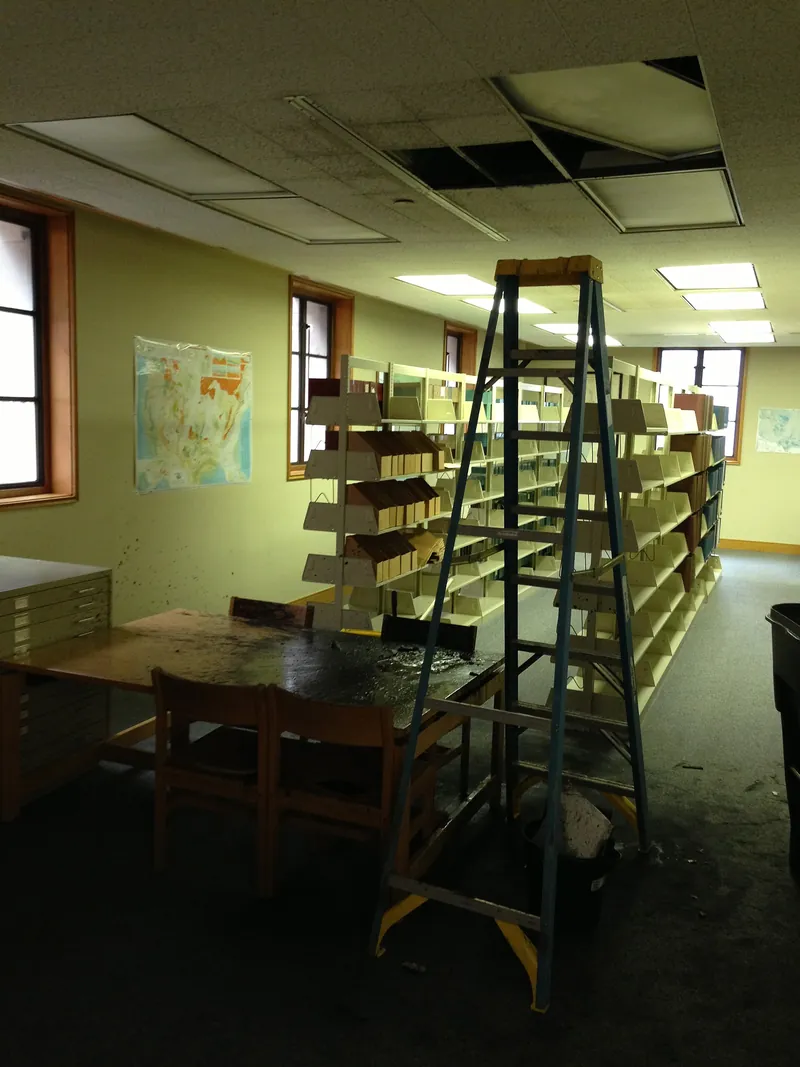
Each space has different materials, so each needs a different plan. Fixr's national figures show that restoration costs per square foot vary widely by material: drywall $1.50 to $3, carpeting $4.75 to $10.50, plaster $6.25 to $18.75 and hardwood $10 to $15. Those are not California quotes.
| Space | Materials to check | What to ask a provider |
|---|---|---|
| Sanctuary | Wood floors, carpet, plaster or drywall walls, upholstered seating | Which finishes can be dried in place? |
| Fellowship hall | Flooring, drywall, stored tables and chairs | How will stored items be moved and protected? |
| Classrooms and nursery | Carpet, ceiling tiles, soft toys and books | What gets removed, and what can be cleaned? |
| Kitchen and restrooms | Cabinets, subfloor, drains, supply lines | Is any of the water from a drain or sewer? |
| Office and archives | Paper records, electronics, carpet | What is the plan for records and equipment? |
Restrooms deserve a second look. Under the IICRC S500, a supply line or burst pipe is Category 1 clean water, while sewage is Category 3 grossly contaminated. If the source is a toilet or drain, read the page on sewage backup cleanup and the explainer on water damage categories and classes.
How do you handle mold in a church building?
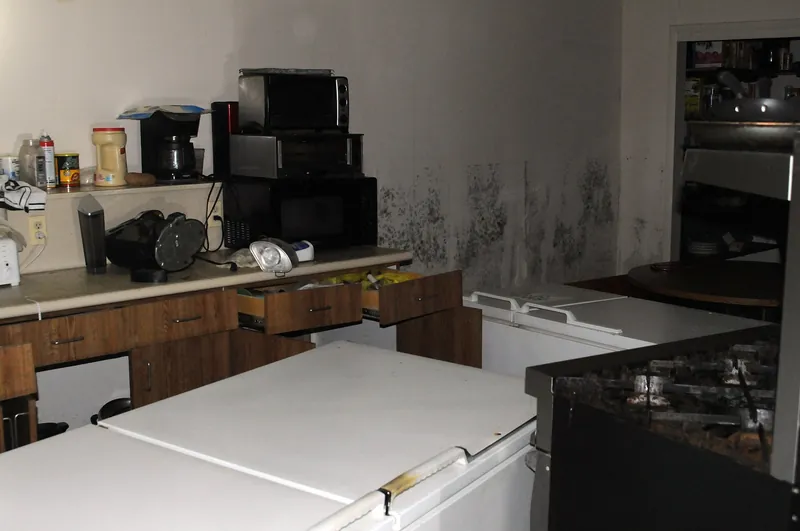
Dry fast, find the water source and size the mold problem before you plan the cleanup. The EPA says the remediation plan should fix the moisture problem or it may return, cover protective gear and containment, and be revised if hidden mold turns up. Discard moldy items that cannot be cleaned.
The EPA notes that its size-based guidelines are meant to help build a plan, and that professional judgment should always play a part. It calls for a more cautious approach when extensive hidden mold is expected or sensitive people, such as those with severe allergies or asthma, are present. Congregations include children, older members and people with health conditions, so that caution applies.
The EPA also says that mold can weaken floors and walls over time, and that if you suspect it has damaged the building's integrity you should consult a structural engineer or other professional. In California, the Department of Public Health says there are no state regulations for mold inspection, assessment or remediation and no state licensing for mold remediators. Ask any provider about its training and process. If the building has paid staff, the CDPH says Cal/OSHA enforces workplace mold and moisture rules. For the general picture, see the mold after water damage guide.

Will the church insurance policy cover water damage?
Read your own policy first, because a congregation's coverage is a different product from a homeowners policy. The Triple-I and NAIC pages used here describe homeowners policies, so they only suggest what to ask. They say flood is excluded from standard homeowners policies, and that sewer backup is usually a separate endorsement.
Triple-I's claim advice is still a good checklist for any owner. Contact your agent or company immediately, take reasonable steps to protect the property, and hold off on major permanent repairs until the adjuster has assessed the damage. Save receipts, and keep damaged items until the adjuster has visited.
Triple-I also advises written bids from licensed contractors with materials and prices listed line by line. Ask your broker whether the policy covers lost use of the building, since that coverage varies by policy. The water damage insurance claim guide walks through the California process, although it is written with homeowners in mind.
How do we keep services going during cleanup?
Tell members early, close the affected rooms and consider meeting elsewhere if the work area is large. The EPA says a remediation plan may include temporary relocation of some or all occupants, and that the decision should consider the size of the affected area, any reported health effects and how much disruption the work will cause.
The EPA also advises scheduling remediation during off-hours when occupants are less likely to be affected, and communicating with building occupants as the work goes on. For a church, off-hours may mean weekdays between services. Ask the provider whether it can work around your calendar, since scheduling depends on the provider and the job.
Have a plan for the pieces that make a building a congregation's home: the nursery, the food pantry, the choir room. Put signs on closed areas and name a contact who answers questions, so volunteers do not wander into a work zone. Keep a short note of every decision for the insurer.
How do we choose a restoration provider for a church?
Ask for a written scope, the water category, a drying plan and itemized pricing before you sign. Restoration teams differ in what they handle, how they document and how they work around events, so confirm each point directly. The water mitigation page explains what early work normally includes.
Ask whether the provider will take moisture readings and share them as the job proceeds, and how it will protect areas you are still using. Check the contractor's license status with the Contractors State License Board before work starts. For a wider list of questions, read the guide to choosing a restoration company, and browse all the California water damage guides.
Get the signed authorization in writing and give the board a copy. That protects volunteers who act for the congregation and keeps the paperwork tidy for the insurer.
Sources: EPA, Mold Remediation in Schools and Commercial Buildings, Chapter 1; EPA, Mold Remediation in Schools and Commercial Buildings, Chapter 3; EPA, A Brief Guide to Mold, Moisture and Your Home; CDC, About Mold and Your Health; IICRC S500; Fixr, Water Damage Restoration Cost; Triple-I, Settling insurance claims after a disaster; Triple-I, Which disasters are covered by homeowners insurance; CDPH, Frequently Asked Questions about Mold.
Water Damage Cleanup California is the local water damage restoration line and information resource for California. When you call or send a request, it reaches a local water damage restoration team that serves your area. That team confirms whether it can reach you and gives its own scope, price and timing. Confirm them directly before you agree to anything.