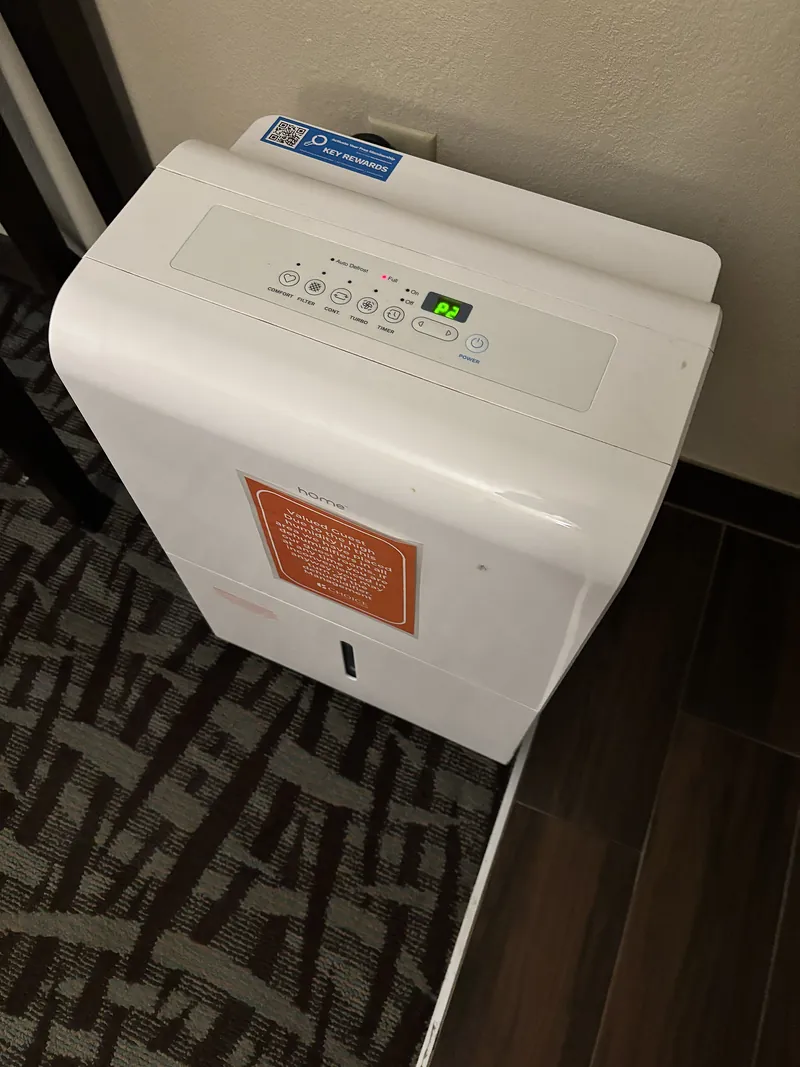
The short version
The EPA says to keep indoor humidity below 60 percent, ideally 30 to 50 percent. Indoor humidity after water damage stays high while wet materials release moisture, so track readings twice a day, run a dehumidifier and check inside walls. Restoration teams differ in their targets, so confirm directly.
On this page (11)
- What should indoor humidity be after water damage?
- How do I measure humidity at home?
- What do different humidity readings mean?
- Why does humidity stay high after the leak is fixed?
- Does the season or climate change what I should expect?
- How long does it take for humidity to come down?
- What can I do to lower humidity myself?
- What is condensation telling me?
- When does high humidity become a mold problem?
- What should I ask a provider about humidity readings?
- How does humidity affect an insurance claim?
What should indoor humidity be after water damage?
The EPA says to keep indoor humidity below 60 percent, ideally between 30 and 50 percent relative humidity. Those numbers are the target to bring a house back to once a leak is fixed. Indoor humidity after water damage often runs above them until the wet materials are dry and the dehumidifiers have done their job.
Relative humidity compares the moisture the air holds with the most it could hold at that temperature. It reads the air, not your drywall or subfloor, and this site can only explain the numbers. The structural drying page describes the equipment side.
How do I measure humidity at home?
Use a humidity meter, also called a hygrometer. The EPA describes relative humidity as something you can measure with a moisture or humidity meter, a small instrument it prices at $10 to $50 at many hardware stores. Put it in the affected room, away from vents, and read it a few times a day.
One reading tells you little, since humidity moves with the weather, cooking, showers and the air conditioner. Write the number down each morning and evening and look at the trend. A reading that stays high while fans and a dehumidifier run suggests that something in the room is still wet.
Put a second meter in an unaffected room as a comparison. If both read the same, the damp air may be a general condition of the house and not the leak. If only the leak room reads high, the water is probably still coming out of the materials.
What do different humidity readings mean?
Readings sort into three bands against the EPA targets: at or under 50 percent is in the ideal range, 50 to 60 percent is below the EPA ceiling but above the ideal band, and above 60 percent is over the line. Treat the table as a guide to action, not a diagnosis.
| Relative humidity | How it compares with the EPA | What to do |
|---|---|---|
| 30 to 50 percent | Inside the ideal band | Keep it there; keep checking for a few days |
| 51 to 59 percent | Under the 60 percent ceiling, above ideal | Keep running the dehumidifier and ventilate |
| 60 percent or higher | Above the EPA ceiling | Look for wet materials and a source of moisture |
| Below 30 percent | Under the ideal band | Not a mold concern; stop extra drying equipment if a provider agrees |
The row for readings under 30 percent is common sense, not an EPA ruling: the EPA's guidance is aimed at keeping humidity from being too high. If the air is that dry and equipment is still running, ask the provider whether it is still needed.
Why does humidity stay high after the leak is fixed?
Because the water went into materials and not just the air. Drywall, framing, subfloor, carpet pad and cabinets hold moisture and release it slowly as vapor. A fixed pipe stops new water, but the old water keeps feeding the room until it dries.
The EPA lists hidden spots where this happens: inside walls around leaking or condensing pipes, behind furniture, inside ductwork and in roof materials above ceiling tiles. If a wall cavity is wet, no meter in the middle of the room will show it right away. That is why providers check materials with a moisture meter as well as the air.
The drywall water damage page shows how a wall can look dry on the surface while the inside is still wet.
Does the season or climate change what I should expect?
Yes, because indoor humidity follows the air outside and the equipment inside. A house that is closed up with the air conditioner running will behave differently from one with windows open during a damp storm. This site has no sourced California humidity figure, so read your own meter and compare it with the EPA targets.
After a winter storm or atmospheric river, outdoor air may be as damp as the air inside, so opening windows may not help. The EPA says to use air conditioners or dehumidifiers when needed, which is the safer default when it is wet outside. Your meter decides, not the forecast.
The atmospheric river page covers storm water in California homes.
How long does it take for humidity to come down?
It depends on how much water got in, which materials were wet and how much drying capacity is in the room. This site cannot promise a number of days, and providers set their own plans. The EPA gives one anchor: wet materials dried in 24 to 48 hours do not grow mold in most cases.
The CDC repeats that window for floods, saying to clean up and dry out the home fully and quickly, within 24 to 48 hours. The clock starts when the water arrives, not when you spot it.
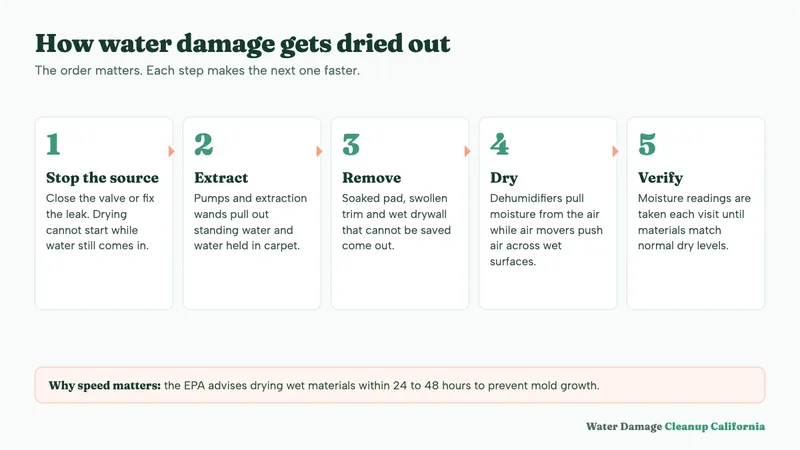
Ask the provider what it is measuring, what the target is and how it will show you the readings. The IICRC S500 standard is the industry reference for drying work, and providers apply it differently.
What can I do to lower humidity myself?
Start with the source, then remove moisture from the air and keep it moving. The EPA lists the basics: use air conditioners or dehumidifiers when needed, run the bathroom fan or open a window when showering, and use exhaust fans or open windows when cooking or running the dishwasher.
- Fix the leak or shut off the water to it first.
- Place a dehumidifier in the affected room and close the doors to that room.
- Move air with fans, and open a window only when outdoor air is drier than indoor air.
- Run exhaust fans while cooking, showering and using the dishwasher.
- Vent dryers and stoves outdoors where possible, as the EPA advises.
- Track readings twice a day and write them down.
The open-window step is a judgment call, since damp outdoor air can add moisture, so check the meter before and after. The water damage repair page covers what comes after the structure is dry.
What is condensation telling me?
Moisture on windows, walls or pipes is a sign of high humidity, according to the EPA. It forms when humid air touches a cold surface. If you see it after a leak, the room is holding more moisture than the surfaces can handle, and the wet surface should be dried quickly.
The EPA suggests three fixes: lower the humidity, increase air movement by using fans or opening doors and windows when practical, and insulate cold water pipes. It also names rust on a drain pipe as an indicator that condensation is forming there. Condensation can come from a pipe that is not leaking at all, so do not assume the water is a break.
If the drips keep returning, look at the signs of water damage guide to separate condensation from a slow leak.
When does high humidity become a mold problem?
It becomes a mold problem when moisture stays on materials past the first day or two. The EPA says drying wet materials in 24 to 48 hours prevents mold in most cases, and the California Department of Insurance says dehumidifying can help minimize the chance that mold accompanies water damage.
Signs to watch for are a musty smell with no visible source, new stains, peeling paint and anyone in the home reporting symptoms. The CDC says mold can cause a stuffy nose, sore throat, coughing or wheezing and burning eyes, and that people with asthma or mold allergy can react severely. The California Department of Public Health notes that no science-based exposure limits for indoor mold exist in California, so a humidity reading is a clue and not a mold test.
Read the mold after water damage guide for the next steps, and the water damage smell guide if the odor lingers. The CDPH also says California has no state regulations on mold inspection or remediation, so ask any inspector about its methods.
What should I ask a provider about humidity readings?
Ask what it is measuring, where and how often. A useful answer names both air readings and material readings, gives a target for each and says when equipment will come out. Restoration teams differ in how they plan a job, so get the plan before work starts and confirm it directly.
- Where are the readings taken? Air, drywall, framing and subfloor all matter.
- What is the target? Ask for a number and how it was chosen.
- How often will you check? Ask to see each day's log.
- Who decides it is dry? Ask what reading ends the job.
- Will the wall cavities be checked? Surface readings can miss wet insulation.
The guide to choosing a restoration company has more questions worth asking, and the cost guide shows how drying days appear on a bill.
How does humidity affect an insurance claim?
It does not set the claim, but it can support it. Drying logs that record humidity and moisture readings show what was wet and when it dried. The California Department of Insurance says to report a water damage claim immediately and notes that delay in cleanup can allow mold to grow.
Triple-I advises saving receipts and photographing the damage, so add your readings to that file with the date, room and number. Triple-I also says policies will not cover mold or lack of maintenance, and the NAIC says homeowners policies often exclude mold costs. Read your policy for how it treats mold after a covered leak.
The insurance claim guide explains the California claim steps and deadlines, and the water damage guides hold the rest of the how-tos.
Sources: EPA, A Brief Guide to Mold, Moisture and Your Home; CDC, About Mold and Your Health; California Department of Insurance, Residential Property Claims Guide; CDPH, Frequently Asked Questions about Mold; IICRC S500; Triple-I, Settling insurance claims after a disaster; Triple-I, Which disasters are covered by homeowners insurance; NAIC, Homeowners Insurance.
Water Damage Cleanup California is the local water damage restoration line and information resource for California. When you call or send a request, it reaches a local water damage restoration team that serves your area. That team confirms whether it can reach you and gives its own scope, price and timing. Confirm them directly before you agree to anything.